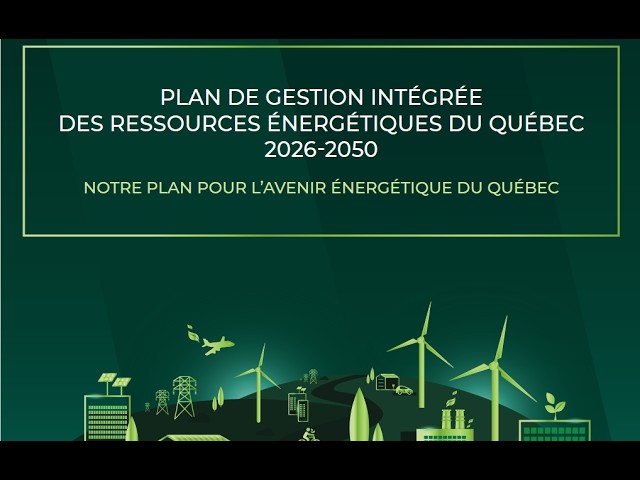
Plan de gestion intégrée des ressources énergétiques (PGIRE) – Avis d’expert.e.s
Keywords
Summary
180 words
Critical Evaluation
Value of the Information & Strength of the Argument
The value of the information is high, as the panel provides a critical and nuanced assessment of a major policy document. The arguments are well-structured and grounded in professional experience, with each expert offering a distinct perspective. For instance, Pineau highlights the plan’s strengths in orientation but criticizes its lack of economic analysis and scenario planning. Gauthier focuses on the needs of industrial consumers, pointing out the absence of clear implementation details and risk management. Cliche emphasizes the importance of energy security and resilience, suggesting indicators from other jurisdictions. Marcoux argues for adaptive planning and the need for flexible infrastructure. Purdon acknowledges the plan’s institutional significance but notes the lack of marginal abatement cost curves and governance clarity. The arguments are coherent and supported by references to the plan’s content, though they are largely qualitative and lack quantitative data.
Scientific Rigor, Source Quality, Title Accuracy
The scientific rigor is moderate to high, as the experts are credible and their analysis is based on their expertise and the plan’s content. However, the video does not provide detailed citations or data to support specific claims, and the discussion is primarily opinion-based. The sources cited are limited to the plan itself and a link to the event page with summaries. The title accurately reflects the content, as it is indeed an expert panel discussion on the PGIRE. The adequacy between title and content is strong, with no significant mismatch.
245 words
Title / Content Match
The title accurately reflects the content: a panel of experts discussing the Quebec Integrated Energy Resources Plan.
Quality & Reliability
8/10
The panel consists of recognized experts in energy policy and economics from HEC Montréal, UQAM, and other institutions. Their analysis is grounded in professional experience and references to official documents. However, the discussion is largely opinion-based and lacks detailed data or citations within the video itself.
Key Moments
Markers derived by PSI from the transcript: the creator did not define chapters.
- Introduction by moderator, setting the stage for the panel discussion on the PGIRE.
- Pierre-Olivier Pineau begins his analysis, highlighting the plan's strengths and weaknesses.
- Geneviève Gauthier discusses the plan from an industrial consumer perspective, noting the lack of implementation details.
- Yvan Cliche emphasizes energy security and resilience, suggesting indicators from other countries.
- Benoit Marcoux argues for adaptive planning and the need for flexible infrastructure.
- Mark Purdon acknowledges the plan's institutional significance but notes gaps in economic modeling and governance.
- Normand Mousseau provides his perspective, likely on the plan's overall direction and execution challenges.
- Concluding remarks and wrap-up by the moderator.
Cited Sources
- Event page with expert summaries — The description provides this link for detailed summaries of each panelist's intervention.
Concurring Sources
- Quebec's Energy Policy (2016) — The PGIRE is intended to replace this policy, and the panelists reference it as a predecessor.
Dissenting Sources
- Government of Quebec's PGIRE presentation — The government's official presentation of the plan may present it more favorably, but no specific source is cited in the video.
Contribution & Novelties
The video provides a critical expert assessment of Quebec’s first integrated energy plan, highlighting both its merits and significant gaps. It offers a multi-perspective analysis that is valuable for policymakers and stakeholders. The discussion underscores the need for more rigorous planning, including economic analysis, scenario development, and governance mechanisms.
Pour aller plus loin :
- Integrated resource planning — Relevant to the concept of integrated energy planning.
- Energy efficiency — Central to the plan’s orientation.
- Energy security — Discussed by Yvan Cliche.
- Marginal abatement cost — Mentioned by Mark Purdon as missing from the plan.
94 words
Radar Profile
The radar profile shows high scores in quantity and quality of information, reflecting the depth of expert analysis. The technical level is moderately high, indicating a specialized audience. The overall reliability is strong due to the credibility of the panelists, though the lack of detailed citations slightly reduces the score.
💬 No comments were provided for analysis.