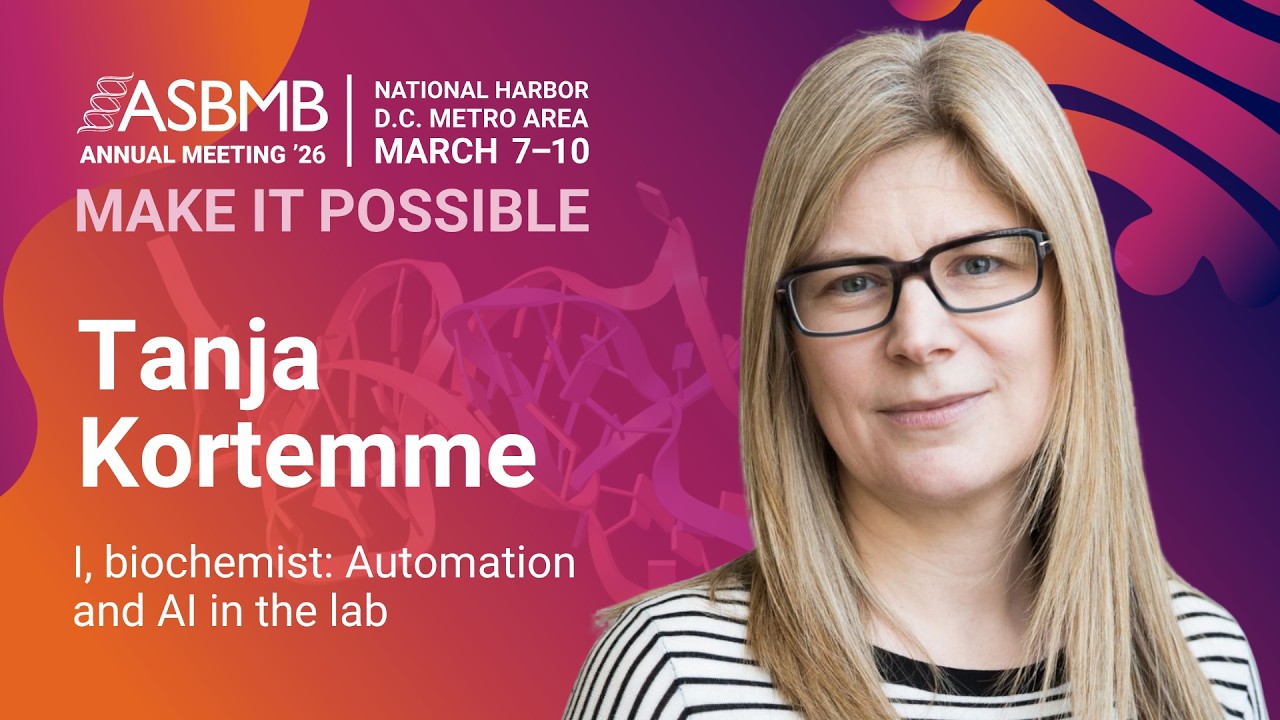
Tanja Kortemme | I, biochemist: Automation & AI in the lab
Keywords
Summary
158 words
Critical Evaluation
Value of the Information & Strength of the Argument
The talk provides significant value by showcasing cutting-edge research in de novo protein design, with concrete examples and experimental validation. The argumentation is solid, as Kortemme systematically builds from foundational methods to complex applications, supporting each claim with data. She addresses challenges and limitations honestly, such as the difficulty of designing polar interfaces and the need for better all-atom models. The inclusion of unpublished work adds novelty but also introduces uncertainty, which she acknowledges. Overall, the argumentation is persuasive and well-structured.
Scientific Rigor, Source Quality, Title Accuracy
The scientific rigor is high, with detailed descriptions of methods and experimental validation. Kortemme references several preprints and papers, including her own and others, but does not provide full citations in the talk. The sources cited in the description include links to ASBMB resources, but no direct links to the mentioned preprints. The title accurately reflects the content, focusing on AI and automation in biochemistry. The talk is delivered at a professional conference, indicating a high level of expertise.
175 words
Title / Content Match
The title accurately reflects the content, focusing on automation and AI in biochemistry, though the talk emphasizes de novo protein design more than general lab automation.
Quality & Reliability
8/10
The talk is delivered by a leading expert in protein design, presenting both published and unpublished work with detailed methodological descriptions and experimental validation. The content is technically rigorous, but as a conference talk, it lacks peer review for the unpublished portions and provides limited context for non-specialists.
Key Moments
Markers derived by PSI from the transcript: the creator did not define chapters.
- Introduction: Why design proteins de novo? Vision of programming biology.
- Overview of two-step process: backbone generation and sequence design.
- Frame-to-Seek model for sequence design, benchmarked against Rosetta.
- Example: TopZero protein with 0% sequence identity, stable and folded.
- Designing novel kinases with high-throughput assay.
- Optimizing polyketide synthases for adipic acid production.
- Designing anti-CRISPR proteins as DNA mimics, with 30% success rate.
- Challenge of polar interfaces and need for all-atom precision.
- Designing proteins with two conformations using multi-state design.
- NMR validation of conformational switching and vision for cellular functions.
Cited Sources
- ASBMB Annual Meeting Proposals — Mentioned in the description as a call for proposals for the 2027 meeting.
- ASBMB Today article on Kortemme's work — Linked in the description as a resource to learn more about Kortemme's research.
Concurring Sources
- ProteinMPNN paper — Supports the sequence design methodology discussed.
- AlphaFold2 paper — Provides background on the structural prediction models used.
Contribution & Novelties
The talk presents novel contributions including the Frame-to-Seek sequence design method, the design of anti-CRISPR proteins with polar interfaces, and a multi-state design approach for conformational switching. It also highlights the potential of AI to explore vast sequence spaces and optimize complex enzymes. The emphasis on programmable motions and cellular functions represents a forward-looking vision.
Pour aller plus loin :
- ProteinMPNN — A foundational sequence design model mentioned in the talk.
- AlphaFold2 — The structural prediction model that inspired Frame-to-Seek.
- Kinetic proofreading — Concept from Hopfield’s Nobel lecture, relevant to the vision of out-of-equilibrium systems.
95 words
Radar Profile
The radar profile shows high scores in quality and technical level, with slightly lower scores in quantity and reliability, reflecting the depth of expertise and the preliminary nature of some unpublished results.