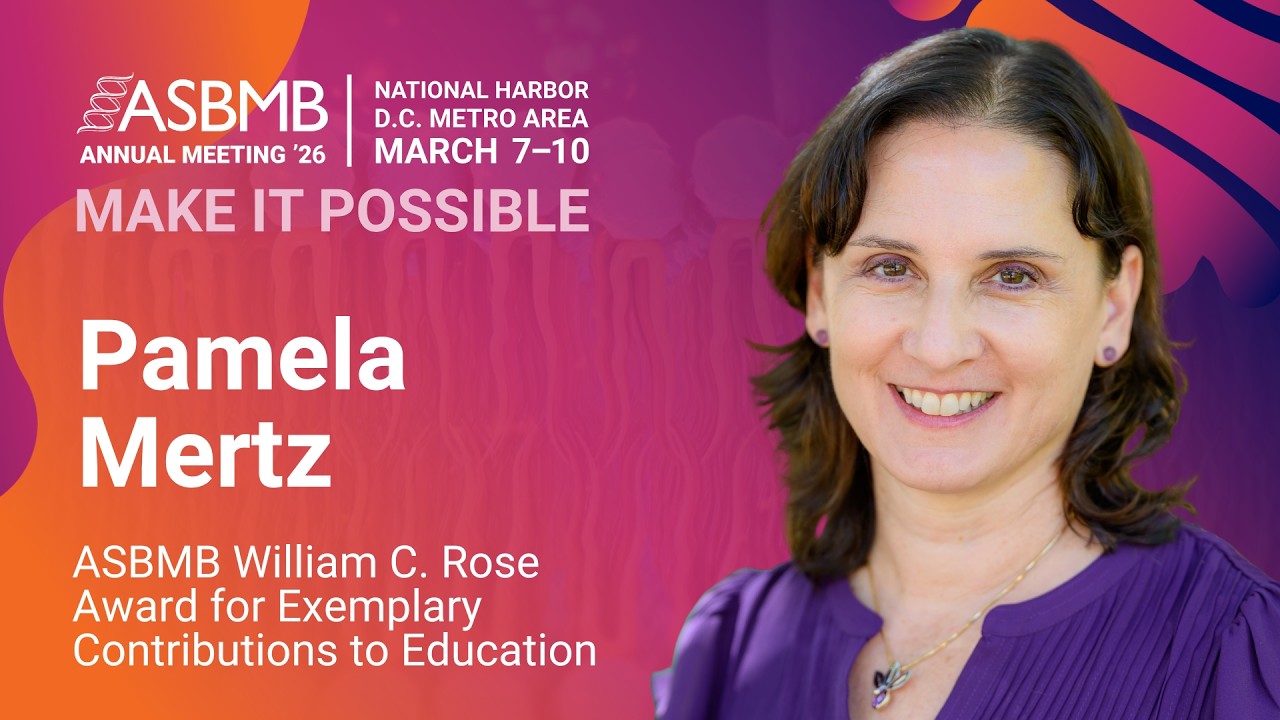
Pamela Mertz | Finding and building your community: Go further together
Keywords
Summary
142 words
Critical Evaluation
Value of the Information & Strength of the Argument
The talk’s value lies in its authentic, experience-based insights into building professional communities in academia. Mertz provides concrete examples of successful collaborations, such as the NSF-funded curriculum transformation and the creation of a national education network. Her argumentation is persuasive, built on a narrative of personal growth and the tangible outcomes of collaborative work. She effectively demonstrates that community involvement leads to professional development, publication opportunities, and improved educational practices. The talk is not data-driven but offers a compelling case for the importance of community in academic careers.
Scientific Rigor, Source Quality, Title Accuracy
Mertz demonstrates scientific rigor by referencing multiple peer-reviewed publications and funded projects, such as the NSF grant and the ASBMB accreditation. She cites specific papers in journals like BAMBED and the Journal of Chemical Education, and mentions the book ‘Transforming Academic Culture and Curriculum.’ The title accurately reflects the content, which focuses on community building. The talk is well-structured and grounded in her extensive experience, though it is primarily anecdotal rather than systematic.
176 words
Title / Content Match
The title accurately reflects the content, which focuses on the importance of community in professional development and education.
Quality & Reliability
8/10
The talk is a personal narrative by a respected educator, grounded in decades of experience and multiple peer-reviewed publications. It is not a research presentation but an expert opinion sharing best practices and community-building strategies. The information is reliable within its scope, though subjective.
Key Moments
Markers derived by PSI from the transcript: the creator did not define chapters.
- Introduction and thanks for the William C. Rose Award.
- Describes starting as a lone biochemist and building a program from scratch.
- Highlights curriculum innovations and publications, including the 'megalodon rubric'.
- Discusses involvement with ASBMB education community and the RCN-UBE project.
- Details roles in student chapters and organizing the 2023 summer education meeting.
- Introduces BiomolViz and the Malate Dehydrogenase CUREs Community.
- Shares take-home points: engage with communities, take opportunities, and build inclusive environments.
- Thanks mentors, colleagues, and family, and dedicates the talk to her parents.
Cited Sources
- ASBMB Annual Meeting Proposals — Referenced in the video description as a call for proposals for the 2027 meeting.
- Creating change in biochemistry education — Linked in the description as a profile of Mertz's work.
Concurring Sources
- ASBMB Today article on Mertz — Provides background on Mertz's contributions and aligns with the talk's themes.
Contribution & Novelties
The talk provides a personal, experience-based perspective on the importance of community in academic careers, offering practical advice for educators. It highlights specific successful initiatives and the role of national organizations like ASBMB in fostering collaboration.
Pour aller plus loin :
- Course-based Undergraduate Research Experiences (CUREs) — CUREs are a key concept in the talk, and this link provides an overview.
- Biomolecular Visualization (BiomolViz) — The community Mertz discusses, with resources and publications.
- ASBMB Student Chapters — The network Mertz served, offering opportunities for students and faculty.
87 words
Radar Profile
The radar profile shows high scores in quality and reliability, reflecting the speaker's expertise and credible references. The moderate score in technical level indicates the talk is accessible to a broad audience. The lower score in quantity of information suggests the talk is more narrative than data-dense.
💬 No comments provided.