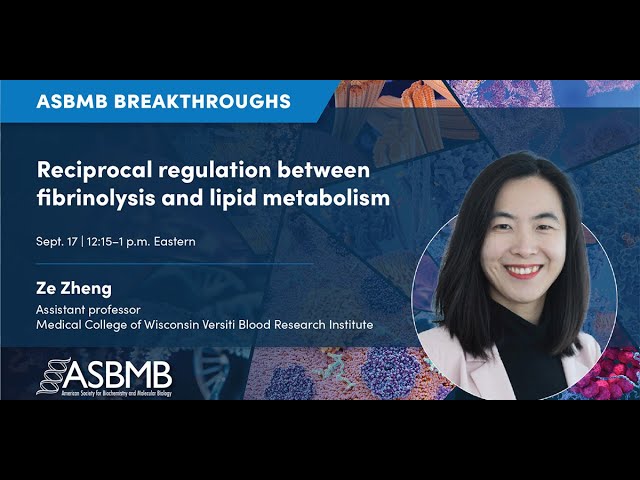
Reciprocal regulation between fibrinolysis and lipid metabolism
Keywords
Summary
149 words
Critical Evaluation
Value of the Information & Strength of the Argument
The presentation provides valuable insights into a novel mechanism linking fibrinolysis and lipid metabolism. The argumentation is solid, based on a series of experiments including gene silencing, protein interaction assays, and clinical observations. The speaker clearly explains the rationale and results, and acknowledges limitations and ongoing work. The value lies in the potential to explain residual cardiovascular risk and to identify new therapeutic targets.
Scientific Rigor, Source Quality, Title Accuracy
The scientific rigor is high, with the research published in a peer-reviewed journal (Science). The speaker cites relevant literature and her own published work. The title accurately reflects the content. The presentation is well-structured and evidence-based, though it is a single study and may not represent the entire field.
128 words
Title / Content Match
The title accurately reflects the content, focusing on the reciprocal regulation between fibrinolysis and lipid metabolism.
Quality & Reliability
8/10
Presentation of original research by a specialist, with experimental data and references to published work. Some limitations: no detailed methodology, potential for bias as the speaker presents her own work.
Key Moments
Markers derived by PSI from the transcript: the creator did not define chapters.
- Introduction to fibrinolysis and the role of tPA in dissolving blood clots.
- Presentation of evidence that hepatocytes produce tPA and contribute to basal fibrinolysis.
- Discussion of the inverse correlation between tPA activity and antigen levels, and the role of PAI-1.
- Hypothesis that tPA may also lower LDL cholesterol by reducing VLDL assembly.
- Experimental evidence that tPA binds to apoB and inhibits lipidation, reducing VLDL particle size.
- Mechanism: tPA's lysine binding site on kringle 2 blocks MTP access to apoB.
- Lipid loading induces PAI-1 to sequester tPA, allowing VLDL assembly.
- Clinical correlation: PAI-1 deficient patients have lower LDL cholesterol and smaller VLDL particles.
Cited Sources
- Science paper on tPA and VLDL assembly — Mentioned as published in Science, but no specific URL given.
- Review article by Dr. Wendai on fibrinolysis and lipoprotein metabolism — Mentioned as a review article, but no specific URL given.
- Review article by Mindy on VLDL assembly and cardiovascular disease — Mentioned as a review article, but no specific URL given.
Concurring Sources
- Clinical studies showing inverse correlation between tPA activity and LDL cholesterol — Mentioned as prior literature, but no specific URLs given.
Contribution & Novelties
The presentation offers a novel mechanism linking fibrinolysis and lipid metabolism, showing that tPA directly inhibits VLDL assembly by binding to apoB. This provides a potential explanation for the inverse correlation between tPA activity and LDL cholesterol levels, and may open new avenues for therapeutic intervention. The research is original and published in a high-impact journal.
Pour aller plus loin :
- tissue plasminogen activator — Overview of tPA, its structure, and functions.
- Plasminogen activator inhibitor-1 — Information on PAI-1, the main inhibitor of tPA.
- Very low-density lipoprotein — Details on VLDL structure and metabolism.
- Apolipoprotein B — Key protein in atherogenic lipoproteins.
- Microsomal triglyceride transfer protein — Enzyme involved in VLDL assembly.
112 words
Radar Profile
The radar profile shows high scores across all dimensions, indicating a well-balanced and reliable presentation. The highest scores are in information quality and technical level, reflecting the depth of the research. The slightly lower score in information quantity is due to the focused scope of the talk.
💬 No comments were provided for analysis.