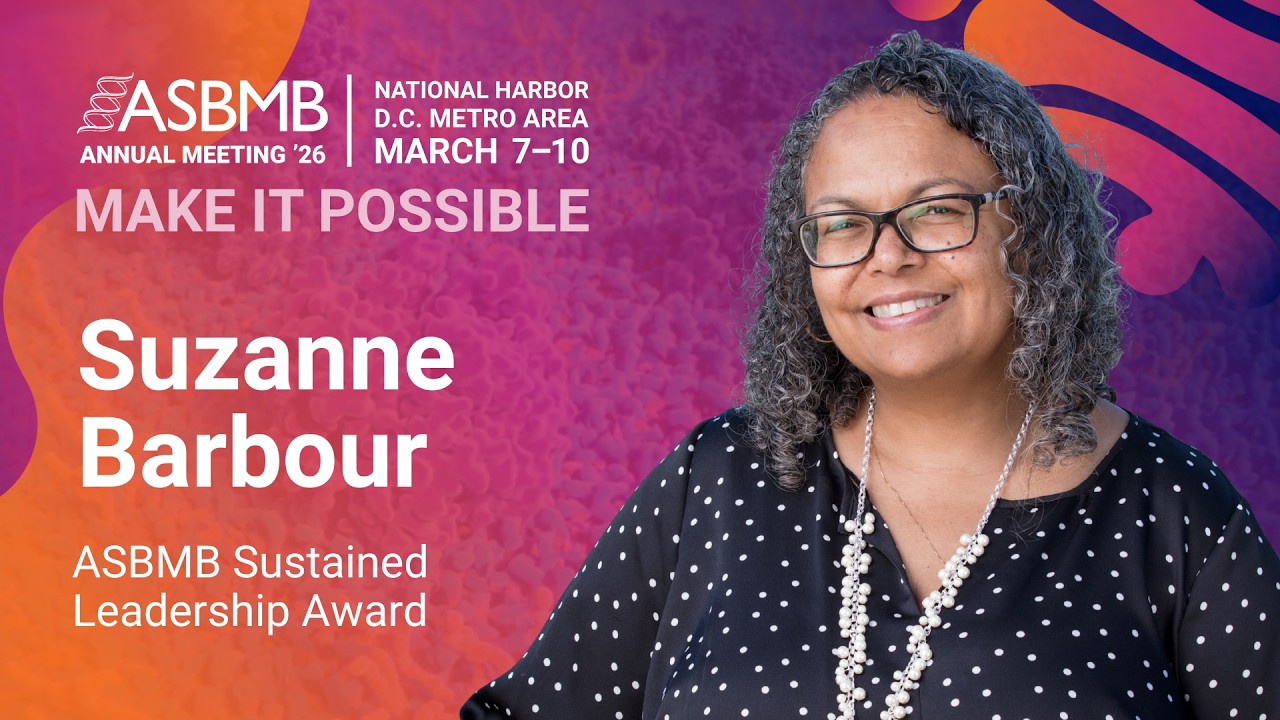
Suzanne Barbour | Building the next gen of molecular bioscientists through sustained leadership
Keywords
Summary
216 words
Critical Evaluation
Value of the Information & Strength of the Argument
The talk provides valuable insights into the importance of broadening participation in STEM from a leader with decades of experience. Barbour’s argument is compelling, combining personal anecdotes with data on the ‘missing millions’ and China’s rise in STEM. She effectively makes the case that diversity is not just a moral imperative but a strategic necessity for US competitiveness. The argumentation is solid, though some claims lack specific citations, relying on general knowledge and personal experience.
Scientific Rigor, Source Quality, Title Accuracy
The talk is scientifically rigorous in its presentation of personal experience and institutional data, but it does not provide detailed citations for all claims. The title accurately reflects the content, focusing on leadership in building the next generation of molecular bioscientists. The speaker’s credibility is high, given her position and awards, but the lack of explicit references to external sources limits the verifiability of some statements.
156 words
Title / Content Match
The title accurately reflects the content, focusing on leadership in building the next generation of molecular bioscientists.
Quality & Reliability
8/10
The speaker is a distinguished professor and dean with extensive experience in graduate education and broadening participation. The talk is based on personal experience and institutional data, but lacks detailed citations for some claims.
Key Moments
Markers derived by PSI from the transcript: the creator did not define chapters.
- Introduction and thanks for the award
- Personal background and inspiration from grandfather
- Graduate studies at Johns Hopkins and postdoc at UCSD
- Research on phospholipase A2 and its role in pre-mRNA splicing
- Initiatives at VCU to broaden participation in science
- Transition to graduate dean roles and leveraging position for diversity
- Impact of policy changes and the dismantling of programs
- Call to action: Sputnik moment and NDEA 2.0
- Advice to young scientists and conclusion
Cited Sources
- ASBMB Annual Meeting Proposals — Mentioned as a call to action for attendees to submit proposals for the 2027 meeting.
- Trainee mentorship as immortality — Linked in the description as a resource to learn more about Barbour's work.
Concurring Sources
- ASBMB Today article on Barbour — Provides additional information on Barbour's mentoring philosophy.
Contribution & Novelties
The talk offers a personal perspective on the importance of sustained leadership in broadening participation in STEM, emphasizing the need for a holistic approach to graduate education. It introduces the concept of a ‘Sputnik moment’ to galvanize support for diversity initiatives, drawing parallels to historical responses to national challenges.
Pour aller plus loin :
- National Defense Education Act — Historical context for the proposed NDEA 2.0.
- MOSAIC Program — NIH program mentioned in the talk.
- Committee on Equal Opportunities in Science and Engineering — NSF committee on which Barbour served.
90 words
Radar Profile
The radar profile shows high scores in quality of information and global reliability, reflecting the speaker's expertise and credible presentation. The lower score in technical level indicates the talk is more focused on leadership and education than on technical scientific content.
💬 No comments were provided for analysis.