LRD Seminar | Lipid metabolism and mitochondria
Keywords
Summary
148 words
Critical Evaluation
Value of the Information & Strength of the Argument
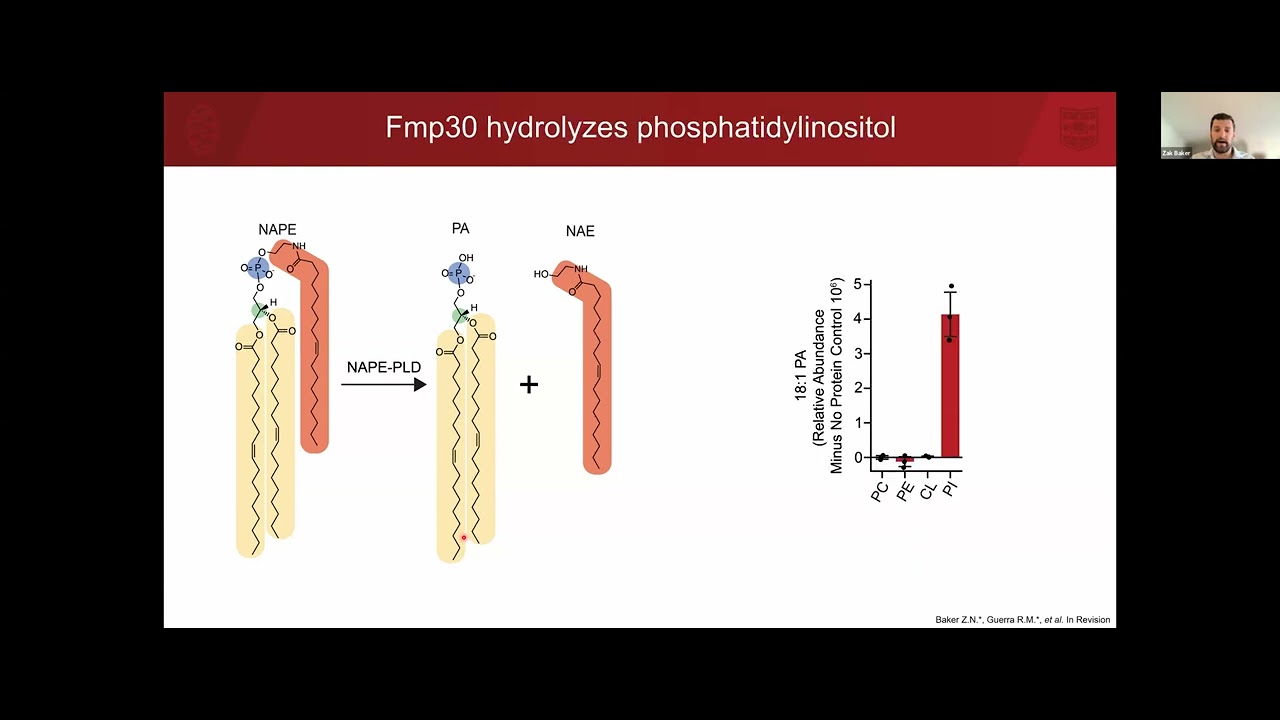
The presentations provide valuable insights into the understudied role of phosphatidylinositol in mitochondrial function and the adaptive responses to lipid saturation changes. Baker’s argumentation is rigorous, combining multi-omics data, biochemical assays, and genetic rescue experiments to support his model. He clearly demonstrates that FMP30 acts as a PI-specific phospholipase D and that PI levels modulate CoQ biosynthesis through the formation of CoQ domains. Wong’s presentation is more preliminary but introduces a novel concept of MDC formation as a response to lipid saturation, with supporting evidence from microscopy and lipidomics. Both speakers effectively use controls and quantitative data to strengthen their claims.
Scientific Rigor, Source Quality, Title Accuracy
The seminar is scientifically rigorous, with Baker’s work being published in Nature Cell Biology and the other presentation based on ongoing research. The sources cited are primarily the speakers’ own work and relevant literature, though specific references are not explicitly mentioned in the talk. The title accurately reflects the content, focusing on lipid metabolism and mitochondria. The seminar is well-structured and the speakers demonstrate expertise in their fields. The Q&A session adds credibility by addressing potential technical concerns.
194 words
Title / Content Match
The title accurately reflects the content: two presentations on lipid metabolism and mitochondria.
Quality & Reliability
8/10
The seminar presents original research from two early-career researchers, with detailed methodology and data. The content is peer-reviewed context (one talk is based on a Nature Cell Biology publication). The presentations are technical and specific, with clear experimental logic. However, as a seminar, it lacks the full rigor of a published paper, and some data are unpublished.
Key Moments
Markers derived by PSI from the transcript: the creator did not define chapters.
- Introduction to the seminar and speakers by the host.
- Zak Baker begins his talk on coenzyme Q and its importance.
- Baker introduces FMP30 as a regulator of CoQ biosynthesis.
- Baker presents evidence that FMP30 is a PI-specific phospholipase D.
- Baker shows that mitochondrial PI levels affect CoQ domain formation.
- Baker discusses rescue of CoQ deficiency in yeast and mammalian cells.
- Sara Wong begins her talk on lipid saturation and OMM remodeling.
- Wong presents data on MDC formation in response to unsaturated fatty acids.
- Q&A session with questions from the audience.
Cited Sources
- Nature Cell Biology publication on TAG lipases and mitochondrial stress recovery — Mentioned by the host as Baker's previous work.
- Y3K dataset — Baker's lab's multi-omics dataset used to identify FMP30.
Concurring Sources
- Nature Cell Biology publication on TAG lipases and mitochondrial stress recovery — Baker's previous work aligns with the current findings on mitochondrial lipid regulation.
Contribution & Novelties
The seminar provides novel insights into the regulation of coenzyme Q biosynthesis by mitochondrial phosphatidylinositol levels, identifying FMP30 as a key enzyme. It also introduces the concept of mitochondrial-derived compartments as a response to lipid saturation changes. These findings open new avenues for understanding mitochondrial lipid homeostasis and potential therapeutic strategies for CoQ deficiency.
Pour aller plus loin :
- Coenzyme Q biosynthesis — Overview of CoQ structure and function.
- Phospholipase D — General information on PLD enzymes.
- Mitochondrial lipid metabolism — Review on mitochondrial lipids and their roles.
88 words
Radar Profile
The radar profile shows high scores across all dimensions, indicating a well-rounded and reliable seminar. The technical depth and information quality are particularly strong, while the overall score is slightly lower due to the seminar format and unpublished data.