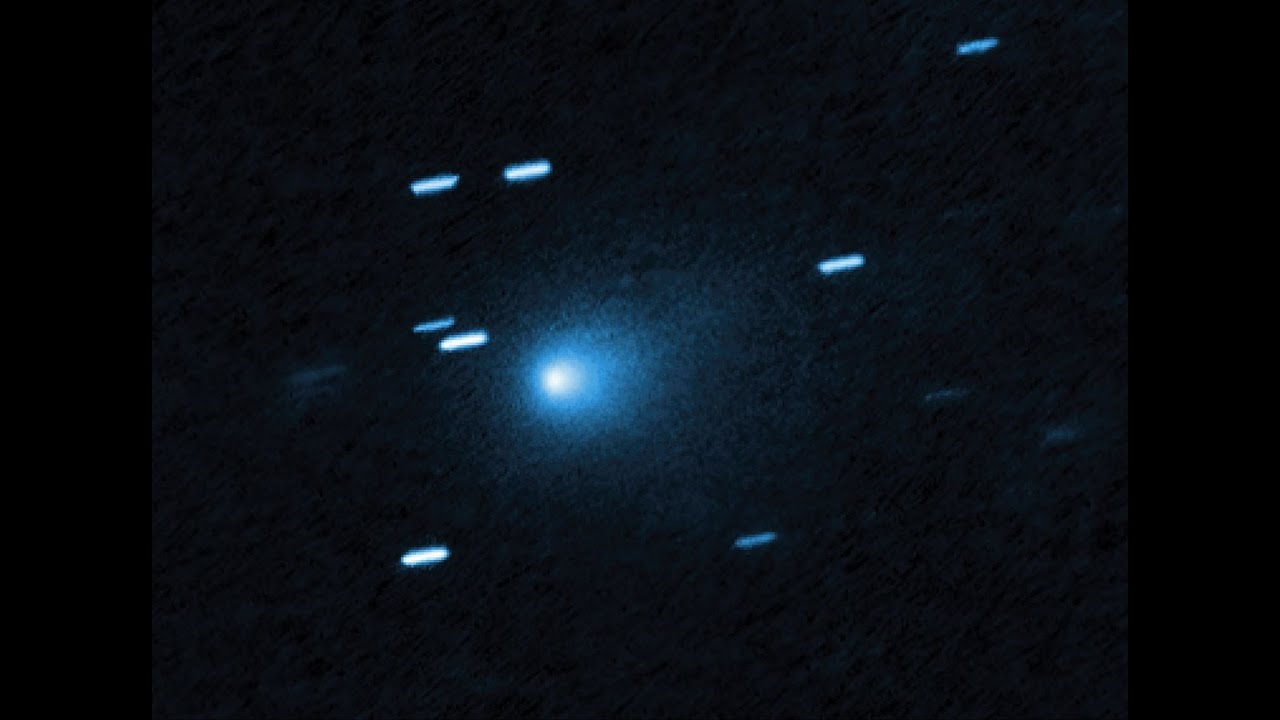
3i/ATLAS Interstellar Comet Update for September 22, 2025
Keywords
Summary
154 words
Critical Evaluation
Value of the Information & Strength of the Argument
The video provides valuable, up-to-date information on a rapidly evolving astronomical event. The presenter clearly explains complex concepts such as polarimetry and exclusion zones, making them accessible without oversimplifying. The argumentation is solid, based on observations from reputable instruments like Hubble, JWST, and the Very Large Telescope. The presenter distinguishes between confirmed data and hypotheses, such as the object’s age and origin, which are described as educated guesses. The explanation of why certain observations are not possible (e.g., Hubble’s exclusion zone) is logical and well-articulated, addressing common questions from the audience.
Scientific Rigor, Source Quality, Title Accuracy
The video demonstrates scientific rigor by referencing specific observatories and missions, including the Very Large Telescope, Nordic Optical Telescope, Rozhen Observatory, Hubble, JWST, Mars Express, ExoMars TGO, JUICE, SOHO, and MRO. The information is presented without sensationalism, and the presenter acknowledges uncertainties. The title accurately reflects the content, which is a factual update. The description provides links to the music used and the presenter’s other channel, but no direct scientific sources are listed. However, the video’s content aligns with known scientific methods and recent announcements, such as ESA’s confirmation of observations.
197 words
Title / Content Match
The title accurately reflects the content: a status update on the comet 3i/ATLAS as of September 22, 2025.
Quality & Reliability
8/10
The video presents a factual update on the interstellar comet 3i/ATLAS, citing observations from major telescopes and space missions. The information is consistent with known scientific methods and the presenter avoids speculation, clearly distinguishing confirmed data from hypotheses.
Key Moments
Markers derived by PSI from the transcript: the creator did not define chapters.
- Introduction to the update and the comet's green hue.
- Discussion of the comet's chemistry, including dicarbon and carbon dioxide.
- Explanation of polarimetric observations and the high negative polarization.
- Why Hubble and JWST cannot observe the comet due to exclusion zones.
- Planned observations by Mars orbiters and other spacecraft.
- Upcoming events: Mars close approach and perihelion, and future visibility.
Cited Sources
- Cylinder Eight by Chris Zabriskie — Background music used in the video.
- Creative Commons Attribution 4.0 license — License for the music.
- Event Horizon Show — The presenter's other YouTube channel.
Concurring Sources
- ESA confirms observations of 3I/ATLAS — ESA announced that Mars Express and ExoMars TGO will observe 3I/ATLAS during its close approach.
- NASA's MRO to observe comet — NASA's Mars Reconnaissance Orbiter is expected to observe the comet, given its history of comet observations.
Dissenting Sources
- Potential origin of 3I/ATLAS — The video suggests an origin in the thick galactic disk with an age of about 7 billion years, but this is described as circumstantial and not robust.
Contribution & Novelties
The video provides a timely update on 3i/ATLAS, highlighting recent observations and the scientific community’s response. It adds value by explaining the implications of the comet’s unusual chemistry and polarization, and by clarifying the constraints on observations from space telescopes. The presenter’s approach of separating confirmed data from speculation is commendable.
Pour aller plus loin :
- Interstellar object — Provides background on interstellar objects and their significance.
- Comet — Overview of comet composition and behavior.
- Polarimetry — Explanation of the technique used to measure polarization.
- James Webb Space Telescope — Information on JWST and its capabilities.
- Hubble Space Telescope — Details on Hubble’s instruments and limitations.
106 words
Radar Profile
The radar profile shows high scores across all dimensions, with a slight dip in technical level, indicating a well-balanced and accessible presentation. The video excels in providing reliable, up-to-date information while maintaining scientific rigor.
💬 Très positif. Sur les 30 commentaires analysés, la grande majorité exprime une forte appréciation pour le contenu factuel et non sensationnaliste, ainsi que pour la qualité de la narration humaine, avec quelques commentaires personnels touchants sur l'impact de la chaîne.