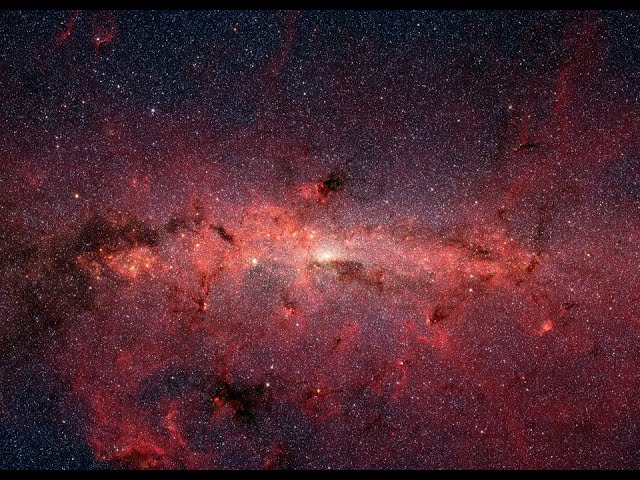
Did Earth Start With an Interstellar Object?
Keywords
Summary
207 words
Critical Evaluation
Value of the Information & Strength of the Argument
The video’s value lies in its clear presentation of a cutting-edge, speculative hypothesis in planetary science. It effectively synthesizes two distinct research papers (Moro-Martin & Norman 2021; Soker & Tsebrenko 2015) into a coherent narrative, connecting them to broader questions in astrobiology and the origin of life. The argumentation is logical and transparent: it states the problem (meter-size barrier), presents a potential solution (ISO seeding), and then explores the implications and a new question (origin of ISOs). The host is careful to label speculation as such, using phrases like ‘one candidate I would toss out there’ and ‘we shall see, I’m just tossing it out there,’ which maintains intellectual honesty. However, the argumentation is not a rigorous scientific demonstration; it is a well-structured thought experiment that relies on the plausibility of the cited models and the host’s own reasoning, without critical evaluation of the papers’ assumptions or limitations.
Scientific Rigor, Source Quality, Title Accuracy
The video demonstrates good scientific rigor by directly referencing and linking to two specific arXiv papers, which are the primary sources for the central claims. The host accurately represents the key findings of these papers (e.g., the number of captured ISOs, the supernova bullet model). The title is an accurate and engaging summary of the content. The video does not overstate the certainty of the hypothesis, and it clearly distinguishes between established facts (e.g., detection of ISOs) and speculative extensions (e.g., ISOs as seeds for all planets). The main weakness is the lack of critical analysis of the cited papers; the host presents their conclusions as plausible without discussing potential counterarguments or limitations. The description also includes links to the papers, which is good practice. Overall, the sourcing is appropriate for a science communication video, though it could benefit from more critical depth.
306 words
Title / Content Match
The title accurately reflects the video's central question and content.
Quality & Reliability
7/10
The video presents a speculative but scientifically grounded hypothesis, referencing two specific arXiv papers. The reasoning is logical and clearly distinguishes between established science and speculation. However, the speculative nature of the central idea and the lack of direct expert interviews or peer-reviewed synthesis limit the score.
Key Moments
Markers derived by PSI from the transcript: the creator did not define chapters.
- Introduction to interstellar objects and their recent detections (Oumuamua, Borisov).
- Explanation of the meter-size barrier in planet formation.
- Introduction of the hypothesis that interstellar objects could overcome the meter-size barrier.
- Discussion of the Moro-Martin & Norman paper and the estimated number of captured interstellar objects.
- Speculation on interstellar objects as seeds for Earth and the Moon-forming impact.
- Discussion of interstellar objects as carriers of life's building blocks (phosphorus, amino acids).
- Exploration of the Sun's sibling stars and the possibility of material exchange between systems.
- Introduction of the new mystery: what created the first interstellar objects? Proposal of supernova bullets.
- Conclusion and summary of the speculative nature of the hypothesis.
Cited Sources
- Interstellar planetesimals: potential seeds for planet formation? — Referenced as the primary source for the model estimating the number of interstellar objects captured by a young star system.
- Type Ia Supernova Remnants: Shaping by Iron Bullets — Referenced as the source for the 'supernova bullet' model, proposed as a potential origin for the first interstellar objects.
- Event Horizon Show — Mentioned as the host's other channel, not a scientific source.
Concurring Sources
- Interstellar planetesimals: potential seeds for planet formation? — The paper's conclusion that young star systems can capture a large number of interstellar objects supports the video's central hypothesis.
Dissenting Sources
- No discordant sources found — The video does not present any sources that contradict its main hypothesis. The speculative nature of the content is acknowledged by the host.
External References
Contribution & Novelties
The video’s original contribution is its synthesis of two distinct research areas—interstellar object capture and supernova bullet models—into a coherent narrative that proposes a novel solution to the meter-size barrier in planet formation. It also connects this hypothesis to broader astrobiological questions, such as the distribution of phosphorus and the transfer of amino acids, and raises a new ‘chicken-and-egg’ question about the origin of the first interstellar objects. This speculative synthesis is thought-provoking and may inspire further research.
Pour aller plus loin :
- Meter-size barrier in planet formation — Wikipedia article on planetesimal formation, which discusses the meter-size barrier and related challenges.
- Oumuamua — Wikipedia article on the first detected interstellar object, providing context on its discovery and unusual properties.
- Vera C. Rubin Observatory — Wikipedia article on the upcoming observatory, which is expected to detect many more interstellar objects and test the hypotheses presented in the video.
148 words
Radar Profile
The radar profile shows a balanced performance across all dimensions, with slightly higher scores in information quality and technical level, reflecting the video's strength in presenting a coherent and scientifically grounded narrative. The lower score in information quantity suggests that the video could have explored some aspects in more depth, but overall it is a solid science communication piece.
💬 Très positif. Sur les 30 commentaires analysés, l'écrasante majorité exprime une forte appréciation du contenu, de la narration et de la qualité de la réflexion, avec quelques commentaires engageant scientifiquement sur le sujet.