10 of the Milky Way's Most Interesting Stars
Keywords
Summary
190 words
Critical Evaluation
Value of the Information & Strength of the Argument
The video provides a wealth of interesting and accurate information about unusual stars, effectively communicating complex astrophysical concepts in an accessible manner. The argumentation is generally solid, presenting scientific findings and hypotheses clearly, with appropriate caveats for speculative topics like alien megastructures. The structure of the list is engaging, building from relatively known objects to the Sun as the ultimate ‘interesting’ star.
Scientific Rigor, Source Quality, Title Accuracy
The video demonstrates scientific rigor by accurately describing the phenomena and citing relevant research contexts (e.g., Kepler mission, predictions of white dwarf crystallization). However, specific sources are not cited in the video or description, limiting verifiability. The title is perfectly adequate, as the content directly matches the promise of listing interesting stars. The description provides links to the creator’s other channels and music credits, but no scientific references.
145 words
Title / Content Match
The title accurately reflects the content, which enumerates ten specific stars with interesting properties.
Quality & Reliability
8/10
The video presents well-established astronomical phenomena and recent discoveries, with accurate descriptions of stellar evolution, binary systems, and unusual stars. The information is consistent with current scientific consensus, though some speculative elements (e.g., alien megastructures) are clearly presented as hypotheses.
Key Moments
Markers derived by PSI from the transcript: the creator did not define chapters.
- Introduction to the Milky Way's star population and the list's premise.
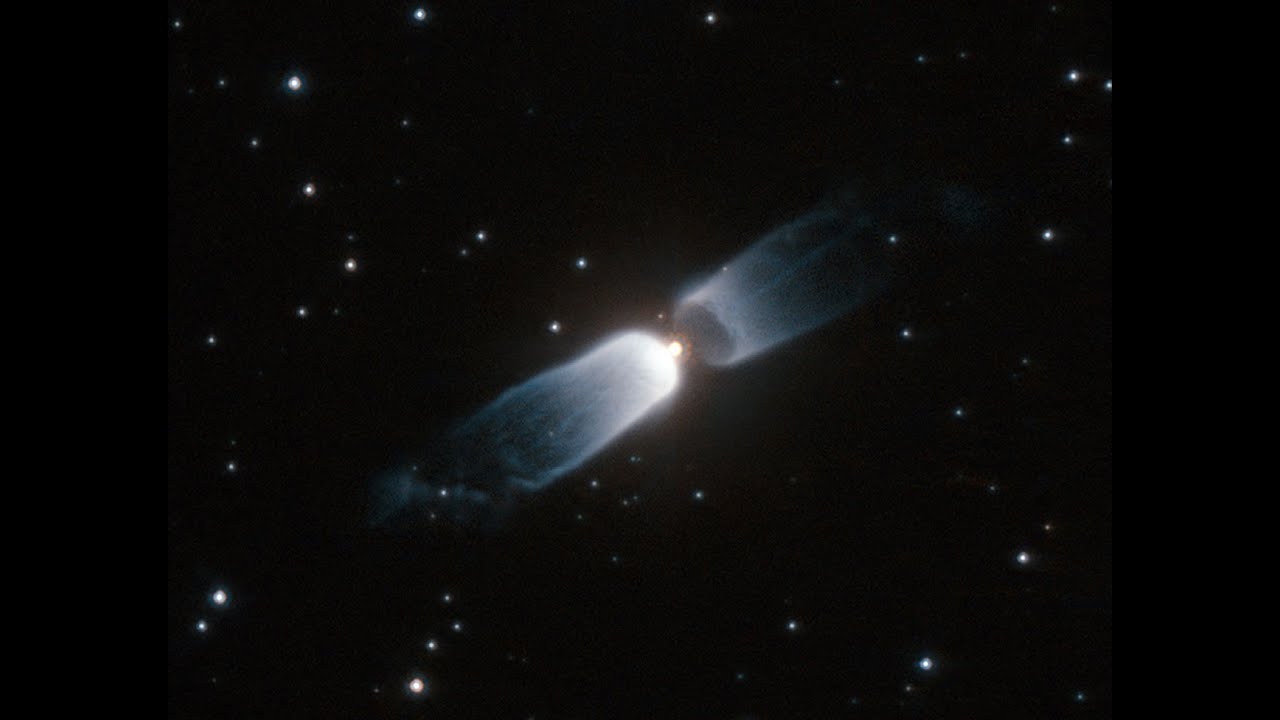
- Mira: binary system with red giant and white dwarf, comet-like tail, protoplanetary disk.
- SAO 206462: young star with spiral protoplanetary disk shaped by planets.
- BPM 37093: crystallized white dwarf, 'diamond star'.
- HE 0437-5439: hypervelocity star being ejected from the galaxy.
- MY Camelopardalis: contact binary system of massive O-type stars.
- UY Scuti: one of the largest known stars, red supergiant.
- Apep: triple system with Wolf-Rayet stars, potential gamma-ray burst progenitor.
- Vega: nearby bright star with debris disk and rapid rotation.
- VVV-WIT-07: mysterious deep dimming events.
Cited Sources
- Event Horizon Show — Creator's talk show channel mentioned in the description.
- Chris Zabriskie - Cylinders — Music source for the video.
- Creative Commons Attribution License — License for the music used.
Concurring Sources
- NASA Exoplanet Archive — General resource for exoplanet and stellar data.
External References
Contribution & Novelties
The video synthesizes recent astronomical discoveries into an engaging list, highlighting lesser-known stars like VVV-WIT-07 and the potential for planet formation around white dwarfs. It emphasizes the Sun’s unusual stability and single-star status, offering a fresh perspective on our own star’s role in the emergence of life.
Pour aller plus loin :
- White dwarf — Background on white dwarfs and crystallization.
- Hypervelocity star — Explanation of stars ejected from galaxies.
- Tabby’s Star — The famous dimming star mentioned in the video.
- Wolf–Rayet star — Details on these massive, hot stars.
- Protoplanetary disk — Context for planet formation around young stars.
100 words
Radar Profile
The radar profile shows high scores in information quantity and quality, with a moderate technical level, indicating content that is informative yet accessible. The global reliability is high, reflecting accurate scientific presentation.
💬 Très positif. Sur les 30 commentaires analysés, les spectateurs expriment une admiration constante pour le contenu et le style apaisant du narrateur, le qualifiant souvent de 'meilleur avant de dormir' et louant sa capacité à éduquer tout en relaxant.