10 Interesting Scientific Discoveries for September of 2025
Keywords
Summary
195 words
Critical Evaluation
Value of the Information & Strength of the Argument
The video provides a valuable overview of recent scientific developments, presenting each discovery with sufficient context to convey its significance. The argumentation is generally solid, with the presenter explaining the background and implications of each finding. For instance, the segment on the potential non-collision of the Milky Way and Andromeda clearly outlines the role of the Large Magellanic Cloud and the uncertainty in the models. Similarly, the discussion on dark matter consuming stars presents a plausible hypothesis to explain observed paradoxes, while acknowledging the speculative nature of dark matter physics. The presenter maintains a balanced tone, often noting when further research is needed. However, the depth of explanation varies; some topics, like the stone tools, could benefit from more detail on the evidence and competing hypotheses. Overall, the video serves as a good starting point for viewers interested in recent science, but it does not delve deeply into the underlying research.
Scientific Rigor, Source Quality, Title Accuracy
The video demonstrates a reasonable level of scientific rigor, with the presenter accurately summarizing the discoveries and often mentioning the institutions or researchers involved (e.g., Stockholm University, Gemini North telescope). However, the lack of explicit citations or links to primary sources in the description is a notable weakness. The description only includes links to the presenter’s Patreon, his other channel, and music credits, not to the scientific papers or news articles. This limits the viewer’s ability to verify the information or explore the topics further. The title accurately reflects the content, and the video is well-structured with a clear countdown format. The presenter’s cautious language, such as ‘may’ and ‘could,’ appropriately conveys the uncertainty inherent in scientific findings. Overall, the video is informative but would benefit from providing references to support its claims.
299 words
Title / Content Match
The title accurately reflects the content: a list of ten scientific discoveries from September 2025, presented in a clear countdown format.
Quality & Reliability
7/10
The video presents a curated list of recent scientific discoveries, each summarized with reasonable accuracy and context. While it does not provide detailed citations or links to primary sources, the information aligns with known scientific topics and the presenter maintains a cautious, non-sensational tone. The main limitations are the lack of direct references and the reliance on secondary reporting.
Key Moments
Markers derived by PSI from the transcript: the creator did not define chapters.
- Introduction to the list of 10 discoveries
- Number 10: The Rye Shipwreck Resurrection - extinct rye strain revived from 1878 shipwreck
- Number 9: Barnard's Star and its planets - four planets confirmed around nearest single star
- Number 8: Milky Way and Andromeda may not collide - Large Magellanic Cloud influence
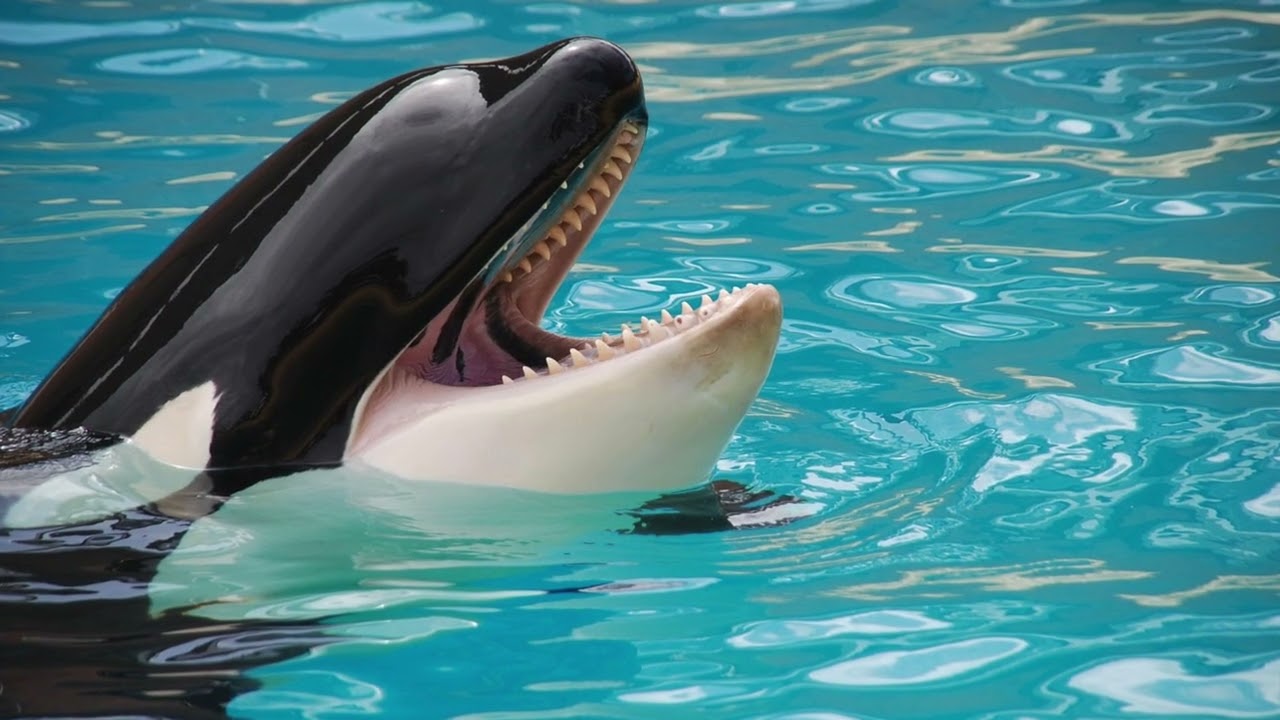
- Number 7: Orcas giving gifts - orcas offer dead birds and other items to researchers
- Number 6: A mysterious potentially new kind of star - two cold, infrared-emitting objects
- Number 5: New ideas on stone tools - early tools may have been inspired by natural fractures
- Number 4: A curious red supergiant - DFK-52's unusually large gas bubble
- Number 3: Dinosaurs may have first evolved at the equator - new modeling
- Number 2: Dark matter consuming immortal stars - dark matter particles trapped in stars
- Number 1: Lost shark species spotted after 50 years - sailback hound shark rediscovered
Cited Sources
- Event Horizon Show — The presenter's other channel, mentioned in the description as a related resource.
- Cylinder Eight by Chris Zabriskie — Music used in the video, licensed under Creative Commons.
- Creative Commons Attribution 4.0 license — License for the music used in the video.
Concurring Sources
- Barnard's Star — Confirms the existence of planets around Barnard's Star.
- Large Magellanic Cloud — Provides context on the galaxy's mass and gravitational influence.
- Theory of mind — Relevant to the discussion of orca intelligence and gift-giving behavior.
Dissenting Sources
- Milky Way–Andromeda collision — The video suggests the collision may not happen, but this article presents the collision as a likely future event, though it acknowledges uncertainties.
Contribution & Novelties
The video compiles recent scientific discoveries into an accessible format, highlighting lesser-known findings such as the resurrection of an extinct rye strain and the rediscovery of a shark species. It also presents emerging hypotheses, like the potential non-collision of the Milky Way and Andromeda, and the role of dark matter in stellar aging, which may not be widely covered in mainstream media. The presenter adds personal commentary, such as advocating for heirloom plant preservation, which adds a human touch.
Pour aller plus loin :
- Barnard’s Star — Provides background on the star and its planetary system.
- Large Magellanic Cloud — Context for the gravitational influence on the Milky Way-Andromeda collision.
- Theory of mind — Relevant to the discussion of orca intelligence and gift-giving behavior.
- Dark matter — Overview of dark matter and its potential interactions with stars.
- Sailback hound shark — Information on the rediscovered shark species.
147 words
Radar Profile
The radar profile shows a balanced performance across all dimensions, with slightly higher scores in quantity of information and technical level, reflecting the video's comprehensive coverage of diverse scientific topics. The lower score in quality of information is due to the lack of direct citations and the reliance on secondary reporting.
💬 Très positif. Sur les 30 commentaires analysés, la grande majorité exprime une appréciation chaleureuse pour le contenu, soulignant la qualité apaisante et instructive des vidéos, avec un intérêt particulier pour les segments sur les orques et la redécouverte du requin.