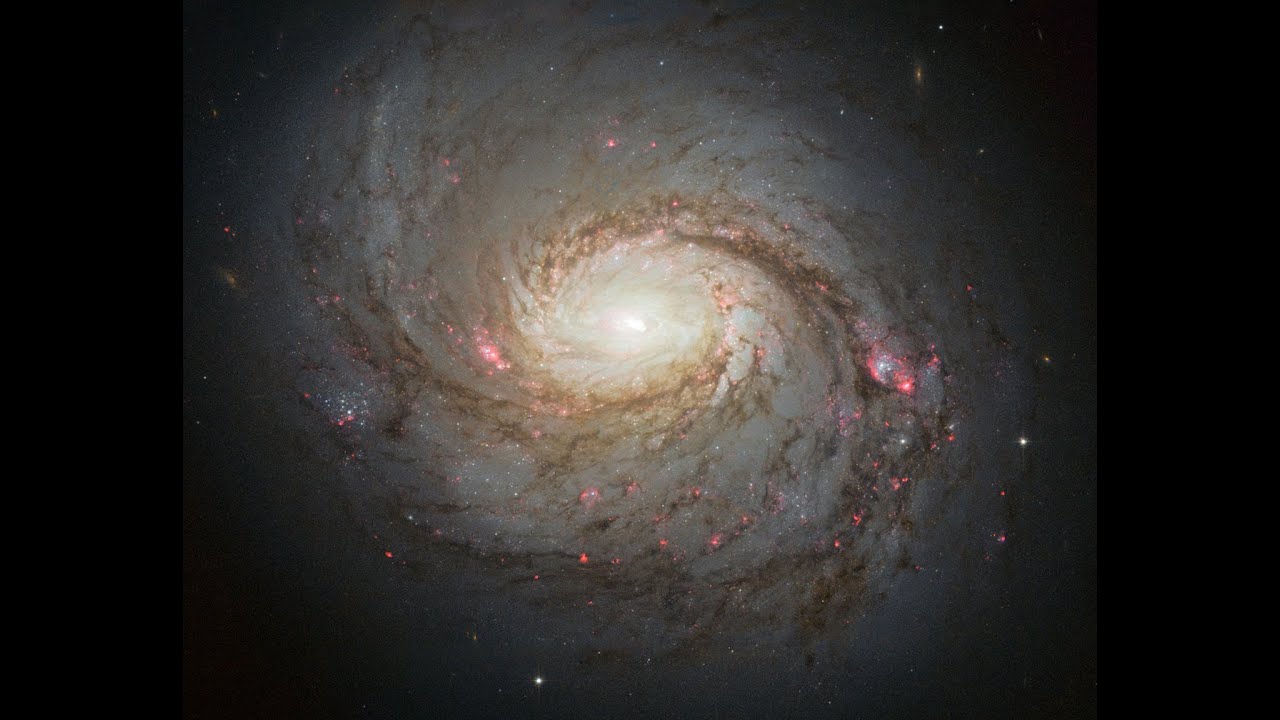
Extragalactic Stars and Planets
Keywords
Summary
176 words
Critical Evaluation
Value of the Information & Strength of the Argument
The video provides a valuable synthesis of current knowledge and hypotheses about extragalactic planets, a niche but fascinating topic. It effectively communicates the challenges of detection and the scientific basis for considering life on rogue planets. The argumentation is logical and well-structured, moving from known detections to speculative scenarios, while clearly marking the boundary between established science and conjecture. The inclusion of specific examples (e.g., the Andromeda planet, the Whirlpool galaxy system) strengthens the credibility. However, the video could have benefited from more detailed explanations of the detection methods and the statistical likelihood of such planets.
Scientific Rigor, Source Quality, Title Accuracy
The video demonstrates a good level of scientific rigor, referencing real detection methods and known candidates. However, it does not provide direct citations or links to the scientific papers, which limits the viewer’s ability to verify the claims. The title is accurate and not misleading. The content is consistent with the channel’s focus on space and astronomy, and the narrator’s background as a science fiction author is transparent. The video does not include any obvious misinformation, but the lack of sources is a minor weakness.
196 words
Title / Content Match
The title accurately reflects the content, which focuses on stars and planets outside the Milky Way, including rogue planets and hypothetical civilizations.
Quality & Reliability
7/10
The video presents a scientifically plausible overview of extragalactic planets and rogue planets, referencing real detection methods (microlensing, X-ray eclipses) and known candidates. It avoids speculative claims by clearly distinguishing between confirmed detections and theoretical possibilities. However, it lacks detailed citations and does not discuss the limitations of the methods in depth.
Key Moments
Markers derived by PSI from the transcript: the creator did not define chapters.
- Introduction to the Milky Way's habitable zone and the possibility of ejected star systems.
- Explanation of why extragalactic planets are difficult to detect, with examples of distant planets in the Milky Way.
- Discussion of indirect detections: the 1996 microlensing event and the Andromeda exoplanet.
- Discovery of rogue planets in the lensing galaxy of quasar RX J1131-1231.
- Potential energy sources for life on rogue planets: geothermal heating and tidal flexing.
- Speculation on intelligent life under ice shells and the limitations of aquatic civilizations.
- Convergent evolution as a guide to imagining alien life, with examples like dolphins and sharks.
- Advanced civilizations in intergalactic space, including the concept of a shadow thruster megastructure.
Cited Sources
- Chris Zabriskie - Cylinders — Music used in the video, licensed under Creative Commons.
- Creative Commons Attribution 4.0 License — License for the music used in the video.
Concurring Sources
- Extragalactic planet - Wikipedia — Supports the existence of extragalactic planet candidates and detection methods.
- Rogue planet - Wikipedia — Provides background on rogue planets and their potential for life.
External References
Contribution & Novelties
The video offers a unique perspective on a rarely discussed topic: planets and stars that exist outside galaxies. It synthesizes current scientific knowledge and hypotheses, making it accessible to a general audience. The discussion of potential life on rogue planets and the constraints on civilization development is thought-provoking and adds to the popular science discourse.
Pour aller plus loin :
- Extragalactic planet - Wikipedia — Overview of known candidates and detection methods.
- Rogue planet - Wikipedia — Detailed information on free-floating planets and their potential for habitability.
- Gravitational microlensing - Wikipedia — Explanation of the technique used to detect some of the mentioned planets.
- Convergent evolution - Wikipedia — Concept discussed in the video as a guide to imagining alien life.
121 words
Radar Profile
The radar profile shows a balanced performance with high scores in information quality and reliability, but slightly lower in technical depth and quantity. This suggests the video is a solid introduction to the topic, suitable for a general audience, but may not satisfy viewers seeking in-depth technical details.
💬 Très positif. Sur les 30 commentaires analysés, l'écrasante majorité exprime une forte appréciation, mentionnant la voix apaisante, le contenu intéressant et la qualité constante de la chaîne. Aucun commentaire négatif n'a été relevé.