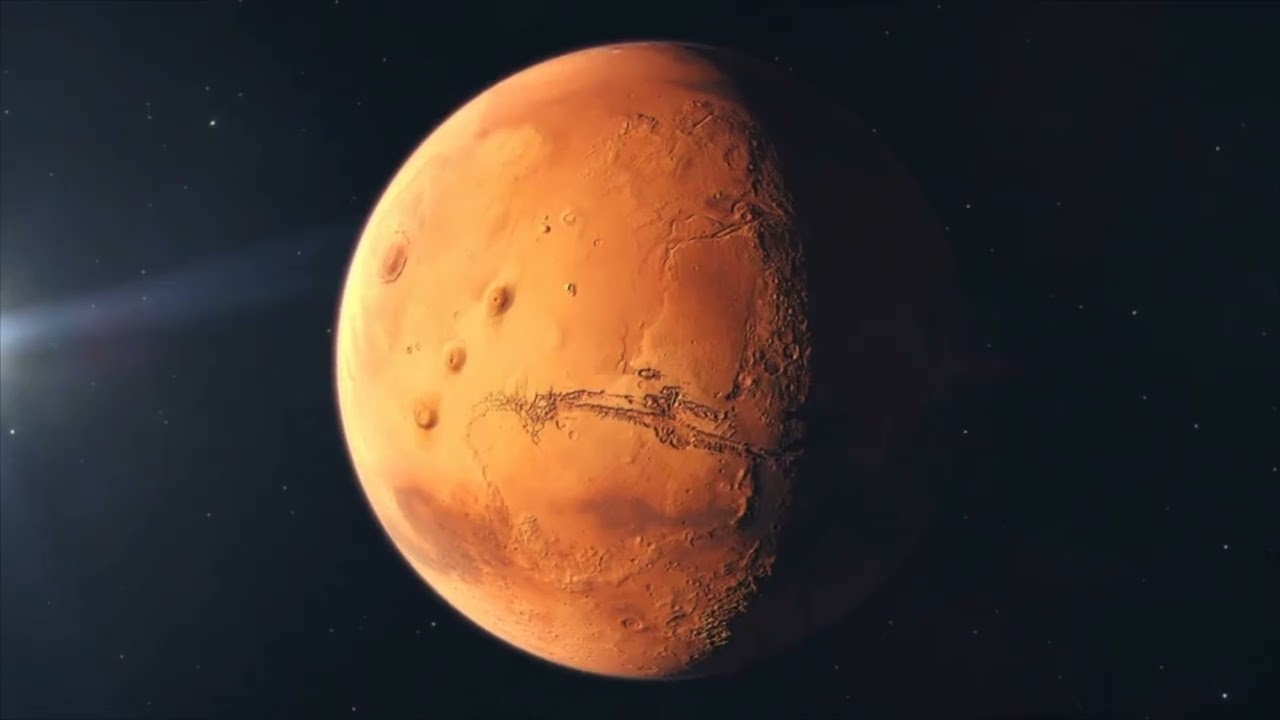
The Strange Mysteries of the Moons of Mars
Keywords
Summary
165 words
Critical Evaluation
Value of the Information & Strength of the Argument
The video provides valuable information by synthesizing current scientific hypotheses about the origin of Mars’ moons and presenting the upcoming MMX mission in detail. The argumentation is logical, systematically comparing capture versus impact scenarios and using orbital dynamics to support the impact hypothesis. It also connects the topic to broader concepts like the Rare Earth hypothesis and the potential for past life on Mars, adding depth. However, the video does not cite specific studies or data, relying on general scientific consensus, which slightly weakens the argumentative rigor.
Scientific Rigor, Source Quality, Title Accuracy
The scientific rigor is moderate; the video presents plausible hypotheses but lacks explicit references to peer-reviewed literature. The quality of sources is not directly addressed, as no specific papers are mentioned. The title accurately reflects the content, focusing on the enigmatic nature of the moons. The video is a science communication piece, so it simplifies complex topics but does so without major inaccuracies. The lack of citations is a notable weakness for a scientifically rigorous analysis.
178 words
Title / Content Match
The title accurately reflects the content, focusing on the enigmatic nature and origin of Mars' moons.
Quality & Reliability
7/10
The video presents a well-structured overview of current hypotheses and mission details, but lacks explicit citations to primary sources, relying on general scientific consensus.
Key Moments
Markers derived by PSI from the transcript: the creator did not define chapters.
- Introduction to the mystery of Phobos and Deimos' origin.
- Discussion of the capture hypothesis and its statistical improbability.
- Introduction of the giant impact hypothesis and its implications for the Rare Earth hypothesis.
- Physical characteristics of Phobos and Deimos, including size and orbit.
- Discussion of the dark surfaces and possible carbonaceous composition.
- Potential for past moons and the fate of Phobos and Deimos.
- Overview of the JAXA MMX mission and its objectives.
- Conclusion and the potential for new mysteries.
Cited Sources
- Event Horizon Show — Related channel by the same author, mentioned in the description.
- Cylinder Five by Chris Zabriskie — Music used in the video, linked in the description.
- Creative Commons Attribution 4.0 License — License for the music used, linked in the description.
Concurring Sources
- JAXA MMX Mission — Official mission page, consistent with the video's description of the mission.
Contribution & Novelties
The video synthesizes current hypotheses about the origin of Mars’ moons and presents the upcoming MMX mission as a key to resolving them. It highlights the potential for the mission to provide indirect samples of Mars, which would be a significant scientific achievement. The discussion of the Rare Earth hypothesis and its connection to the moons adds a broader perspective.
Pour aller plus loin :
- Martian Moons eXploration (MMX) mission — Official JAXA page for the mission, providing detailed technical information.
- Rare Earth hypothesis — Wikipedia article discussing the conditions for complex life, including the role of a large moon.
- Giant impact hypothesis — Wikipedia article on the leading theory for the formation of Earth’s Moon, relevant to the impact origin scenario for Mars’ moons.
125 words
Radar Profile
The radar profile shows high scores in quantity of information and fiabilite, but lower in niveau technique, indicating a broad but not deeply technical presentation. The video is informative and reliable for a general audience, but lacks the technical depth of a specialized lecture.
💬 No comments were provided for analysis.