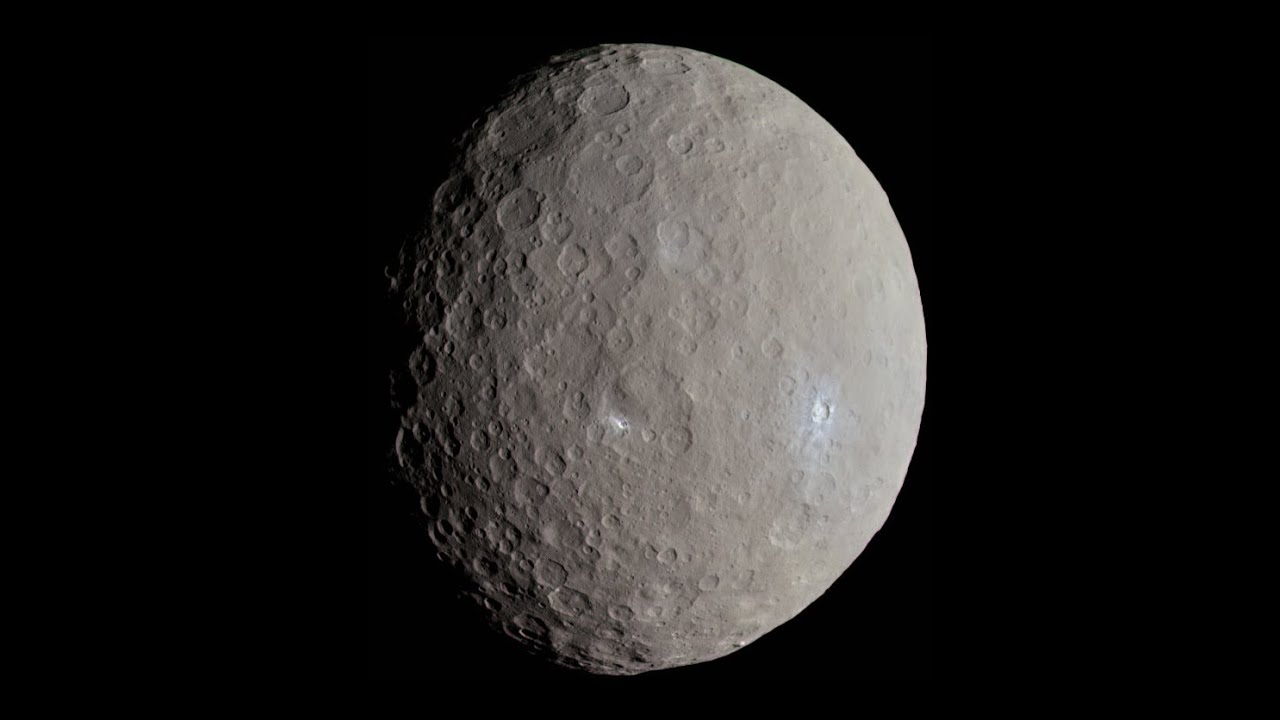
The Possibilities of Asteroid Life and Ceres Strangeness
Keywords
Summary
170 words
Critical Evaluation
Value of the Information & Strength of the Argument
The video provides valuable information by synthesizing recent scientific findings about Ceres and asteroid habitability, making complex topics accessible to a general audience. The argumentation is generally solid, building a case for Ceres as a potential habitat for microbial life based on evidence from the Dawn mission and comparisons with Ryugu. The presenter logically connects the presence of water, energy sources, and organic compounds to the possibility of abiogenesis. However, some speculative elements, such as the potential for panspermia and the implications for the Fermi paradox, are presented with less scientific rigor and more as thought-provoking ideas. The overall argument is coherent and well-structured, though it could benefit from more explicit citations to primary sources.
Scientific Rigor, Source Quality, Title Accuracy
The video demonstrates a good level of scientific rigor by referencing key missions (Dawn, Hayabusa2) and scientific concepts (differentiation, cryovolcanism, redox reactions). The presenter, John Michael Godier, is a known science communicator with a background in futurism and science fiction, which lends credibility but also introduces a speculative element. The description provides links to the music used and to the presenter’s other channels, but no direct links to scientific papers or mission pages, which limits the verifiability of the claims. The title accurately reflects the content, and the video stays on topic throughout. The adéquation between title and content is strong, with no significant discrepancies.
235 words
Title / Content Match
The title accurately reflects the content, which focuses on the potential for microbial life on asteroids, with a particular emphasis on the dwarf planet Ceres.
Quality & Reliability
7/10
The video presents a well-informed overview of current scientific understanding of Ceres and asteroid habitability, drawing on NASA's Dawn mission and JAXA's Hayabusa2 mission. The information is generally accurate and up-to-date, though it includes some speculative elements and lacks detailed citations. The presenter's expertise is evident, but the content is presented in a popular science format rather than a rigorous academic review.
Key Moments
Markers derived by PSI from the transcript: the creator did not define chapters.
- Introduction to Ceres as a dwarf planet and its classification history.
- Discovery of Ceres by Giuseppe Piazzi and its reclassification as an asteroid.
- Dawn mission findings: Ceres's surface composition, differentiation, and cryovolcanism.
- Ahuna Mons as a cryovolcano and its possible formation from an impact.
- Evidence of subsurface brines and bright salt deposits on Ceres.
- Comparison with Ryugu asteroid and evidence of long-lasting liquid water.
- Implications for water delivery to Earth and the role of asteroid belts in habitability.
- Discussion of panspermia and the Fermi paradox in the context of microbial life on asteroids.
Cited Sources
- Event Horizon Show — Mentioned as the presenter's other channel for in-depth explorations.
- Cylinder Eight by Chris Zabriskie — Background music used in the video, licensed under Creative Commons.
- Cylinder Five by Chris Zabriskie — Background music used in the video, licensed under Creative Commons.
- Creative Commons Attribution 4.0 License — License for the music used in the video.
Concurring Sources
- NASA Dawn Mission — Provides data on Ceres's surface composition, cryovolcanism, and evidence of subsurface brines, supporting the video's claims.
- JAXA Hayabusa2 — Mission page detailing the Ryugu sample analysis, including evidence of water alteration and isotope anomalies.
Dissenting Sources
- No direct discordant sources found — The video's claims are generally consistent with current scientific consensus, though some speculative aspects (e.g., panspermia) are not universally accepted.
Contribution & Novelties
The video provides a fresh perspective on asteroid habitability by highlighting Ceres as a ‘relict world’ with potential for microbial life, distinct from both Earth-like planets and icy moons. It synthesizes recent findings from the Dawn mission and the Ryugu sample return to argue that asteroids could be significant reservoirs of water and possibly life. The discussion of the role of asteroid belts in delivering water to habitable planets and the implications for panspermia adds a novel angle to the astrobiology discourse.
Pour aller plus loin :
- NASA Dawn Mission — Official mission page with detailed findings on Ceres and Vesta.
- JAXA Hayabusa2 — Official mission page for the Ryugu sample return, including scientific results.
- Ceres (dwarf planet) - Wikipedia — Comprehensive overview of Ceres, its geology, and exploration.
- Panspermia - Wikipedia — Overview of the hypothesis that life can be transferred between celestial bodies.
- Snow line (astronomy) - Wikipedia — Explanation of the snow line and its role in planetary formation.
162 words
Radar Profile
The radar profile shows a balanced performance across all dimensions, with slightly higher scores in information quantity and quality, reflecting the video's comprehensive yet accessible approach. The technical level is moderate, making it suitable for a general audience, while the reliability score indicates a generally trustworthy presentation of scientific facts.
💬 Très positif. Sur les 30 commentaires analysés, la grande majorité exprime une appréciation chaleureuse et enthousiaste, saluant la qualité des vidéos, l'intérêt pour Cérès et l'ambiance apaisante, avec quelques touches d'humour et de références culturelles.