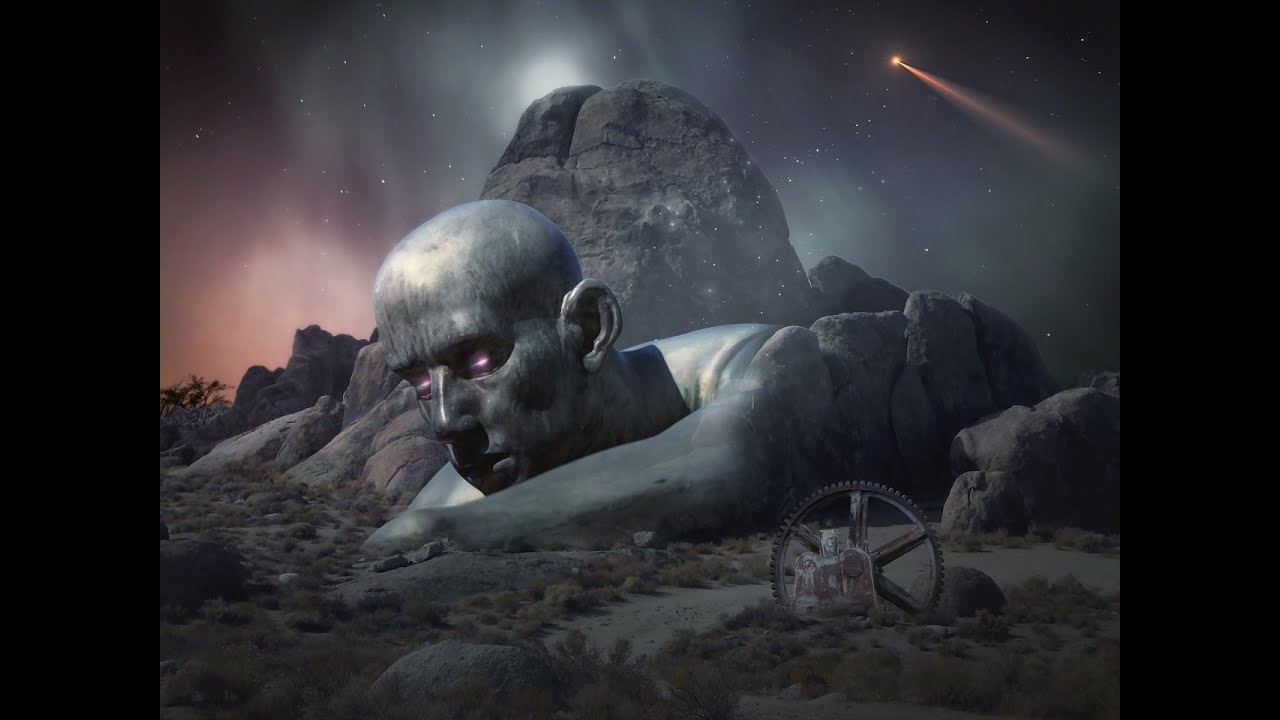
Alien Reanimation and the Modern Prometheus
Keywords
Summary
180 words
Critical Evaluation
Value of the Information & Strength of the Argument
The video offers a valuable synthesis of literary analysis and scientific speculation, connecting the themes of Frankenstein to contemporary topics like cryonics, genetic resurrection, and interstellar travel. The argumentation is coherent and well-structured, moving from historical context to modern scientific possibilities and then to speculative future scenarios. Godier carefully distinguishes between established science, such as organ freezing and DNA degradation, and speculative ideas like nanobot repair and artificial panspermia, which he presents as possibilities rather than certainties. The reasoning is generally sound, though some leaps, such as the feasibility of growing humans from stored DNA, are presented without deep technical discussion. Overall, the video provides a thoughtful and engaging exploration of its subject, encouraging viewers to consider the ethical and philosophical implications of reanimation.
Scientific Rigor, Source Quality, Title Accuracy
The video demonstrates a reasonable level of scientific rigor, referencing real scientific concepts and historical events, but it does not provide formal citations or links to specific studies. The sources mentioned in the description are primarily music credits and a link to the creator’s other channel, which are not directly related to the content. The title accurately reflects the content, which is a speculative essay on reanimation and alien life, and the video stays on topic throughout. The lack of formal sourcing is a minor weakness, but the content is presented in a way that is transparent about its speculative nature, and the creator’s background as a science fiction author and futurist lends credibility to the discussion.
256 words
Title / Content Match
The title accurately reflects the content, which explores the theme of reanimation in the context of alien life and the Frankenstein myth.
Quality & Reliability
7/10
The video presents a well-informed, speculative discussion grounded in scientific concepts (cryonics, vitrification, DNA degradation, panspermia) and literary analysis. It clearly distinguishes established science from speculation, though it lacks formal citations and relies on narrative reasoning.
Key Moments
Markers derived by PSI from the transcript: the creator did not define chapters.
- Introduction: Favorite book, Frankenstein, and its significance.
- Historical context: Electrical experiments and Arctic exploration in Shelley's time.
- Modern reanimation: Defibrillators, organ freezing, and cryonics.
- Memory and identity: Uploading memories and the question of self.
- Nanotechnology and suspended animation for space travel.
- Extraterrestrial life and the Jurassic Park problem of ancient DNA.
- Artificial panspermia and the possibility of resurrecting alien species.
Cited Sources
- Intermission in D by Miguel Johnson — Music used in the video.
- Dark Fog by Kevin MacLeod — Music used in the video.
- Creative Commons Attribution 4.0 license — License for the music.
- Event Horizon Show — John Michael Godier's other channel.
Concurring Sources
- Cryonics — Supports the discussion on freezing humans for revival.
- Ancient DNA — Supports the point about DNA degradation over time.
Dissenting Sources
- No discordant sources found — The video is speculative and does not contradict established science, but it presents ideas like nanobot repair as speculative.
Contribution & Novelties
The video offers a unique interdisciplinary perspective, linking the literary themes of Frankenstein to modern scientific concepts in astrobiology and cryonics. It introduces the idea of ‘artificial panspermia’ as a means of resurrecting extinct alien species from stored genetic data, which is a novel and thought-provoking concept. The discussion of the ‘Frankenstein problem’—the loss of identity upon reanimation—adds a philosophical depth that is often missing in purely scientific discussions.
Pour aller plus loin :
- Cryonics — Overview of the practice and its scientific challenges.
- Panspermia — Hypothesis that life exists throughout the Universe and can be transferred between planets.
- DNA degradation — Explanation of why ancient DNA is difficult to recover.
- Nanotechnology in medicine — Potential applications and challenges of nanobots in medicine.
123 words
Radar Profile
The radar profile shows a balanced video with moderate scores across all dimensions. The quantity and quality of information are solid, and the technical level is accessible to a general audience. The reliability is good, though the lack of formal citations prevents a higher score.
💬 Très positif. Sur les 30 commentaires analysés, les spectateurs expriment un fort enthousiasme pour le contenu, appréciant particulièrement le ton apaisant et la profondeur des sujets abordés, avec de nombreux témoignages personnels sur l'impact du canal.