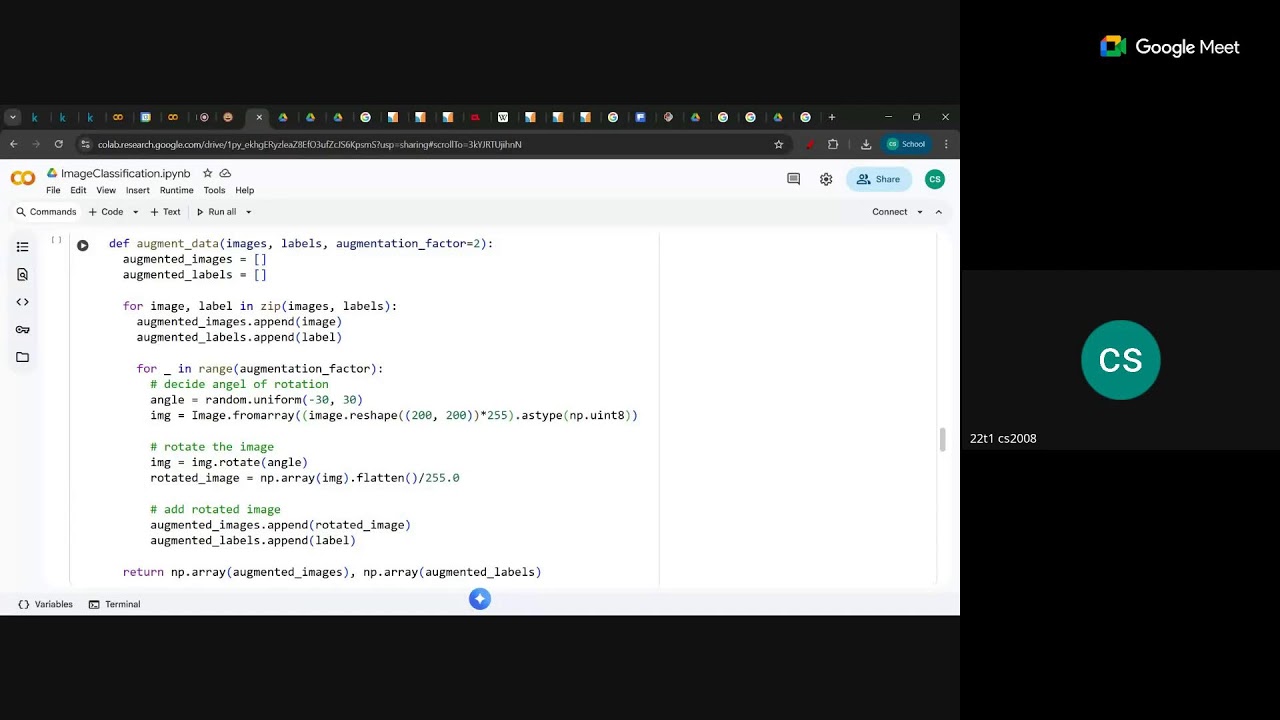
MLP Live session 25T3 Week8
Keywords
Summary
125 words
Critical Evaluation
Value of the Information & Strength of the Argument
The session provides valuable practical knowledge on text preprocessing, a fundamental step in NLP. The instructor uses clear examples and live coding to illustrate concepts, making it accessible for beginners. The argumentation is logical, building from simple counting to more sophisticated TF-IDF, and addresses common pitfalls like stop words. However, the session lacks depth in explaining the mathematical underpinnings of TF-IDF and does not cover advanced topics like word embeddings. The interactive nature sometimes leads to digressions, but overall the content is solid and directly applicable.
Scientific Rigor, Source Quality, Title Accuracy
The session is a tutorial, and the instructor does not cite external sources, relying on his own knowledge and standard practices. The technical accuracy is high, and the explanations align with common machine learning textbooks. The title accurately reflects the content, as it is a live session for a machine learning practice course. No comments were provided for analysis.
160 words
Title / Content Match
The title accurately describes the content as a live session for a machine learning practice course, focusing on text data preprocessing.
Quality & Reliability
7/10
Content is a live tutorial session covering text preprocessing for machine learning. The instructor explains concepts clearly with examples, but the session is interactive and informal, with some digressions. No external sources are cited, but the technical content is accurate and aligns with standard practices.
Key Moments
Markers derived by PSI from the transcript: the creator did not define chapters.
- Introduction to the session and overview of text and image data preprocessing.
- Discussion on converting text to numbers using counting methods.
- Explanation of CountVectorizer and its limitations with stop words.
- Introduction to TF-IDF and its advantages over simple counting.
- Live demonstration of CountVectorizer and TF-IDF in Python.
- Discussion on vocabulary and feature indexing.
- Handling stop words and using max_features for dimensionality reduction.
- Introduction to hashing vectorizer as an alternative.
- Q&A session addressing student questions on tokenization and preprocessing.
Contribution & Novelties
The session provides a practical, hands-on introduction to text vectorization techniques, which is essential for anyone starting in NLP. It clarifies the transition from raw text to numerical features, a step often glossed over in theoretical courses. The instructor’s live coding and interactive Q&A help solidify understanding. For further exploration, consider the following:
- CountVectorizer documentation — Official documentation for CountVectorizer.
- TF-IDF explained — Wikipedia article on TF-IDF.
- Stop words list — Wikipedia article on stop words.
- HashingVectorizer documentation — Official documentation for HashingVectorizer.
83 words
Radar Profile
The radar profile shows balanced scores across all dimensions, with slightly lower technical depth due to the introductory nature. The session is strong in providing practical information and maintaining accuracy, but it does not delve into advanced topics, making it suitable for beginners.