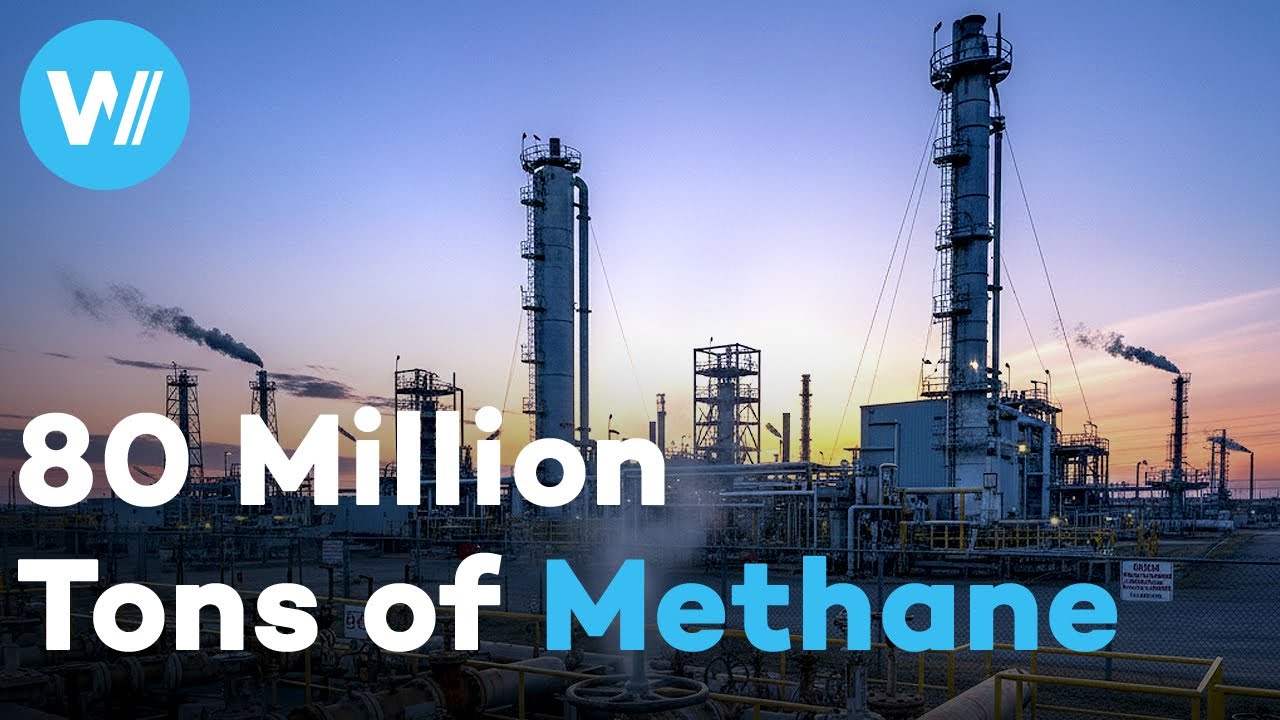
The Methane Crisis: How Big Oil's Methane Emissions are Wrecking Our Planet (Documentary, 2023)
Keywords
Summary
198 words
Critical Evaluation
The documentary provides a compelling and informative look at the often-overlooked issue of methane emissions from the oil and gas industry. It successfully combines scientific data, expert interviews, and on-the-ground investigations to build a strong case for the severity of the problem. The use of satellite imagery and mobile detectors adds a layer of empirical evidence, making the claims more credible. The film’s strength lies in its ability to make a complex scientific topic accessible to a general audience without oversimplifying the science. It clearly explains the difference between methane and CO2 in terms of global warming potential and atmospheric lifetime, which is crucial for understanding the urgency of addressing methane leaks. The interviews with scientists like Ralph Sussmann and Thomas Röckmann provide authoritative insights, and the visit to the testing facility at Colorado State University effectively illustrates the scale of the problem. However, the documentary could be criticized for not providing more detailed citations for some of its statistics, such as the claim that 80 million tons of methane are emitted annually. While this figure is consistent with scientific literature, the film does not always attribute such numbers to specific studies. Additionally, the documentary tends to focus on the oil and gas industry’s responsibility, which is valid, but it might have benefited from a more nuanced discussion of other methane sources, such as agriculture and natural wetlands, to provide a complete picture. The film also touches on the role of companies and regulators, but it could have delved deeper into the political and economic factors that hinder effective regulation. Despite these minor shortcomings, the documentary is a valuable contribution to climate communication, raising awareness about a critical yet underreported aspect of the climate crisis. The production quality is high, with clear visuals and a logical narrative structure. Overall, it is a well-researched and thought-provoking piece that effectively highlights the urgent need for action on methane emissions.
317 words
Title / Content Match
The title accurately reflects the content, focusing on methane emissions from the oil industry and their impact on climate change.
Quality & Reliability
8/10
The documentary relies on interviews with scientists and experts, direct measurements, and satellite data, providing a credible overview of methane emissions from the oil and gas industry. However, it lacks detailed citations for some claims and may oversimplify complex issues.
Key Moments
Markers derived by PSI from the transcript: the creator did not define chapters.
- Introduction to the documentary and the issue of methane emissions.
- Visit to the Zugspitze research station and initial measurements of methane.
- Explanation of methane as a potent greenhouse gas and its sources.
- Introduction of mobile methane detectors and investigation in Utrecht.
- Focus on the Permian Basin and large-scale methane leaks in the US.
- Investigation of leaky tanks and equipment at oil and gas facilities.
- Discussion of methane emissions in Europe and Germany.
- Credits and conclusion.
Cited Sources
- wocomoCOOK — Channel link from description, not directly related to content.
- wocomoHISTORY — Channel link from description, not directly related to content.
- wocomoHUMANITY — Channel link from description, not directly related to content.
- wocomoTRAVEL — Channel link from description, not directly related to content.
- wocomoWILDLIFE — Channel link from description, not directly related to content.
Concurring Sources
- Global Methane Assessment — UNEP report confirming the significant impact of methane on climate and the potential for mitigation.
- IEA Methane Tracker — International Energy Agency data on methane emissions from the energy sector.
Dissenting Sources
- Climate change is a hoax — A commenter denies climate change, contradicting the scientific consensus presented in the documentary.
Contribution & Novelties
The documentary provides a comprehensive and accessible overview of methane emissions from the oil and gas industry, combining satellite data, ground measurements, and expert interviews. It highlights the scale of the problem and the lack of adequate monitoring and regulation, offering a compelling case for urgent action. The film’s strength lies in its visual documentation of leaks and its explanation of the science behind methane’s climate impact.
Pour aller plus loin :
- Methane emissions - Wikipedia — Overview of methane sources and impacts.
- Global Methane Pledge — International initiative to reduce methane emissions.
- UNEP Methane Report — Comprehensive assessment of methane mitigation.
102 words
Radar Profile
The radar profile shows high scores in quantity and quality of information, with a moderate technical level. This indicates a well-researched documentary that is accessible to a general audience while providing substantial scientific content.
💬 The comments are predominantly positive, with viewers expressing appreciation for the documentary's importance and raising additional concerns about methane sources like permafrost. A few comments express skepticism about climate change, but the overall sentiment is supportive and engaged. Sur les 30 commentaires analysés, la majorité est positive et souligne l'importance du sujet.