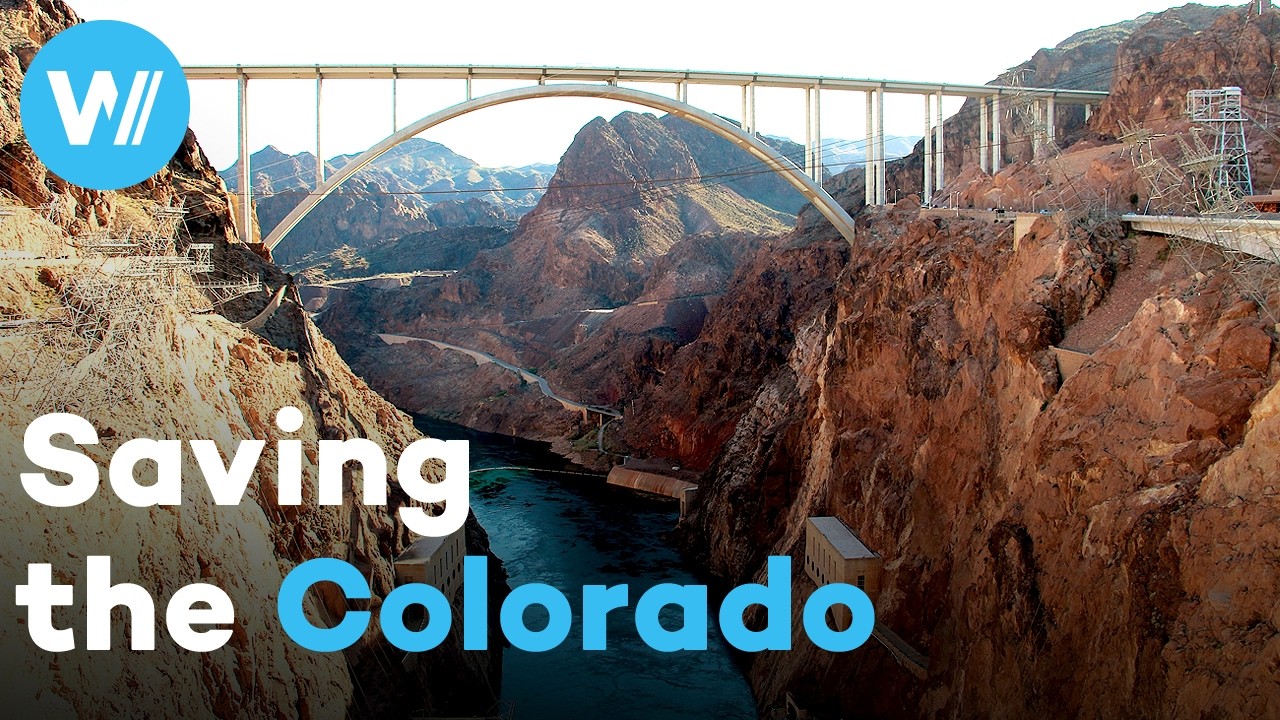
The Colorado River Crisis - From Grand Canyon to Desert Delta | Water is our Future (2/5)
Keywords
Summary
165 words
Critical Evaluation
The documentary provides a compelling and visually engaging overview of the Colorado River crisis, effectively combining interviews, on-site footage, and explanatory narration. Its strength lies in illustrating the complex interplay between urban water use, agriculture, and environmental needs. The interviews with water authority officials and conservationists lend credibility, and the specific examples of water-saving measures in Las Vegas (e.g., the ‘water cops’ and turf conversion programs) offer practical insights. However, the scientific rigor is moderate: while data points like Lake Mead’s water level drop are mentioned, the documentary does not delve into the underlying climate models or hydrological studies. The legal aspects of water rights are touched upon but not deeply analyzed. The sources cited are primarily the interviewees and the documentary series itself, with no direct references to academic papers or official reports. The title accurately reflects the content, and the documentary’s balanced approach, acknowledging both challenges and restoration efforts, is commendable. The public comments (not provided) would be needed to gauge audience reception, but the documentary’s production quality and narrative coherence are high. Overall, it serves as an informative introduction to the topic, though viewers seeking in-depth scientific analysis may need to consult additional resources.
197 words
Title / Content Match
The title accurately reflects the content, covering the river's journey from the Grand Canyon to the delta and the crisis of water scarcity.
Quality & Reliability
7/10
The documentary presents a balanced view of the Colorado River crisis, featuring interviews with water authority officials, landscape designers, and conservationists. It includes specific data (e.g., Lake Mead water level drop of 140-145 feet, Las Vegas water use reduction by 30%) and references to legal frameworks (Law of the River). However, it lacks in-depth scientific citations and relies on anecdotal evidence. The production quality is high, and the information is generally accurate, but the depth of scientific analysis is limited.
Key Moments
Markers derived by PSI from the transcript: the creator did not define chapters.
- Introduction to the Colorado River's journey and its importance.
- Hoover Dam and Lake Mead: the creation of a major reservoir.
- Discussion of drought and water shortage affecting the river.
- Las Vegas as a desert playground and its water challenges.
- Water cops and conservation efforts in Las Vegas.
- Desert gardens and adaptation strategies.
- Golf courses and water use in the desert.
- Recycling water in Las Vegas and the Las Vegas Wash.
- Lower Colorado and the Mojave Desert.
- Imperial Dam and farmland irrigation.
- Feeding America from the desert: agriculture in Yuma.
- Settlers and water rights in Yuma.
- The Morelos Dam and the end of the river.
- A flood of hope: restoring the delta.
- Buying water rights for nature.
- Reviving the Rio Hardy and delta.
- Signs of life return to the delta.
- Birds in the delta: a river reborn.
Cited Sources
- wocomoCOOK — Related channel from the same documentary network.
- wocomoHISTORY — Related channel from the same documentary network.
- wocomoHUMANITY — Related channel from the same documentary network.
- wocomoTRAVEL — Related channel from the same documentary network.
- wocomoWILDLIFE — Related channel from the same documentary network.
Concurring Sources
- Colorado River Compact — The legal framework mentioned in the documentary.
- Lake Mead water levels — The documentary discusses the drop in water levels.
- Sonoran Institute — The organization involved in delta restoration, as mentioned in the documentary.
Dissenting Sources
- No discordant sources identified — The documentary does not present conflicting viewpoints, but some might argue that the optimistic outlook on restoration is not universally shared.
Contribution & Novelties
The documentary provides a comprehensive visual narrative of the Colorado River crisis, highlighting both urban and agricultural water use, and the innovative restoration efforts in the delta. It emphasizes the importance of water recycling and conservation, offering a hopeful perspective on ecosystem restoration.
Pour aller plus loin :
- Colorado River Compact — The legal framework governing water allocation among the seven basin states.
- Lake Mead — The reservoir’s history and current drought conditions.
- Sonoran Institute — Organization involved in delta restoration efforts.
- Prior appropriation water rights — The legal doctrine governing water rights in the western US.
- Colorado River Delta — The ecological significance and restoration projects.
107 words
Radar Profile
The radar profile shows high scores in quantity of information and fiabilité, reflecting the documentary's comprehensive coverage and credible sources. The niveau technique is moderate, indicating accessibility to a general audience. The overall balance suggests a well-rounded presentation of the topic.