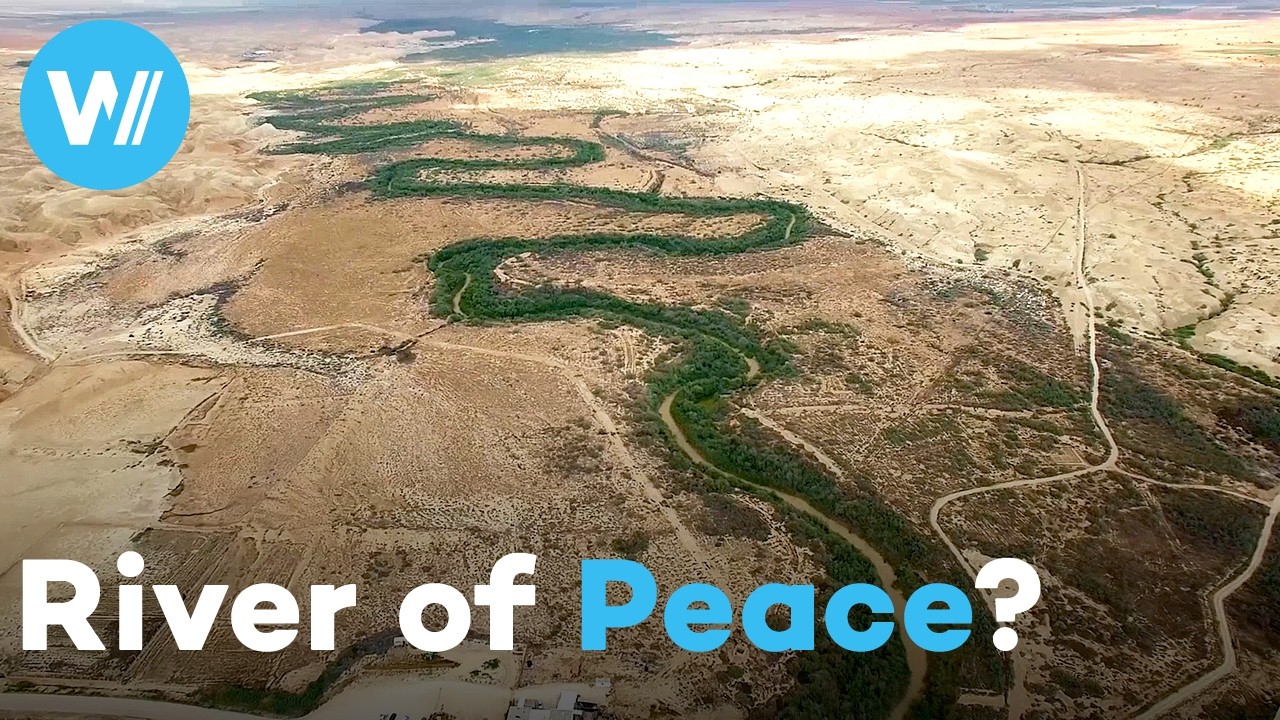
Saving the River Jordan and the Dead Sea: A Water Crisis Uniting Enemies | Water is our Future (4/5)
Keywords
Summary
123 words
Critical Evaluation
The documentary provides a compelling and visually rich overview of the water crisis in the Jordan River basin, effectively combining scientific data with personal narratives. Its strength lies in showcasing the collaborative efforts of EcoPeace, a unique organization that brings together Israelis, Jordanians, and Palestinians to address a shared environmental threat. The film successfully illustrates the interconnectedness of water, politics, and peace, and it offers a nuanced perspective on a complex geopolitical issue. However, the documentary has limitations. It tends to gloss over the deep-rooted political conflicts and power imbalances that hinder cooperation, presenting a somewhat optimistic view that may not fully reflect the on-the-ground realities. The scientific content is accessible but lacks depth, with limited discussion of the technical aspects of water management, such as the specifics of desalination or the environmental impacts of agricultural practices. The sources cited are primarily interviews and observations, with no explicit references to scientific studies or reports, which reduces its academic rigor. The adéquation between the title and content is strong, as the film directly addresses the river’s decline and the efforts to save it. Overall, the documentary serves as an excellent introduction to the topic for a general audience, but it falls short of a comprehensive scientific analysis. It raises important questions about the feasibility of large-scale water projects and the long-term sustainability of current practices, but it does not delve into these complexities. The film’s optimistic tone, while inspiring, may underestimate the political obstacles that remain. Despite these shortcomings, the documentary is valuable for its human-centered approach and its demonstration that environmental cooperation can transcend political divides.
266 words
Title / Content Match
The title accurately reflects the content, focusing on the Jordan River and Dead Sea water crisis and the cross-border cooperation efforts.
Quality & Reliability
7/10
The documentary presents a balanced view of the water crisis, featuring interviews with experts and on-the-ground footage. However, it lacks detailed citations and may oversimplify complex geopolitical issues.
Key Moments
Markers derived by PSI from the transcript: the creator did not define chapters.
- Introduction to the Jordan River as the lifeline of the Middle East.
- Exploration of the river's source in the Golan Heights and Hula Valley.
- The Sea of Galilee and its role as a freshwater reservoir.
- The river's journey from Galilee to the Dead Sea.
- The river under threat from over-extraction and pollution.
- Introduction to EcoPeace and its mission to save the Jordan.
- Cross-border cooperation efforts and the vision for a peace park.
- Water rationing in Amman, Jordan's capital.
- Restoration of a forgotten reservoir as a nature park.
- Smart farming techniques to reduce water usage.
- Jericho and the West Bank water challenges.
- Springs of life and conflict in the region.
- The Baptism Site on the Jordan and its religious significance.
- A father returns to the river, reflecting on its past.
- Fish farms and pollution affecting the river.
- High-tech farming and water sensors in agriculture.
- Desalination as a new hope for water supply.
- The shrinking Dead Sea and its consequences.
- Sinkholes and salt craters around the Dead Sea.
- Protest swim to raise awareness for the Dead Sea.
Cited Sources
- wocomoCOOK — Related documentary channel
- wocomoHISTORY — Related documentary channel
- wocomoHUMANITY — Related documentary channel
- wocomoTRAVEL — Related documentary channel
- wocomoWILDLIFE — Related documentary channel
Concurring Sources
- EcoPeace Middle East — The organization's website provides detailed information on the Jordan River restoration projects and cross-border cooperation.
- World Bank report on water in the Arab world — This report discusses water scarcity and management challenges in the region, aligning with the documentary's themes.
Dissenting Sources
- Comment on the documentary — Some viewers criticized the documentary for its 'rosy depiction' of the situation, arguing that it downplays the impact of Israeli occupation on Palestinian water access.
Contribution & Novelties
The documentary provides a unique perspective on the water crisis by highlighting the role of environmental NGOs in fostering peace and cooperation. It showcases concrete examples of cross-border projects, such as the restoration of a reservoir and the implementation of drip irrigation, which offer practical solutions. The film also emphasizes the importance of public awareness and community involvement.
Pour aller plus loin :
- EcoPeace Middle East — Official website of the organization featured, with reports and projects.
- Dead Sea — Overview of the Dead Sea’s geography and environmental challenges.
- Jordan River — Background on the river’s history and current state.
- Water scarcity in the Middle East — World Bank report on water management in the region.
- Desalination in Israel — Information on Israel’s desalination plants and their impact.
128 words
Radar Profile
The radar profile shows a balanced documentary with high scores in information quantity and quality, moderate technical depth, and good reliability. The strengths lie in its comprehensive coverage and credible sources, while the main weakness is the lack of in-depth technical analysis.
💬 The comments are mixed, with some praising the documentary for its hopeful message and others expressing skepticism about the political context. On the 30 comments analyzed, the tone is generally positive but with notable criticism regarding the portrayal of the conflict.