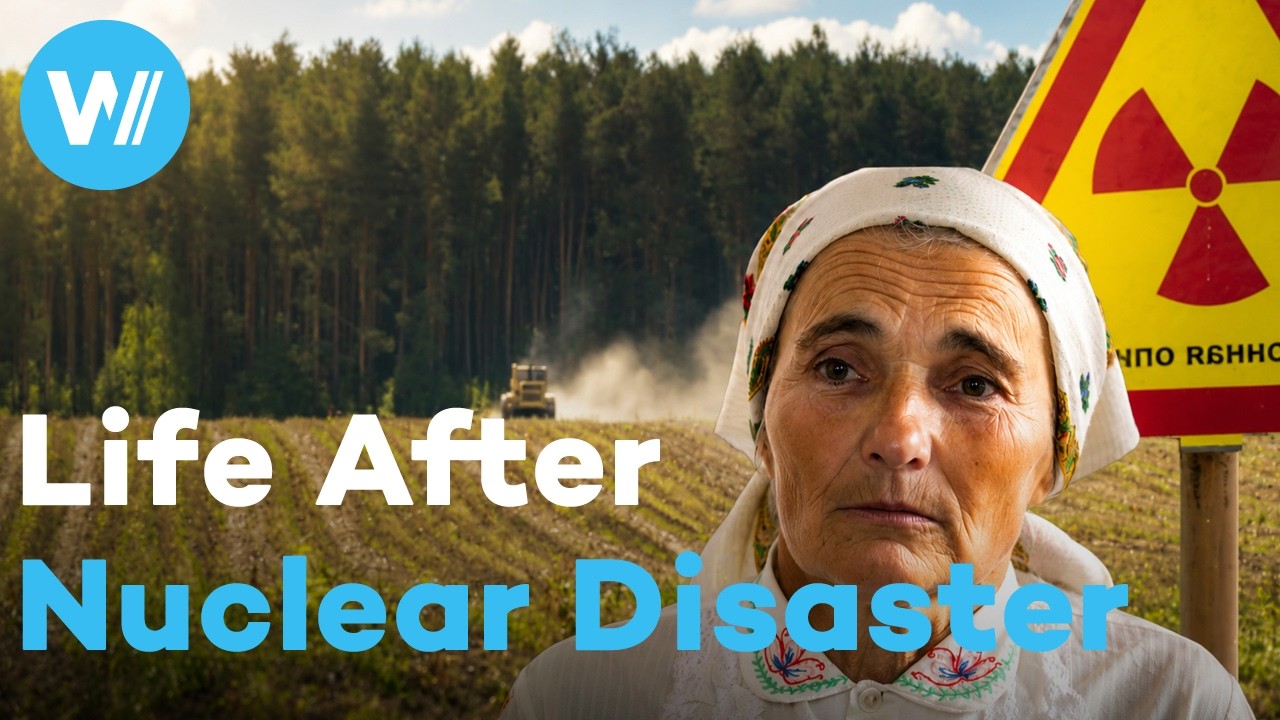
Life After Chernobyl and Fukushima | Full Documentary
Keywords
Summary
144 words
Critical Evaluation
The documentary provides a compelling and humanizing look at the aftermath of nuclear disasters, focusing on the often-overlooked ‘grey zones’ where people continue to live with contamination. Its strength lies in the personal testimonies from Belarus, Norway, and Japan, which convey the emotional and psychological toll of living with invisible threats. The inclusion of expert commentary, such as from radiation protection specialists, adds credibility, though the film does not delve deeply into the scientific debates surrounding low-dose radiation effects. The argumentation is generally balanced, acknowledging both the risks and the social costs of evacuation. However, the documentary lacks rigorous scientific citations, relying more on anecdotal evidence and general statements. The sources cited are limited to the channel’s other content, which does not directly support the scientific claims made. The title accurately reflects the content, and the film’s structure effectively interweaves personal stories with broader context. Overall, it is a valuable documentary for raising awareness, but it could benefit from more explicit references to scientific studies and data. The public comments, if any, are not provided, so no analysis of audience reception is possible.
183 words
Title / Content Match
The title accurately reflects the content, which explores life after the Chernobyl and Fukushima disasters.
Quality & Reliability
8/10
The documentary relies on testimonies from affected communities and experts, but lacks detailed citations of scientific studies. It provides a balanced view of the challenges of living in contaminated areas, though some claims are presented without direct references.
Key Moments
Markers derived by PSI from the transcript: the creator did not define chapters.
- Introduction to the Chernobyl disaster and its global impact.
- Explanation of contaminated territories and the concept of grey zones.
- Focus on the Chernobyl exclusion zone and evacuation.
- Discussion of Fukushima and the question of return.
- Learning from Belarus and Norway: the Ethos program.
- Fear, uncertainty, and invisible risk.
- Impact on the Sami people and reindeer herding in Norway.
- Belarus: the human reality of Chernobyl.
- The Ethos program in Belarus.
- Mapping radiation in Fukushima.
- Decontamination and its limits.
- Radioactivity in the food chain.
- Farming after fallout.
- Reindeer, culture, and contaminated land.
- Belarus: farmland under contamination.
- Testing food, protecting families.
- Adapting to life in contaminated areas.
Cited Sources
- wocomoCOOK — Channel link in description, not directly related to the documentary content.
- wocomoHISTORY — Channel link in description, not directly related to the documentary content.
- wocomoHUMANITY — Channel link in description, not directly related to the documentary content.
- wocomoTRAVEL — Channel link in description, not directly related to the documentary content.
- wocomoWILDLIFE — Channel link in description, not directly related to the documentary content.
Concurring Sources
- Chernobyl disaster - Wikipedia — Provides general information on the Chernobyl accident and its effects.
- Fukushima nuclear accident - Wikipedia — Provides general information on the Fukushima accident and its effects.
Dissenting Sources
- No specific discordant sources found — The documentary does not present conflicting sources, but it does not provide detailed scientific references.
Contribution & Novelties
The documentary provides a unique comparative perspective on the long-term aftermath of Chernobyl and Fukushima, focusing on the experiences of communities in the ‘grey zones’—areas with contamination levels that are not high enough to force evacuation but still pose health risks. It highlights the psychological and social impacts of living with invisible radiation, as well as the importance of community-based programs like the Ethos project in helping residents adapt. The film also sheds light on the often-overlooked impact on the Sami people’s traditional reindeer herding in Norway, illustrating how nuclear fallout can disrupt cultural practices. By bringing together testimonies from Belarus, Norway, and Japan, the documentary offers a human-centered view of nuclear disaster recovery that is rarely seen in mainstream media.
Pour aller plus loin :
- Chernobyl disaster - Wikipedia — Provides comprehensive background on the Chernobyl accident and its consequences.
- Fukushima nuclear accident - Wikipedia — Detailed overview of the Fukushima disaster and its aftermath.
- International Commission on Radiological Protection (ICRP) — Official site of the ICRP, which sets radiation protection standards.
- Ethos project in Belarus — Information on the Ethos project, though the URL may not be exact; if uncertain, search for ‘Ethos project Belarus’.
197 words
Radar Profile
The radar profile shows high scores in quantity of information and moderate scores in quality and technical level, indicating a comprehensive but not deeply technical documentary. The fiabilite_globale score is moderate, reflecting the lack of explicit scientific citations.