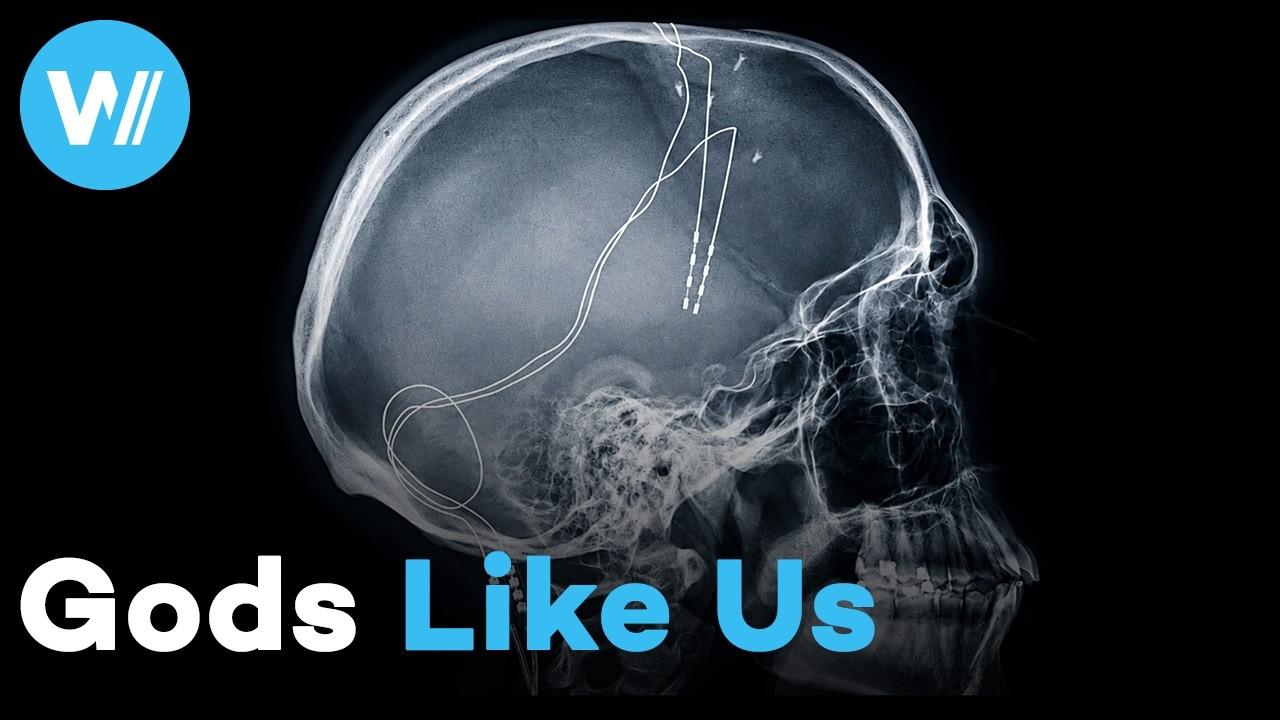
Gene Editing Humans: CRISPR, Longevity and the Future of Evolution | Gods Like Us (3/3)
Keywords
Summary
124 words
Critical Evaluation
The documentary provides a comprehensive overview of the current state and future possibilities of gene editing, particularly CRISPR. It successfully balances scientific optimism with ethical caution, featuring interviews with researchers like those studying epigenetic reprogramming for longevity, and bioethicists concerned about the implications. The inclusion of Lena’s personal story humanizes the debate, showing the real-world dilemmas faced by individuals with genetic conditions. However, the scientific depth is limited; while CRISPR is explained, the mechanisms are simplified, and some claims about longevity are speculative. The documentary does not provide rigorous citations or references to peer-reviewed studies, which weakens its scientific credibility. The case of He Jiankui is presented accurately, but the ethical analysis is not deeply explored. The title is appropriate, and the content aligns with it. The documentary would benefit from more expert commentary on the regulatory and societal aspects. Overall, it is a thought-provoking piece that raises important questions but lacks the rigor of a scientific review.
158 words
Title / Content Match
The title accurately reflects the content, which covers CRISPR, longevity, and the future of human evolution.
Quality & Reliability
7/10
The documentary presents a balanced view of gene editing, featuring interviews with scientists, ethicists, and affected individuals. It includes real cases (He Jiankui) and references to CRISPR, but lacks detailed citations and some claims are presented without strong scientific backing.
Key Moments
Markers derived by PSI from the transcript: the creator did not define chapters.
- Introduction: Science fiction becomes reality.
- Discussion on whether humans should live for centuries.
- Introduction to Lena and her family with hearing loss.
- Explanation of CRISPR and new genetics.
- Editing life from the first cell.
- Choosing a child's future.
- Taking charge of evolution.
- Reprogramming aging.
- Evolution by choice.
- Deaf identity and community.
- The first gene-edited babies.
- The limits of science.
- Longevity, climate and the future.
- Is deafness a disease?
- The business of human enhancement.
- Cryonics and the fight against death.
- Beyond the biological body.
- Engineered bodies and human evolution.
Cited Sources
- wocomoCOOK — Related channel from the same network.
- wocomoHISTORY — Related channel from the same network.
- wocomoHUMANITY — Related channel from the same network.
- wocomoTRAVEL — Related channel from the same network.
- wocomoWILDLIFE — Related channel from the same network.
Concurring Sources
- CRISPR gene editing — Provides background on the technology discussed.
- He Jiankui affair — Details on the controversial gene-edited babies.
Dissenting Sources
- Longevity escape velocity — Some claims about indefinite lifespan are speculative and not universally accepted.
Contribution & Novelties
The documentary provides a nuanced look at gene editing, highlighting the personal and ethical dimensions often missing in scientific discussions. It brings together diverse voices, from scientists to deaf community members, offering a holistic view.
Pour aller plus loin :
- CRISPR gene editing — Overview of the technology.
- He Jiankui affair — Details on the first gene-edited babies.
- Epigenetic reprogramming — Related to longevity research.
- Transhumanism — Philosophical movement relevant to human enhancement.
- Deaf culture — Context for the deaf community’s perspective.
82 words
Radar Profile
The radar profile shows high scores in quantity of information and fiabilité, but lower in technical level, indicating a documentary that is informative and reliable but not highly technical.