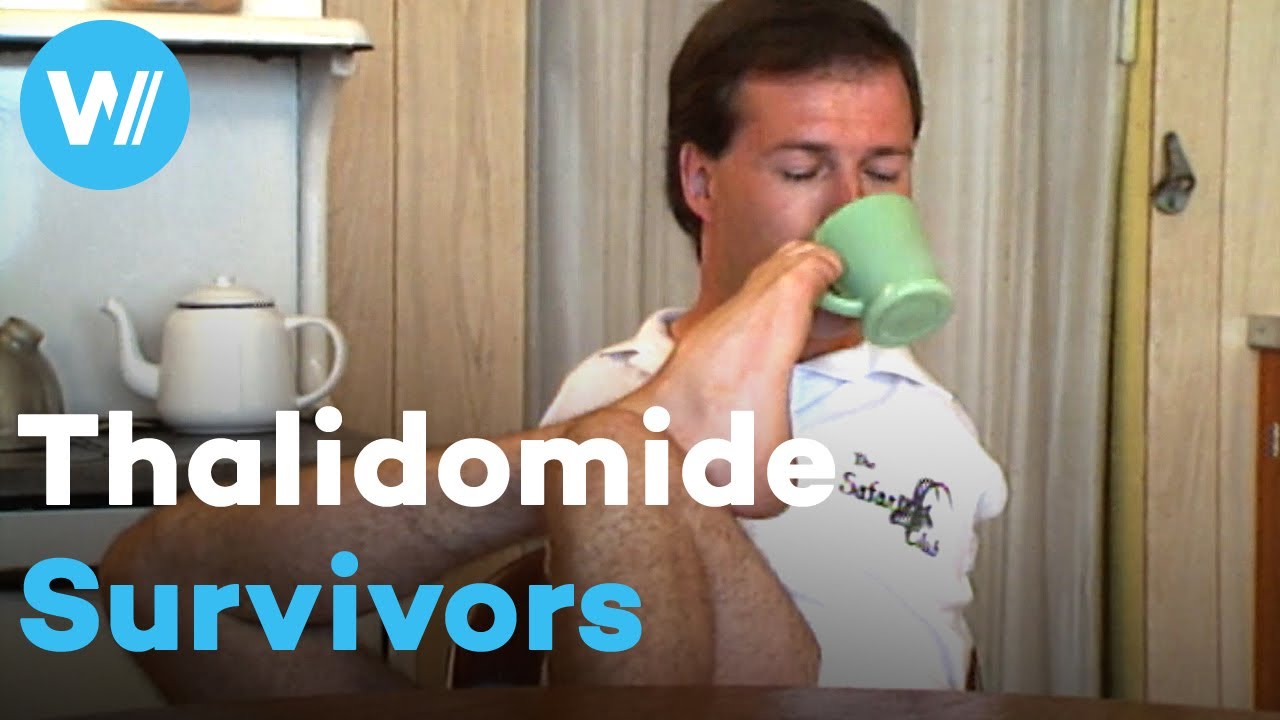
Inside the Drug Disaster That Still Haunts the World | No Limits (Full documentary)
Keywords
Summary
187 words
Critical Evaluation
The documentary provides a compelling and emotionally charged account of the thalidomide disaster, blending personal narratives with historical investigation. Its strength lies in the powerful testimonies of survivors and their families, which humanize the tragedy and illustrate the long-term consequences. The film also effectively exposes the negligence and unethical behavior of pharmaceutical companies, particularly Grünenthal, and the regulatory failures that allowed the drug to spread. The inclusion of investigative journalist Michael Magazanic adds credibility, as he explains the deceptive marketing tactics used by Richardson-Merrill. However, the documentary has some weaknesses. It relies heavily on anecdotal evidence and does not always provide clear citations for its factual claims, such as the exact number of victims. The historical context, while informative, could be more thoroughly sourced. The film’s focus on individual stories sometimes overshadows broader systemic analysis, and it does not delve deeply into the scientific mechanisms of thalidomide’s teratogenic effects. Additionally, the documentary does not address potential counterarguments or defenses from the pharmaceutical companies, which might have provided a more balanced perspective. Despite these limitations, the film is a valuable contribution to public understanding of a major medical scandal, and its call for accountability remains relevant. The title accurately reflects the content, and the documentary succeeds in highlighting the enduring impact of the disaster on survivors and their fight for justice.
220 words
Title / Content Match
The title accurately reflects the content, focusing on the thalidomide disaster and its lasting impact.
Quality & Reliability
8/10
The documentary is produced by an Oscar-winning filmmaker and features interviews with victims, medical experts, and investigators. It draws on historical records and personal testimonies, but lacks direct citations to primary sources in the video itself. The information is generally reliable and well-researched, though some claims (e.g., number of victims) are presented without precise references.
Key Moments
Markers derived by PSI from the transcript: the creator did not define chapters.
- Introduction to the thalidomide disaster and its global impact.
- The birth of the first thalidomide baby in Germany and the drug's launch.
- Richardson-Merrill promotes thalidomide as safe in the US without evidence.
- Heinrich Mückter's Nazi past and his role in developing thalidomide.
- Growing up as a thalidomide child and adapting to physical challenges.
- Dr. Frances Kelsey's role in preventing thalidomide approval in the US.
- Discussion on artificial limbs and their impact on thalidomide victims.
- Grünenthal charged with criminal negligence and manslaughter.
- The Hadamar hospital and the mass murder of disabled people in Nazi Germany.
- David Mason's campaign for increased lawsuit settlement.
Cited Sources
- wocomoCOOK — Related documentary channel by the same distributor.
- wocomoHISTORY — Related documentary channel by the same distributor.
- wocomoHUMANITY — Related documentary channel by the same distributor.
- wocomoTRAVEL — Related documentary channel by the same distributor.
- wocomoWILDLIFE — Related documentary channel by the same distributor.
Concurring Sources
- Thalidomide - Wikipedia — Provides factual background on the drug's history and effects, consistent with the documentary.
- Frances Oldham Kelsey - Wikipedia — Details Kelsey's role in preventing thalidomide approval in the US, as mentioned in the film.
Contribution & Novelties
The documentary offers a unique longitudinal perspective by revisiting thalidomide victims decades after the disaster, providing insights into their lifelong struggles and resilience. It also brings to light newly released information about Grünenthal’s aggressive marketing and its re-marketing of the drug. The film’s strength lies in its human stories, which are often absent from clinical accounts.
Pour aller plus loin :
- Thalidomide - Wikipedia — Comprehensive overview of the drug’s history, mechanism, and consequences.
- Frances Oldham Kelsey - Wikipedia — The FDA reviewer who blocked thalidomide approval in the US.
- Contergan - Wikipedia — German brand name for thalidomide and its history.
102 words
Radar Profile
The radar profile shows high scores in quantity of information and reliability, reflecting the documentary's comprehensive coverage and credible sources. The lower score in technical level indicates that the film is accessible to a general audience, focusing more on human stories than scientific detail.