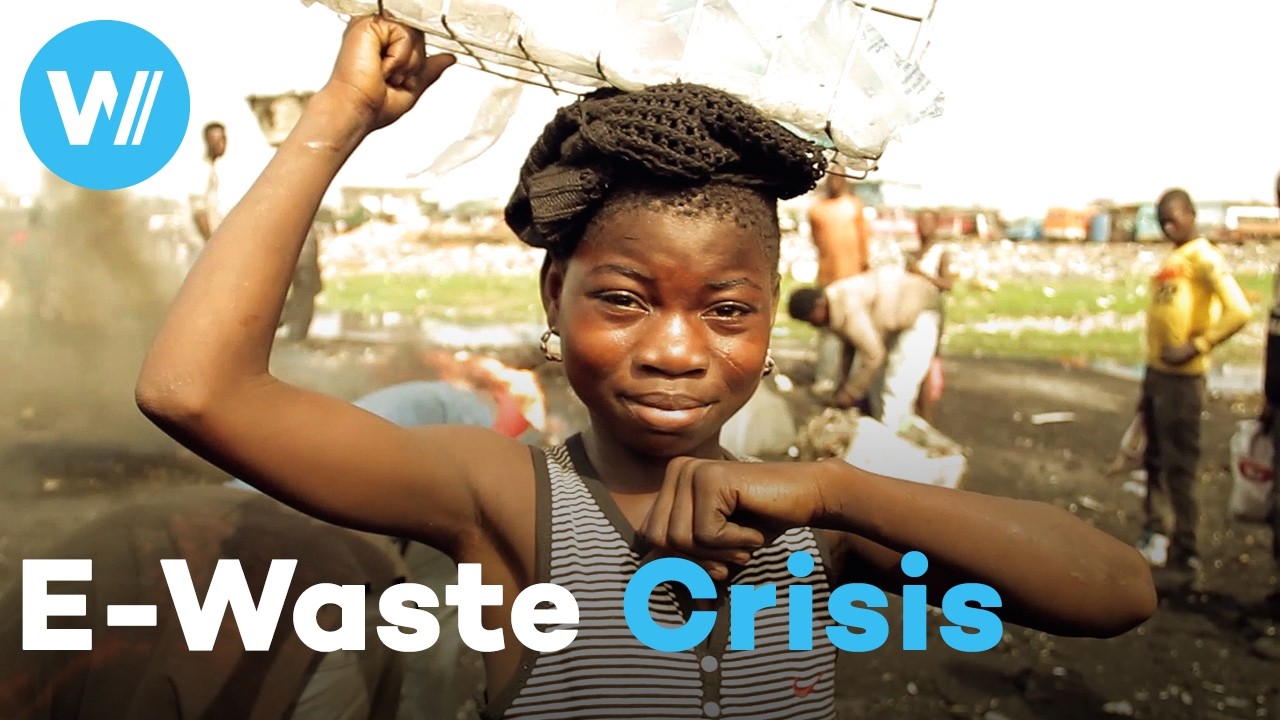
The murky world of global e-waste disposal at a toxic dumping ground in Agbogbloshie, Ghana
Keywords
Summary
135 words
Critical Evaluation
The documentary offers a compelling and humanizing look at the e-waste crisis in Agbogbloshie, Ghana. Its strength lies in its on-the-ground footage and interviews with local workers, activists, and experts, which vividly illustrate the social and economic dimensions of the issue. The narrative effectively exposes the hypocrisy of Ghana’s government, which claims to oppose e-waste imports while benefiting from the trade, and highlights the lack of investment in recycling infrastructure. The inclusion of perspectives from Robin Ingenthron, founder of Fair Trade Recycling, and the Restart Project adds credibility and offers potential solutions. However, the documentary has several weaknesses. It relies heavily on anecdotal evidence and emotional appeals, with limited scientific data to quantify the health and environmental impacts. The scientific claims about contamination are made by a researcher but lack specific measurements or references to published studies. The film also does not adequately address the complexities of the global e-waste trade, such as the role of international corporations and the effectiveness of the Basel Convention. The adéquation between title and content is strong, as the title accurately reflects the murky and toxic nature of the disposal site. Overall, the documentary is informative and raises awareness, but its lack of rigorous scientific analysis and potential bias from the filmmakers’ perspective prevent it from being a fully reliable source. It is best viewed as a starting point for understanding the issue rather than a definitive scientific investigation.
235 words
Title / Content Match
The title accurately reflects the content, focusing on the murky world of e-waste disposal and the toxic dumping ground in Agbogbloshie, Ghana.
Quality & Reliability
7/10
The documentary provides a detailed on-the-ground investigation with interviews from local workers, activists, and experts, but lacks rigorous scientific data and relies on anecdotal evidence. The presence of a recognized expert (Robin Ingenthron) and references to the Basel Convention add credibility, but the lack of verifiable sources and the emotional framing reduce the overall reliability.
Key Moments
Markers derived by PSI from the transcript: the creator did not define chapters.
- Introduction to the e-waste problem in Agbogbloshie
- Discussion of the second-hand market and government hypocrisy
- Robin Ingenthron on Ghanaian fixers and technology access
- Burning copper wires and toxic conditions in Agbogbloshie
- The Restart Project in London promoting repair culture
- Health risks of e-waste scavenging and copper burning
- Transforming scavenged wires into jewelry in Tamale
- 13-year-old Alassan collecting e-waste in dangerous conditions
- Moses encourages others to seek education and jobs
- Life on the e-waste site with mosquitos, red ants, and fire risks
- Fair Trade Recycling aims to improve communication between tech sector and regulators
- Hal Watts' machine to shred wires and separate metal from plastic
Cited Sources
- wocomoCOOK — Related channel
- wocomoHISTORY — Related channel
- wocomoHUMANITY — Related channel
- wocomoTRAVEL — Related channel
- wocomoWILDLIFE — Related channel
Concurring Sources
- Basel Convention — International treaty addressing hazardous waste, including e-waste, aligns with the documentary's call for regulation.
- The Restart Project — Promotes repair and reuse, consistent with the documentary's advocacy for sustainable solutions.
Dissenting Sources
- Ghana Environmental Protection Agency — May have official statements contradicting the documentary's claims of government inaction.
Contribution & Novelties
The documentary provides a unique on-the-ground perspective on the e-waste crisis in Agbogbloshie, highlighting the social and economic complexities often overlooked in policy discussions. It emphasizes the role of fixers and the second-hand market in providing affordable technology, while also exposing the health and environmental costs. The film offers a balanced view by presenting both the problems and potential solutions, such as repair initiatives and fair trade recycling.
Pour aller plus loin :
- Basel Convention — International treaty on hazardous waste management, directly relevant to the documentary’s discussion of e-waste regulation.
- The Restart Project — Social enterprise promoting repair culture, featured in the documentary.
- Fair Trade Recycling — Organization working on sustainable e-waste solutions, mentioned in the film.
118 words
Radar Profile
The radar profile shows high scores in quantity of information and quality of information, reflecting the documentary's rich content and credible interviews. However, the lower scores in technical level and global reliability indicate that while the film is informative, it lacks deep scientific analysis and verifiable data.
💬 No comments provided.