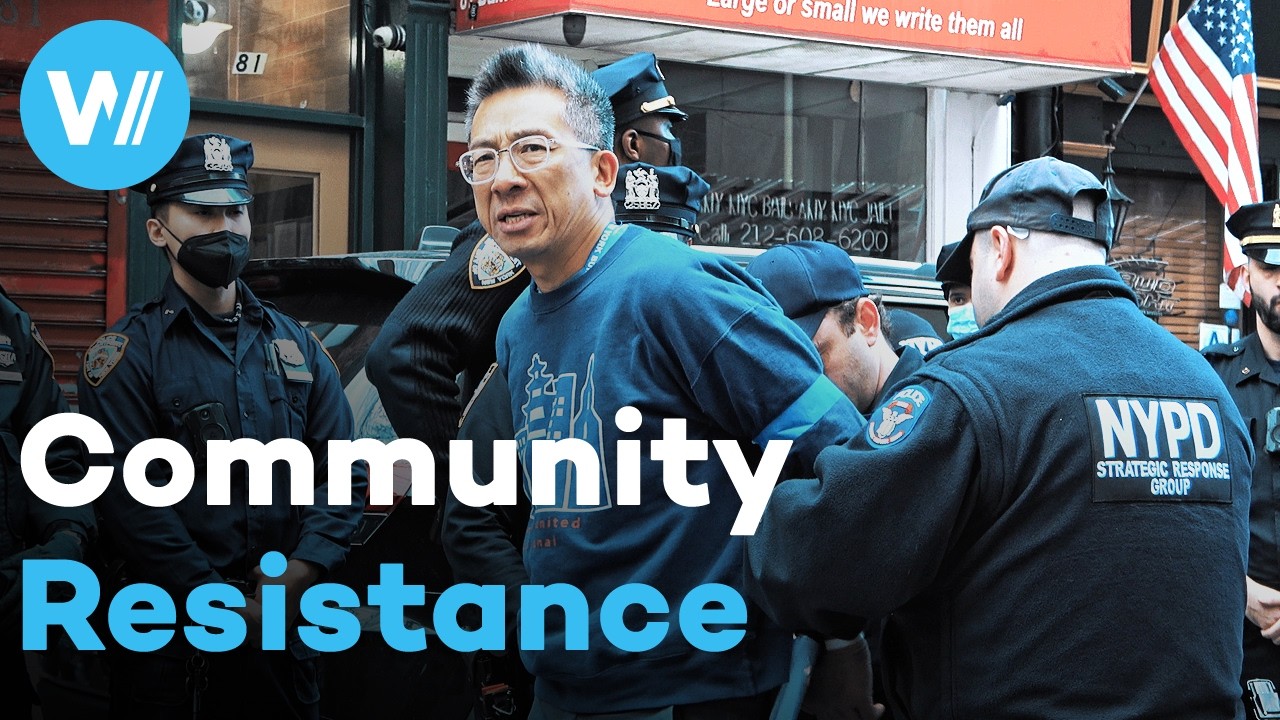
Chinatowns worldwide are under threat of disappearing, but residents fight back (Documentary, 2022)
Keywords
Summary
153 words
Critical Evaluation
The documentary provides a compelling and emotionally resonant account of the challenges facing Chinatowns, effectively combining personal narratives with broader socio-economic analysis. Its strength lies in its on-the-ground perspective, giving voice to residents, business owners, and activists who are directly affected. The film successfully illustrates the complex interplay of factors threatening these neighborhoods, including gentrification, urban renewal policies, and systemic racism. The historical context provided, such as the legacy of discriminatory immigration laws and urban renewal projects, adds depth to the current struggles. However, the documentary is clearly advocacy-oriented, presenting the community’s perspective without significant counterpoints from developers or city officials. While this is not necessarily a flaw, it means the film is more of a call to action than a neutral examination. The sources cited are primarily interviews and personal testimonies, which are credible but not independently verifiable. The film does not engage with potential counterarguments, such as the need for new housing or the economic benefits of development. Additionally, the documentary’s focus on North America, despite the title’s global claim, limits its scope. Overall, it is a valuable and well-produced piece that raises important questions about urban development and cultural preservation, but it would benefit from a more balanced presentation of opposing views.
205 words
Title / Content Match
The title accurately reflects the content, which focuses on the threats to Chinatowns and the resistance efforts of their communities.
Quality & Reliability
8/10
The documentary presents a well-researched and balanced view of the threats facing Chinatowns, featuring interviews with residents, business owners, and community organizers. It includes historical context and specific examples from multiple cities. While it is advocacy-oriented, it grounds its claims in observable events and personal testimonies, and does not rely on dubious sources.
Key Moments
Markers derived by PSI from the transcript: the creator did not define chapters.
- Introduction to the documentary and the threats facing Chinatowns.
- New York Chinatown family businesses threatened by developers.
- Montreal's francophone Chinatown and its unique history.
- Growth and decline of Chinatowns throughout history.
- Vancouver: William Liu's story of taking over family dim sum business.
- New York's Chinatown threatened by construction of a vertical jail.
- Montreal residents fight to save the 'Wings' building.
- Toronto's Chinatown resists a freeway project.
- Historical context: Chinese immigrants and the railway.
- Family associations and their role in community support.
- Different strategies of each Chinatown to remain.
- New Yorkers protest the new jail on Chinese New Year 2021.
- The rise of anti-Asian hate during the pandemic.
- Bringing the community back to Chinatown.
Cited Sources
- wocomoCOOK — Related channel mentioned in description.
- wocomoHISTORY — Related channel mentioned in description.
- wocomoHUMANITY — Related channel mentioned in description.
- wocomoTRAVEL — Related channel mentioned in description.
- wocomoWILDLIFE — Related channel mentioned in description.
Concurring Sources
- Gentrification — Supports the documentary's claims about displacement pressures.
- Anti-Asian racism in the United States — Corroborates the rise in anti-Asian hate incidents mentioned in the film.
Dissenting Sources
- Comment by user: 'Chinatown in NYC is not going anywhere anytime soon. Still strong.' — A viewer disagrees with the documentary's premise, arguing that NYC's Chinatown is resilient and not disappearing.
Contribution & Novelties
The documentary provides a contemporary and personal account of the struggles facing Chinatowns, highlighting the intersection of urban development, racism, and community resilience. It offers a multi-city perspective that is often missing in media coverage.
Pour aller plus loin :
- Gentrification — Key concept in the documentary’s analysis of threats to Chinatowns.
- Anti-Asian racism in the United States — Context for the rise in hate incidents during the pandemic.
- Chinatown, Manhattan — Specific neighborhood featured in the film.
- Urban renewal — Historical policy that has impacted Chinatowns.
87 words
Radar Profile
The radar profile shows high scores in quantity and quality of information, reflecting the documentary's rich content and credible sources. The technical level is moderate, as it is accessible to a general audience. Overall, the documentary is highly reliable and informative.
💬 Positif. Sur les 30 commentaires analysés, la majorité exprime un soutien à la préservation des Chinatowns et une appréciation du documentaire, bien que certains doutent de la menace réelle ou critiquent des aspects comme la langue parlée.