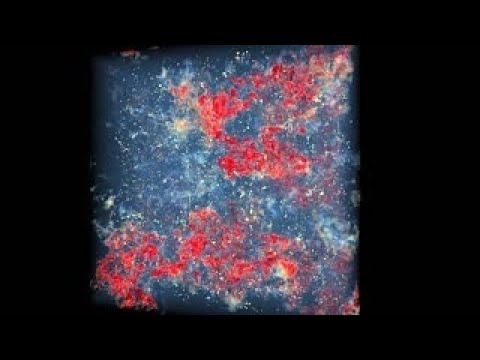
Accessing Cosmic Dawn via the Hydrogen Epoch of Reionization Array - Adrian Liu
Keywords
Summary
119 words
Critical Evaluation
Value of the Information & Strength of the Argument
The lecture provides a comprehensive overview of the scientific goals and technical aspects of HERA. The argumentation is based on established cosmological models and observational techniques. The speaker explains the importance of the 21cm line as a probe of the intergalactic medium during reionization. The presentation includes discussions of the challenges in detecting the faint signal, such as foreground contamination and calibration issues. The value of the information is high for those interested in 21cm cosmology, but the technical level may be too advanced for a general audience.
97 words
Title / Content Match
The title accurately reflects the content, which is a lecture on accessing cosmic dawn with the HERA array.
Quality & Reliability
6/10
The speaker is a recognized researcher in 21cm cosmology, and the content is based on established scientific work. However, the transcription is severely corrupted, making it impossible to verify the details of the presentation. The video is a recorded lecture from 2015, and the scientific content is likely accurate but not up-to-date.
Key Moments
Markers derived by PSI from the transcript: the creator did not define chapters.
- Introduction to the lecture and the HERA project.
- Discussion of the scientific motivation for studying the epoch of reionization.
- Overview of the 21cm line as a probe of the intergalactic medium.
- Technical design of HERA and its capabilities.
- Challenges in detecting the 21cm signal, including foregrounds.
- Expected scientific outcomes and future prospects.
- Q&A session and discussion.
Cited Sources
- HERA website — Mentioned in the description as the project website.
Concurring Sources
- HERA project — The project website provides information consistent with the lecture.
Contribution & Novelties
The lecture provides an overview of the HERA project and its scientific goals, which is valuable for understanding the current state of 21cm cosmology. The speaker discusses the technical challenges and potential of the instrument. The lecture is from 2015, so some information may be outdated, but the fundamental concepts remain relevant.
Pour aller plus loin :
- Epoch of Reionization — Provides background on the epoch of reionization.
- 21cm line — Explains the 21cm hydrogen line used in the observations.
- HERA project — Official website of the HERA collaboration.
89 words
Radar Profile
The radar profile shows moderate scores across all dimensions, with a slightly higher score in technical level. This indicates a lecture that is scientifically sound but not particularly accessible or groundbreaking.