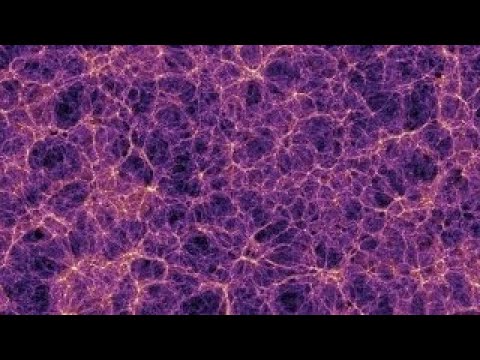
The Thermal Odyssey of the Photoionized Intergalactic Medium
Keywords
Summary
167 words
Critical Evaluation
Value of the Information & Strength of the Argument
The lecture provides valuable insights into the thermal state of the IGM, synthesizing theoretical models with observational constraints. McQuinn’s argumentation is rigorous, systematically building from basic principles to complex applications. He clearly explains the physical mechanisms and justifies each step, making the reasoning transparent. The use of toy models and simulations strengthens the argument, and he acknowledges uncertainties and alternative explanations. The talk is well-structured and persuasive, offering a compelling case for the importance of IGM temperature measurements.
Scientific Rigor, Source Quality, Title Accuracy
The lecture demonstrates high scientific rigor, with careful attention to physical processes and observational data. McQuinn references seminal papers and recent observations, though specific citations are not explicitly listed in the talk. The title accurately reflects the content, and the lecture is well-organized. The speaker’s expertise and the colloquium setting lend credibility. However, as a 2016 talk, some details may be superseded by later research.
158 words
Title / Content Match
The title accurately reflects the content: a detailed account of the thermal history of the photoionized intergalactic medium.
Quality & Reliability
8/10
The lecture is given by a leading expert (Matthew McQuinn) at a prestigious colloquium (Bok Prize). It presents a coherent theoretical framework supported by observational data and simulations. The content is technical and detailed, with clear reasoning. Minor caveats: the talk is from 2016, so some data may be outdated, and it represents the speaker's perspective.
Key Moments
Markers derived by PSI from the transcript: the creator did not define chapters.
- Introduction to the Bok Prize and the speaker's background.
- Explanation of the Lyman-alpha forest and its use as a probe.
- Historical overview of Lyman-alpha forest observations.
- Principles governing IGM temperature: ionization fronts and cooling.
- Discussion of photoheating and recombination.
- Application to temperature measurements and Gunn-Peterson troughs.
- Implications for dwarf galaxies and future prospects.
Cited Sources
- Bok Prize Lecture — The lecture itself, given at the Center for Astrophysics.
Concurring Sources
- McQuinn, M. (2016) The Thermal History of the Intergalactic Medium — A review article by the speaker that aligns with the lecture content.
Contribution & Novelties
The lecture synthesizes current understanding of the IGM thermal history, emphasizing the robustness of temperature predictions and their observational implications. It highlights the importance of IGM temperature as a probe of reionization and the sources of ionizing radiation. The talk also discusses potential additional heating mechanisms and the role of helium reionization.
Pour aller plus loin :
- Intergalactic medium — Overview of the IGM and its properties.
- Lyman-alpha forest — Detailed description of this observational probe.
- Reionization — The process of the universe becoming ionized.
- Gunn-Peterson trough — Absorption feature used to study the IGM at high redshift.
- McQuinn, M. (2016) The Thermal History of the Intergalactic Medium — A comprehensive review by the speaker.
115 words
Radar Profile
The radar profile shows high scores in quantity and quality of information, with a strong technical level and good reliability. This indicates a dense, expert-level lecture with solid scientific content, though it may be less accessible to a general audience.
💬 No comments were provided for analysis.