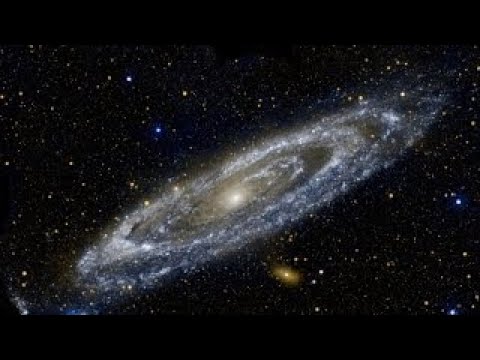
How galaxies evolve | Dr. Sarah Sweet | TEDxBrisbane
Keywords
Summary
148 words
Critical Evaluation
Value of the Information & Strength of the Argument
The talk provides valuable insights into the current state of galaxy evolution research, showcasing advanced observational techniques and recent findings. The argumentation is solid, based on established scientific methods and data from surveys like SAMI. The speaker effectively explains complex concepts, such as metallicity gradients and emission-line diagnostics, with clear examples and visual aids. The presentation is well-structured, moving from local to high-redshift galaxies and future prospects, making a compelling case for the importance of integral field spectroscopy.
Scientific Rigor, Source Quality, Title Accuracy
The scientific rigor is high, as the talk is based on peer-reviewed research and large surveys. The speaker cites specific instruments and surveys (e.g., SAMI, Keck, Giant Magellan Telescope) and mentions theoretical models (e.g., MAPPINGS). The title accurately reflects the content, which focuses on galaxy evolution and the use of 3D spectroscopy. The talk is well-referenced, though specific citations are not provided in the transcript, but the methods and results are consistent with established astrophysics.
168 words
Title / Content Match
The title accurately reflects the content, which focuses on galaxy evolution and the use of 3D spectroscopy to study it.
Quality & Reliability
8/10
The talk is given by a professional astrophysicist (Dr. Sarah Sweet) and presents established scientific methods and results from peer-reviewed research, including integral field spectroscopy surveys like SAMI. The content is technically accurate and well-structured, though presented in a popular science format.
Key Moments
Markers derived by PSI from the transcript: the creator did not define chapters.
- Introduction to the talk and the importance of studying galaxies in 3D.
- Explanation of integral field spectroscopy and its advantages over single spectra.
- Discussion of metallicity gradients and their use in tracing gas inflows.
- Presentation of results from the SAMI survey on galaxy outflows and shocks.
- Techniques to separate star formation from AGN using line ratios.
- High-redshift observations using gravitational lensing and adaptive optics.
- Future prospects with the Giant Magellan Telescope and 3D spectroscopy.
Cited Sources
- SAMI Survey — Mentioned as a large integral field spectroscopy survey using the Anglo-Australian Telescope.
- Giant Magellan Telescope — Mentioned as a future facility for 3D spectroscopy.
- Keck Observatory — Mentioned for adaptive optics and integral field spectroscopy observations.
Concurring Sources
- SAMI Survey — The talk's results are consistent with published SAMI survey findings.
- Giant Magellan Telescope — Future plans align with the telescope's capabilities.
Contribution & Novelties
The talk provides an accessible overview of how integral field spectroscopy is revolutionizing galaxy evolution studies, highlighting recent results from the SAMI survey and the potential of future instruments. It emphasizes the importance of spatially resolved observations in understanding processes like gas inflows, outflows, and AGN feedback.
Pour aller plus loin :
- Integral field spectroscopy — Provides background on the technique.
- SAMI Galaxy Survey — Official website with publications and data.
- Metallicity gradient — Explains the concept and its relevance.
- AGN feedback — Discusses the role of AGN in galaxy evolution.
91 words
Radar Profile
The radar profile shows high scores in information quantity, quality, and technical level, indicating a dense and reliable presentation. The overall reliability is also high, reflecting the speaker's expertise and the use of established research.