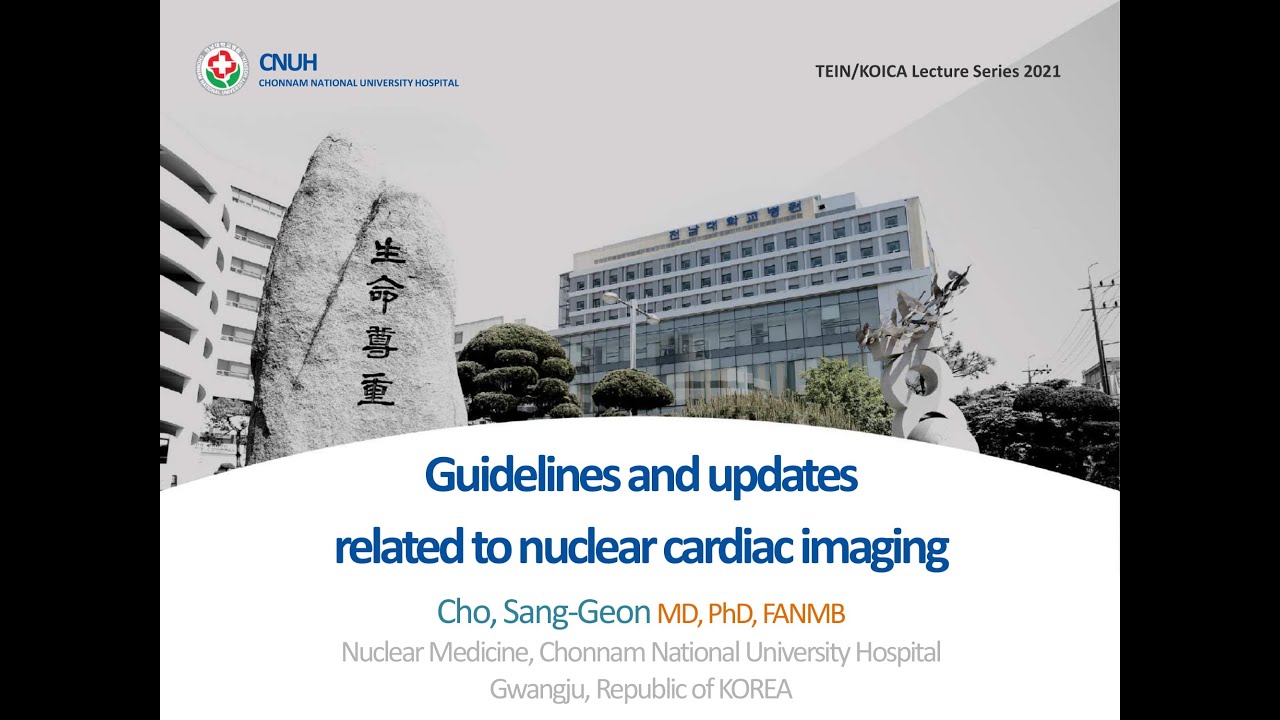
Guidelines and updates related to nuclear cardiac imaging
Keywords
Summary
231 words
Critical Evaluation
Value of the Information & Strength of the Argument
The lecture provides substantial value by synthesizing key clinical trials and guidelines relevant to nuclear cardiology. Cho’s argumentation is solid, as he critically appraises the evidence, such as pointing out the high proportion of exercise ECG in trials favoring cardiac CT, and the design flaws of the ISCHEMIA trial. He supports his points with specific data and thresholds, like the 10% LV ischemia cutoff and MBFR reference values. The discussion of microvascular disease and the importance of PET in detecting balanced ischemia adds depth. However, the lecture is a single expert’s perspective, and some interpretations may be debated. Overall, the argumentation is well-structured and evidence-based.
Scientific Rigor, Source Quality, Title Accuracy
The lecture demonstrates scientific rigor by referencing major trials (FAME, SCOT-HEART, ISCHEMIA, CorMicA) and guidelines (ESC, NICE, ASNC). The sources are appropriate and current as of 2021. The title accurately reflects the content, which is a focused update on nuclear cardiac imaging guidelines. The lecture is well-organized, with clear explanations of concepts and clinical implications. However, the lack of formal citations in the presentation may limit traceability, but the verbal references are sufficient for a lecture format. The content is consistent with established knowledge in the field.
207 words
Title / Content Match
The title accurately reflects the content, which focuses on guidelines and recent updates in nuclear cardiac imaging.
Quality & Reliability
8/10
The lecture is delivered by a professor specializing in nuclear cardiology, with references to major clinical trials and guidelines. The content is technically accurate and up-to-date as of 2021, but lacks formal citations and peer review.
Key Moments
Markers derived by PSI from the transcript: the creator did not define chapters.
- Introduction by host and start of lecture
- Overview of SPECT/PET interpretation and ischemia-driven PCI
- Discussion on 10% LV ischemia threshold and guidelines
- Critique of cardiac CT trials and NICE guideline changes
- ISCHEMIA trial results and implications
- PET MBFR reference values and clinical use
- Technical aspects of PET acquisition and microvascular angina
- Chronic total occlusion (CTO) definition and treatment
- Viability testing in ischemic cardiomyopathy
- Perfusion-metabolism mismatch and meta-analysis evidence
Cited Sources
- FAME trial — First randomized trial showing superiority of FFR-guided PCI over angiography-guided PCI.
- SCOT-HEART trial — Trial showing better outcomes with cardiac CT in stable chest pain.
- ISCHEMIA trial — Large trial comparing invasive vs conservative strategies in stable CAD.
- CorMicA trial — Trial on microvascular angina and stratified medical therapy.
- ASNC information statement on PET MBF — Statement on quantification and clinical use of PET-measured myocardial blood flow.
Concurring Sources
- ESC guidelines on stable coronary artery disease — Guidelines recommending functional imaging for ischemia assessment.
- NICE guideline CG95 — UK guideline recommending cardiac CT as first-line for stable chest pain.
Dissenting Sources
- ISCHEMIA trial — The trial found no overall benefit of invasive strategy, which contrasts with the lecture's emphasis on ischemia-guided revascularization.
Contribution & Novelties
The lecture provides an up-to-date synthesis of guidelines and evidence in nuclear cardiac imaging, with a critical perspective on the role of cardiac CT and the importance of functional assessment. It highlights the value of PET MBFR in detecting microvascular disease and balanced ischemia, which is a significant advancement. The discussion on CTO and viability testing offers practical guidance for clinicians. The lecture also shares technical insights from the author’s institution, such as using an auto-injector for N13 ammonia PET.
Pour aller plus loin :
- Myocardial perfusion imaging — Overview of MPI techniques.
- Fractional flow reserve — Invasive measurement of coronary stenosis severity.
- Positron emission tomography — General PET imaging principles.
- Cardiac magnetic resonance imaging — Alternative modality for viability assessment.
- Chronic total occlusion — Definition and treatment options.
129 words
Radar Profile
The radar profile shows high scores in all dimensions, indicating a technically detailed and reliable lecture. The strongest aspects are the quality and quantity of information, with a slightly lower but still high score in technical level, reflecting the advanced nature of the content.
💬 No comments were provided for analysis.