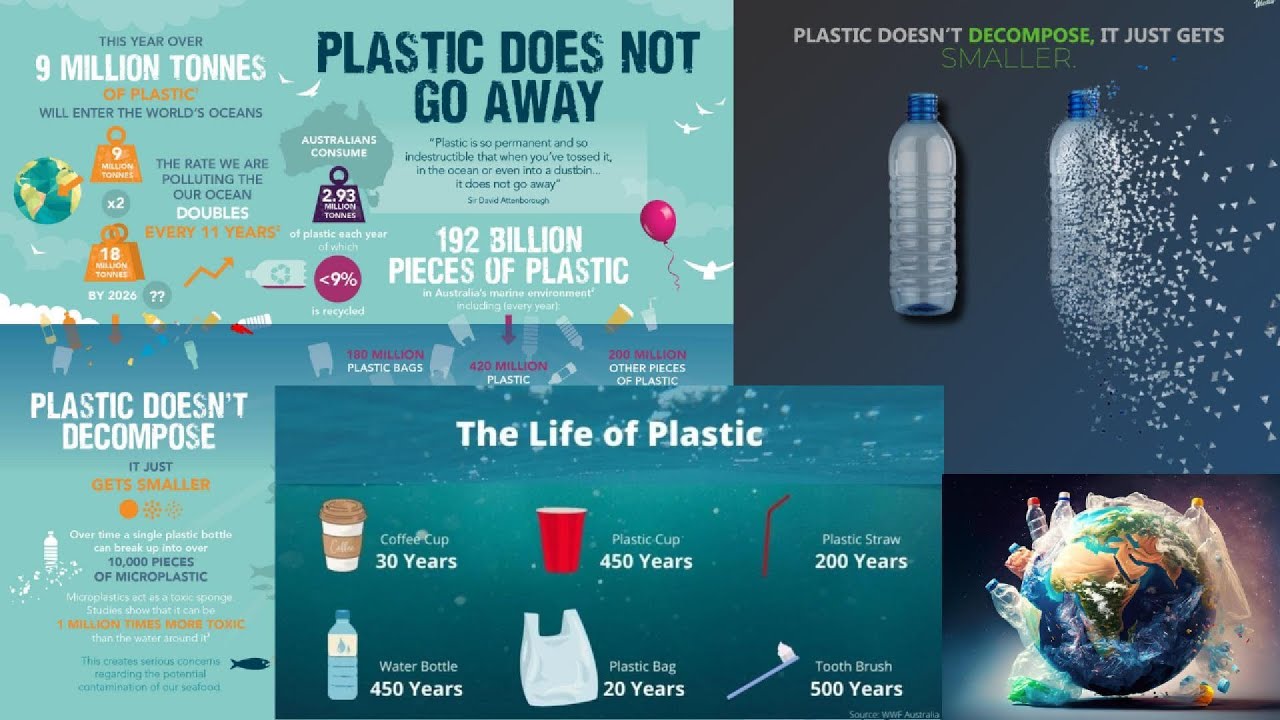
Plastics, Plastics, Plastics: They Never Disappear; Remediation Techniques are in the Offing! (Ep12)
Keywords
Summary
190 words
Critical Evaluation
Value of the Information & Strength of the Argument
The podcast provides a valuable overview of plastic pollution, effectively explaining the scale of the problem and the challenges in addressing it. The hosts use clear examples and analogies, such as the ’tragedy of the commons’ and the comparison to climate change, to illustrate the systemic issues. The argumentation is coherent, moving from the history and production of plastics to the environmental and health impacts, and finally to potential solutions. However, the discussion sometimes lacks depth, particularly in explaining the scientific mechanisms of bioremediation and the specifics of alternative materials. The hosts present a balanced view, acknowledging both the difficulties and the promising developments, but they could have provided more concrete data and references to strengthen their claims.
Scientific Rigor, Source Quality, Title Accuracy
The scientific rigor is moderate. The hosts cite general statistics (e.g., 8.3 billion tons of plastic produced) and mention specific organizations (The Ocean Cleanup) and companies (Zero Circle) without providing detailed sources. The information is largely accurate but presented in a simplified manner suitable for a general audience. The title accurately reflects the content, which focuses on the persistence of plastics and emerging remediation techniques. The podcast does not include formal citations, but the hosts appear knowledgeable and the information aligns with current scientific consensus. The lack of specific references reduces the overall reliability, but the content is still informative and generally trustworthy.
236 words
Title / Content Match
The title accurately reflects the content, which discusses the persistence of plastics and emerging remediation techniques.
Quality & Reliability
7/10
The podcast provides a broad overview of plastic pollution, citing general statistics (e.g., <10% recycling, 8.3 billion tons produced) and mentioning specific remediation technologies (bioremediation, The Ocean Cleanup) without detailed citations. The information is generally accurate but lacks specific references and occasionally oversimplifies complex issues.
Key Moments
Markers derived by PSI from the transcript: the creator did not define chapters.
- Introduction to the topic of plastics and their ubiquity.
- Discussion on the history of plastics and their growth after WWII.
- Explanation of why plastics are cheap and the issue of recycling rates.
- Health impacts of microplastics on humans and animals.
- Introduction to bioremediation and examples of microbes that degrade plastics.
- Discussion on bioplastics and alternative materials, including Zero Circle.
- Conclusion emphasizing the need for economic incentives and consumer action.
Cited Sources
- The Ocean Cleanup — Mentioned as an organization working to remove plastics from oceans and rivers.
- Zero Circle — Mentioned as a company achieving price parity for non-toxic food packaging.
Concurring Sources
- Plastic pollution - Wikipedia — Provides comprehensive information on plastic pollution, including statistics and impacts.
- Microplastics in the environment - ScienceDirect — Academic source discussing the prevalence and effects of microplastics.
Dissenting Sources
Contribution & Novelties
The podcast offers a comprehensive yet accessible overview of plastic pollution, connecting it to broader environmental and economic issues. It highlights the ’tragedy of the commons’ framework and the precautionary principle, providing a lens to understand the systemic challenges. The discussion of bioremediation and bioplastics introduces emerging solutions, though it lacks technical depth. The episode’s optimistic tone, focusing on potential solutions, is a valuable contribution to public discourse.
Pour aller plus loin :
- Microplastics - Wikipedia — Provides a detailed overview of microplastics, their sources, and impacts.
- Bioremediation - Wikipedia — Explains the use of microbes to degrade pollutants, including plastics.
- The Ocean Cleanup — Official website of the organization mentioned, offering information on their projects.
- Zero Circle — Company website for the alternative packaging solution mentioned.
127 words
Radar Profile
The radar profile shows moderate scores across all dimensions, indicating a balanced but not deeply technical presentation. The podcast excels in providing a broad overview and engaging narrative, but lacks in-depth scientific detail and rigorous sourcing.