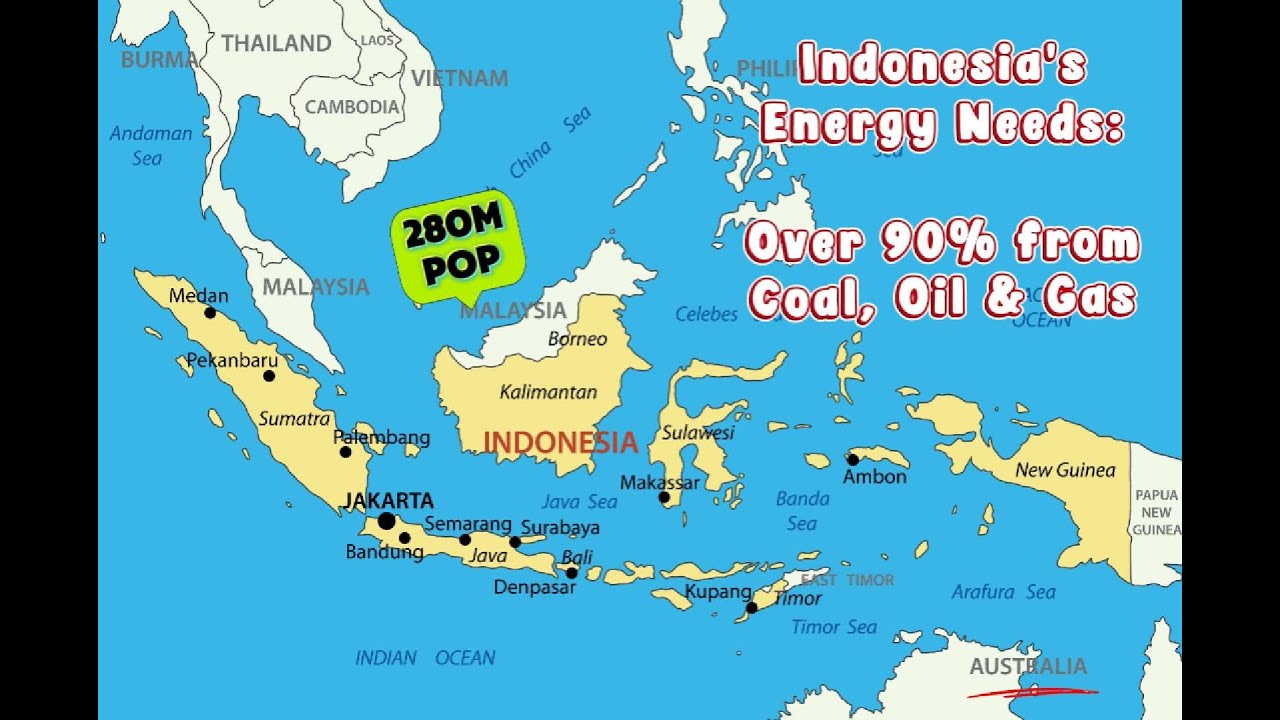
Ep 14: Indonesia's Energy Transition Challenge, 280 Million People who Depend on Coal, Oil & LNG.
Keywords
Summary
150 words
Critical Evaluation
Value of the Information & Strength of the Argument
The value of the information lies in its comprehensive overview of Indonesia’s energy landscape, highlighting the complex interplay of economic, political, and geographical factors. The hosts argue that Indonesia’s reliance on coal is deeply entrenched due to economic incentives and infrastructure, but they also point out the country’s significant renewable energy potential. The argumentation is coherent, but it relies heavily on general statements and lacks specific data or case studies to support claims. The discussion is more descriptive than analytical, with limited critical evaluation of policies or solutions.
Scientific Rigor, Source Quality, Title Accuracy
The scientific rigor is moderate. The hosts mention some statistics (e.g., 90% fossil fuel use, 14% EV share) but do not cite specific sources. The show notes link is provided, which may contain references, but it is not explicitly referenced in the episode. The title accurately reflects the content, focusing on Indonesia’s energy transition challenges. The discussion is largely based on the hosts’ expertise and general knowledge, which is acceptable for a podcast but not for a rigorous scientific analysis.
183 words
Title / Content Match
The title accurately reflects the content, focusing on Indonesia's energy transition challenges and its dependence on coal, oil, and LNG.
Quality & Reliability
6/10
The hosts provide a broad overview of Indonesia's energy challenges, but the discussion is largely qualitative and lacks specific data citations. They mention some statistics (e.g., 90% fossil fuel use, 14% EV share) without sources. The show notes link may contain references, but they are not explicitly cited in the episode.
Key Moments
Markers derived by PSI from the transcript: the creator did not define chapters.
- Introduction to the podcast and topic of Indonesia.
- Discussion of Indonesia's population and geography.
- Overview of Indonesia's fossil fuel consumption and coal dominance.
- Economic background and history of Indonesia.
- Discussion of renewable energy potential, including geothermal and solar.
- Challenges to energy transition: economic incentives and regulatory issues.
- Climate change impacts on Indonesia, including agriculture and sinking capital.
- Biodiversity and mangroves as nature-based solutions.
- Indonesia's role in nickel and copper production and value chain ambitions.
- Geothermal potential and new drilling techniques.
Cited Sources
- Ep 13 Climate Basics Podcast: Indonesia's Energy Transition Challenges — Show notes for the episode, likely containing additional references and details.
Concurring Sources
- IEA Indonesia Country Page — Provides data on Indonesia's energy mix and transition efforts.
Contribution & Novelties
The episode provides a broad overview of Indonesia’s energy transition challenges, highlighting the tension between economic reliance on coal and the potential for renewables. It offers a unique perspective on the role of geography and infrastructure in shaping energy policy. However, it lacks novel insights or in-depth analysis.
Pour aller plus loin :
- Indonesia’s Energy Transition — IEA country page with data and reports.
- Geothermal Energy in Indonesia — Overview of geothermal potential and development.
- Indonesia’s New Capital City — Information on the planned capital city.
- Mangrove Restoration in Indonesia — Conservation International’s work on mangroves.
96 words
Radar Profile
The radar profile shows moderate scores across all dimensions, with slightly higher scores in quantity of information and lower in technical level. This suggests the episode is informative but not highly technical, suitable for a general audience.