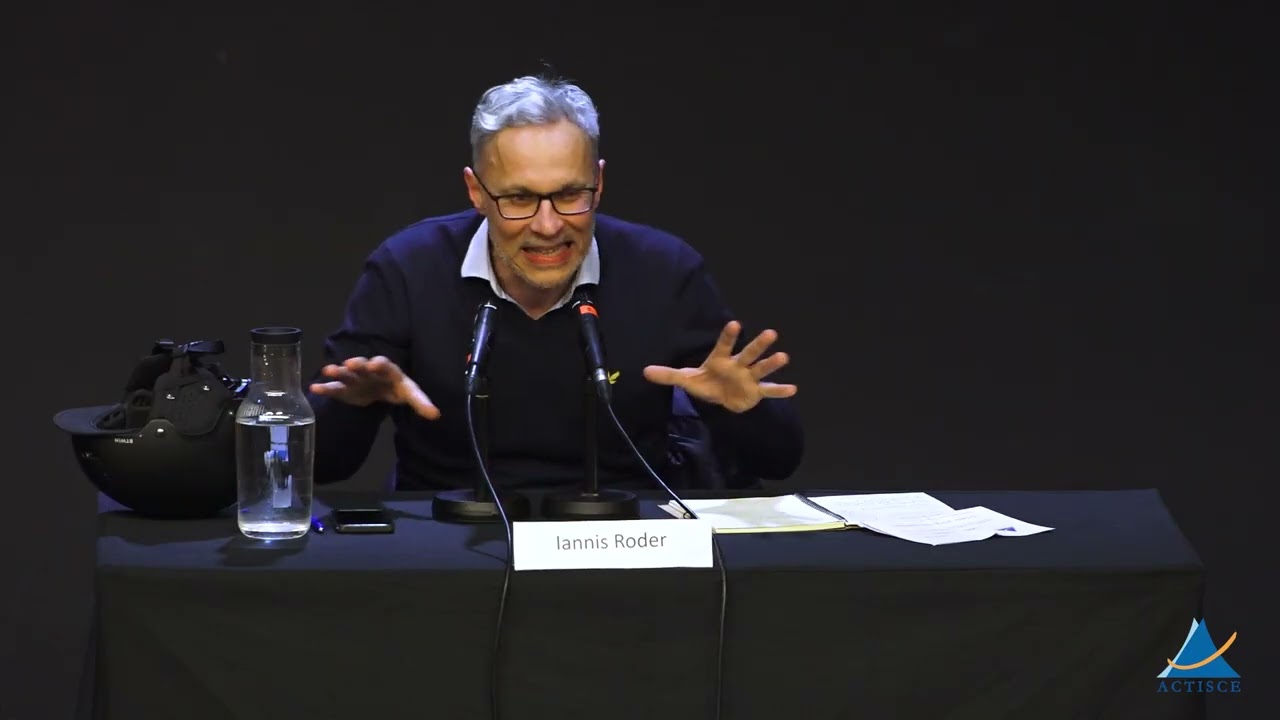
La Laïcité, pilier de l'école républicaine
Keywords
Summary
198 words
Critical Evaluation
Value of the Information & Strength of the Argument
The talk provides valuable insights from a practitioner’s perspective, enriched by references to recent surveys and sociological studies. Roder’s argumentation is coherent and well-structured, moving from diagnosis to historical context and pedagogical solutions. He effectively uses concrete examples and data to support his points, such as the 52% of high school students who oppose the 2004 law and the increase in teacher self-censorship from 36% to 56%. However, some claims are based on personal experience and may not be generalizable, and the talk is more of an expert opinion than a systematic analysis.
Scientific Rigor, Source Quality, Title Accuracy
Roder demonstrates rigor by citing specific surveys (LICRA 2021, IFOP 2018 and 2023) and sociological works (Philippe Portier, Olivier Galland, Anne Muxel). He also references historical figures like Ferdinand Buisson and Jules Ferry. The title accurately reflects the content, which is a defense of secularism as a foundational principle of the republican school. The talk is well-organized and the arguments are presented with clarity, though the lack of formal citations for some claims slightly reduces the overall rigor.
186 words
Title / Content Match
The title accurately reflects the content, which focuses on the role of secularism in French schools and its challenges.
Quality & Reliability
8/10
The speaker is a seasoned educator and director of the education observatory at the Jean Jaurès Foundation, providing expert testimony grounded in field experience and referencing specific surveys and sociological studies. However, the talk is primarily an opinion-based lecture rather than a systematic academic review, and some claims are not fully sourced.
Key Moments
Markers derived by PSI from the transcript: the creator did not define chapters.
- Introduction: Roder presents his background as a teacher in Saint-Denis and his field experience.
- Discussion of youth's misunderstanding of secularism, influenced by American culture and individualism.
- Citing surveys: 52% of high school students oppose the 2004 law; 49% believe teachers should be allowed to display religious affiliation.
- Analysis of identity-based reactions and the rise of absolutist religious views among a third of young Muslims.
- Historical context: the republican school's mission to free children from predetermined identities and provide access to universal knowledge.
- Pedagogical approach: explaining secularism as an emancipatory principle, not a coercive one, and addressing students' concerns.
- Conclusion: Roder opposes banning religious signs in universities and emphasizes the importance of teaching secularism.
Cited Sources
- Sondage LICRA 2021 — Cited as a survey showing 52% of high school students believe students should be allowed to display religious affiliation at school.
- Sondage IFOP pour le Comité National d'Action Laïque (CNAL) 2018 — Cited as showing 36% of teachers self-censor on religious topics.
- Sondage IFOP pour le CNAL 2023 — Cited as showing 56% of teachers self-censor, with a quarter doing so several times a year.
- Article de Olivier Galland sur Telos — Cited as recent article on the absolutist vision of religion among a third of young Muslims.
- Philippe Portier — Cited as sociologist noting that a minority reinvests in religious identity.
Concurring Sources
- Rapport sur la laïcité de l'Observatoire de la laïcité (2016) — Supports the view that secularism is often misunderstood and needs to be better taught.
Dissenting Sources
- Critiques of the 2004 law from some academics — Some scholars argue that the ban on religious signs in schools may be discriminatory or counterproductive, a perspective not addressed in the talk.
Contribution & Novelties
The talk offers a field-based perspective on the challenges of secularism in French schools, combining personal experience with survey data. It provides a clear pedagogical framework for addressing misunderstandings and emphasizes the emancipatory nature of secularism. The discussion of identity-based reactions and the distinction between school and private sphere is particularly insightful.
Pour aller plus loin :
- Loi du 15 mars 2004 — Official text of the law banning religious signs in public schools.
- Charte de la laïcité à l’École — Official document outlining the principles of secularism in French schools.
- Observatoire de l’éducation de la Fondation Jean Jaurès — Reports on education and youth perceptions, relevant to the talk’s themes.
111 words
Radar Profile
The radar profile shows high scores in quantity and quality of information, reflecting the speaker's expertise and use of data. The technical level is moderate, as the talk is accessible to a general audience. The overall reliability is good, though the reliance on personal experience and the lack of formal citations for some claims slightly lower the score.
💬 Sur les 0 commentaires analysés, aucune tendance n'est disponible.