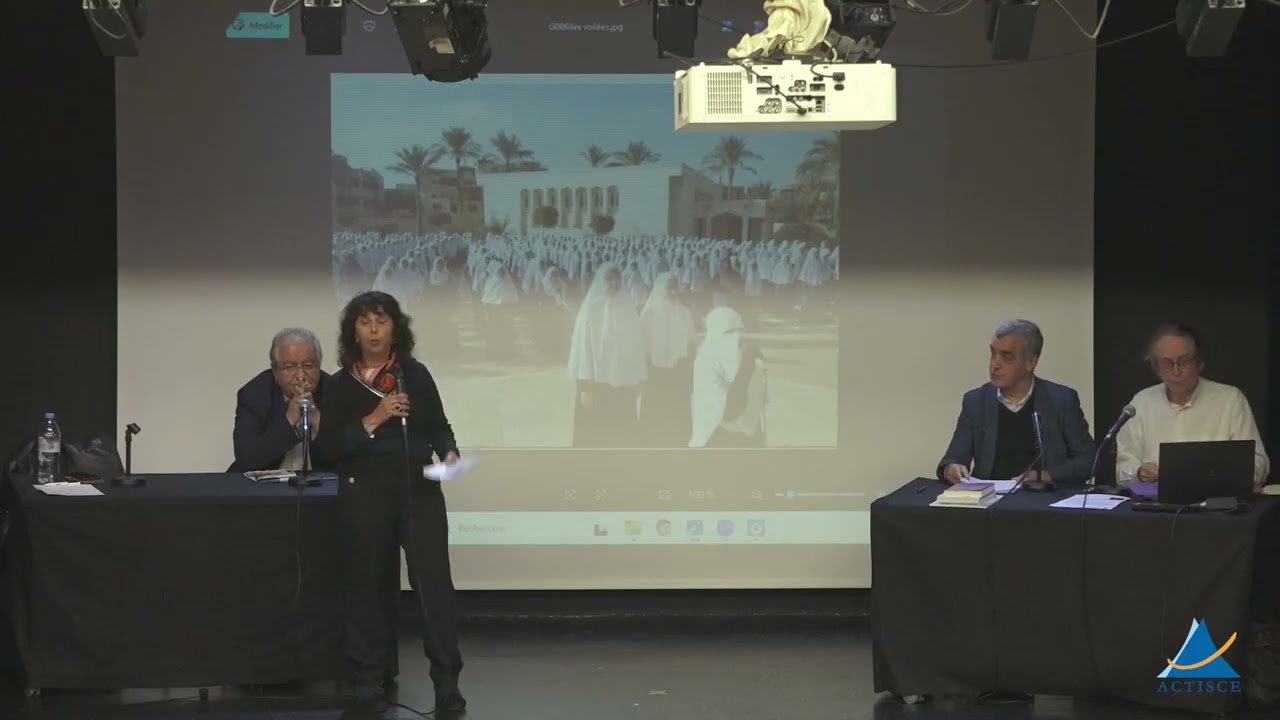
Libres penseurs, Kabyles et Iraniens en quête de liberté | Gérard Vignaux
Keywords
Summary
183 words
Critical Evaluation
Value of the Information & Strength of the Argument
The video provides valuable firsthand accounts and perspectives on the struggles for freedom in Kabylia and Iran, which are often underrepresented in mainstream media. The speakers bring personal experience and expertise, adding authenticity to their narratives. However, the argumentation is largely one-sided and lacks critical examination of counterarguments. The speakers rely heavily on emotional appeals and unverified claims, which weakens the overall persuasiveness for a neutral audience. The discussion is more of a platform for advocacy than a balanced analysis.
Scientific Rigor, Source Quality, Title Accuracy
The scientific rigor is limited. The speakers make numerous factual claims (e.g., historical events, casualty figures, legal articles) without providing verifiable sources. No academic references or official documents are cited. The title accurately reflects the content, but the lack of citations and the partisan nature of the presentation reduce its reliability. The video serves more as an opinion piece than a rigorous scientific analysis.
159 words
Title / Content Match
The title accurately reflects the content, which focuses on the struggles for freedom in Kabylia and Iran, framed within the context of freethought.
Quality & Reliability
6/10
The video presents a debate with expert speakers, but claims are largely unverified and rely on personal testimony and advocacy. No formal citations or references are provided, and the content is highly partisan.
Key Moments
Markers derived by PSI from the transcript: the creator did not define chapters.
- Introduction by the moderator, presenting the speakers and the theme of the conference.
- Gérard Vignaux begins his talk on the history of freethought and secularism in France.
- Vignaux discusses contemporary threats to freedom, including radical Islamism and authoritarianism.
- Zidane Lafdal presents the Kabyle case, detailing alleged human rights abuses by Algeria.
- Lafdal describes the concept of 'lawfare' and the use of judicial terrorism against Kabyle activists.
- Didier Idjadi discusses the Islamic Republic of Iran as a totalitarian regime and the recent protests.
- Conclusion and call for solidarity with the peoples of Kabylia and Iran.
Cited Sources
- Défi de la libre pensée — Book by Gérard Vignaux, mentioned during his presentation.
- Réduire au silence — Book mentioned by Zidane Lafdal, likely about the use of law to silence opposition.
Concurring Sources
- Amnesty International on Algeria — Reports on human rights violations in Algeria, supporting claims of repression.
- Human Rights Watch on Iran — Documentation of human rights abuses in Iran, aligning with the speaker's assertions.
Dissenting Sources
- Algerian Government Official Statements — The Algerian government denies allegations of human rights abuses and considers Kabyle activists as separatists threatening national unity.
- Iranian Government Official Statements — The Iranian government rejects accusations of totalitarianism and frames its actions as maintaining Islamic values and national security.
Contribution & Novelties
The video offers a unique platform for activists from Kabylia and Iran to present their causes to a French-speaking audience, highlighting the intersection of freethought and political struggles. It provides personal testimonies and specific allegations of human rights abuses that are not widely covered. The concept of ’lawfare’ as applied to Algeria is a notable contribution.
Pour aller plus loin :
- Kabylia - Wikipedia — Provides background on the region and its history.
- Human Rights in Algeria - Amnesty International — Reports on human rights issues in Algeria.
- Iran Human Rights - United Nations — UN reports on human rights in Iran.
- Secularism in France - Wikipedia — Context on French laïcité, relevant to the freethought movement.
117 words
Radar Profile
The radar profile shows moderate scores in quantity of information and technical level, but lower scores in quality and reliability, reflecting the video's advocacy nature and lack of rigorous sourcing.
💬 No comments were provided for analysis.