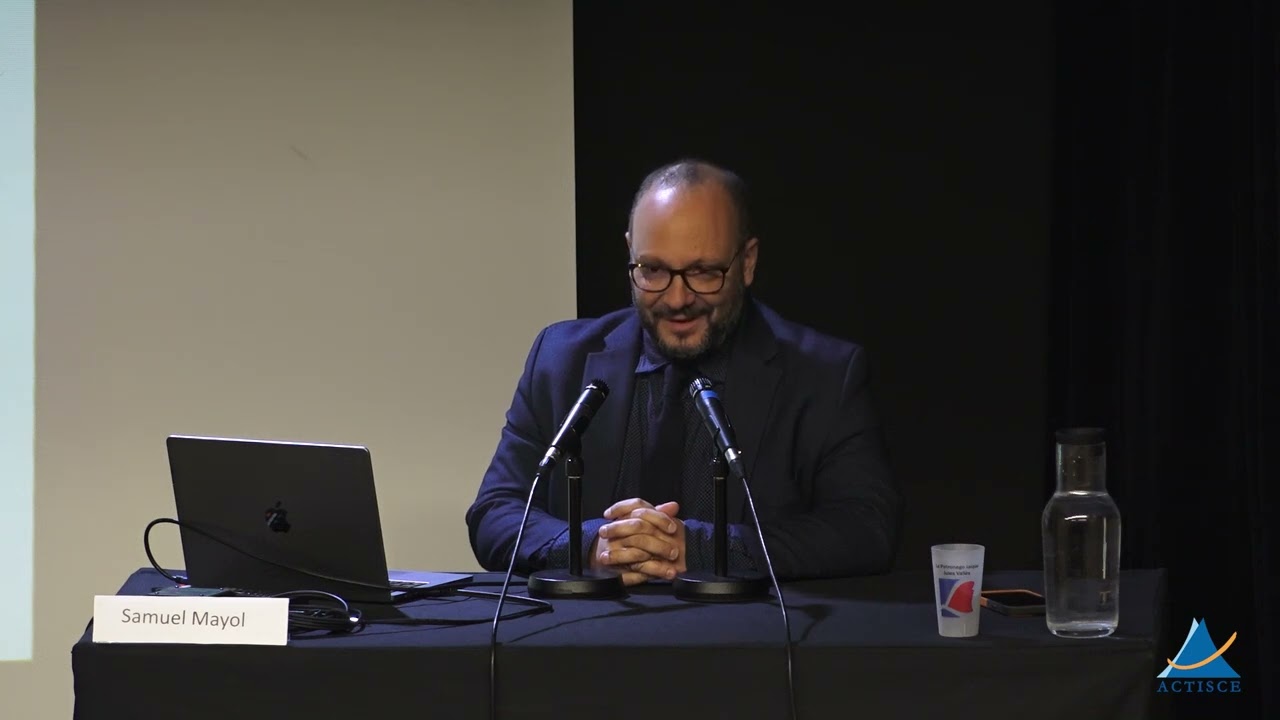
La laïcité, un modèle universel ou une exception française
Keywords
Summary
192 words
Critical Evaluation
Value of the Information & Strength of the Argument
The value of the information lies in its comprehensive historical overview of French secularism, connecting key events and figures in a coherent narrative. The speaker’s argumentation is structured and persuasive, using historical examples to support his thesis that laïcité is a universal value. However, the presentation is one-sided, lacking a balanced discussion of criticisms or alternative perspectives. The speaker’s ideological stance is clear, and he does not engage with potential counterarguments, which weakens the overall argumentative rigor.
86 words
Title / Content Match
The title accurately reflects the content, which explores whether laïcité is a universal model or a French exception.
Quality & Reliability
7/10
The speaker provides a historical overview of French secularism, referencing key events and figures, but the presentation is an opinion-based lecture without formal citations or peer-reviewed sources. The argument is coherent and well-structured, but lacks critical engagement with counterarguments and relies on a specific ideological perspective.
Key Moments
Markers derived by PSI from the transcript: the creator did not define chapters.
- Introduction: the difficulty of finding venues for laïcité conferences.
- Historical foundation: baptism of Clovis and France as 'fille aînée de l'église'.
- The Reformation and the Edict of Nantes (1598).
- Enlightenment philosophers: Rousseau, Montesquieu, Diderot, Voltaire.
- Voltaire's involvement in the Calas and Sirven affairs.
- French Revolution: Declaration of the Rights of Man (1789).
- Concordat of 1801 and the organic articles.
- Creation of civil status in 1792.
- 1881 law abolishing blasphemy and the Jules Ferry laws.
- The 1905 law separating church and state and the debates.
Cited Sources
- La Séparation (film) — Film depicting the debates on the 1905 law, shown as an excerpt.
Concurring Sources
- Laïcité in France — General information on French secularism.
Dissenting Sources
- Critiques of French laïcité — Some scholars argue that laïcité can be discriminatory, but no specific source is cited in the video.
Contribution & Novelties
The video provides a passionate and accessible historical narrative of French laïcité, emphasizing its universalist potential. It offers a clear synthesis of key events and figures, making it useful for a general audience. However, it does not present new research or original analysis, and its perspective is explicitly partisan.
Pour aller plus loin :
- Laïcité in France — Overview of the concept and its history.
- 1905 French law on the Separation of the Churches and the State — Detailed article on the law.
- Voltaire’s Treatise on Toleration — Relevant to the discussion of religious tolerance.
95 words
Radar Profile
The radar profile shows high scores in quantity of information and quality of information, reflecting the comprehensive historical overview. The level of technicality is moderate, as the talk is accessible to a general audience. The global reliability is moderate due to the lack of formal citations and the partisan perspective.
💬 No comments were provided for analysis.