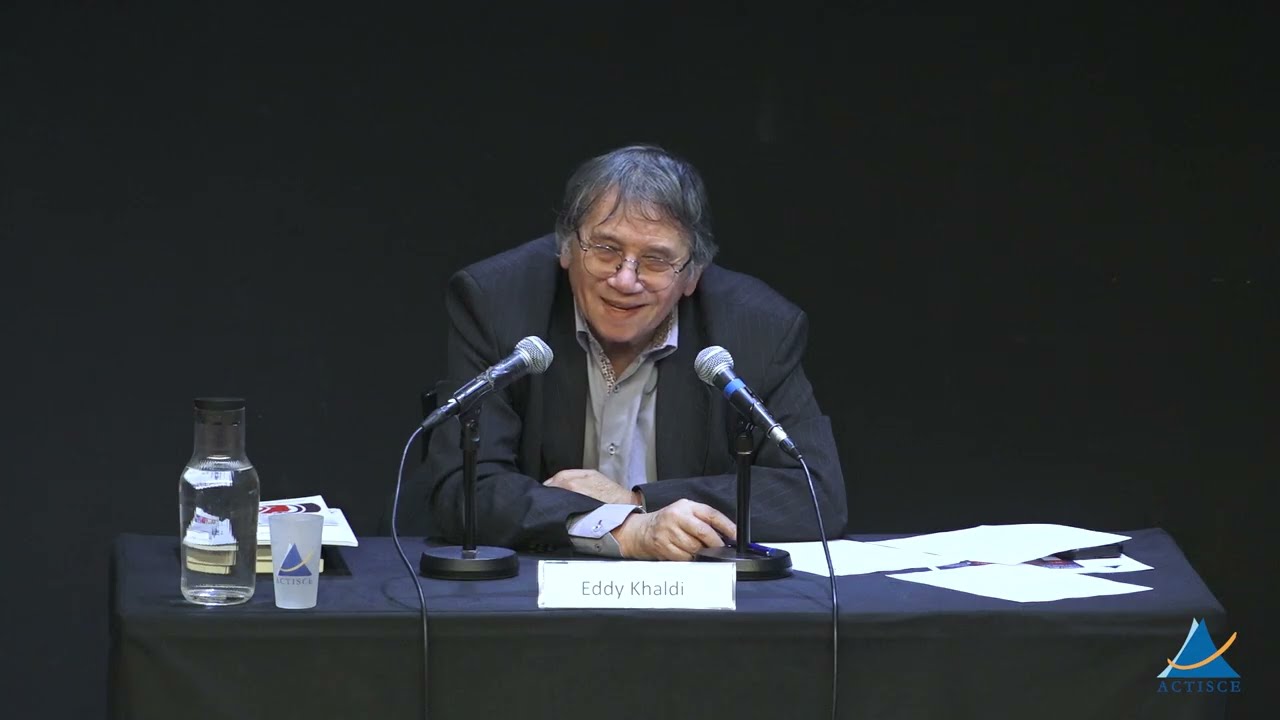
La laïcité à l’Ecole, défis et perspectives | Eddy Khaldi
Keywords
Summary
136 words
Critical Evaluation
Value of the Information & Strength of the Argument
The talk provides a valuable historical perspective on the French school system and secularism, drawing on key thinkers and laws. The argumentation is coherent and passionate, but it is largely based on personal experience and ideological positions rather than rigorous empirical evidence. The speaker makes several claims (e.g., about private school funding) without providing detailed sources, which weakens the overall persuasiveness for a critical audience.
Scientific Rigor, Source Quality, Title Accuracy
The speaker cites historical figures and laws (Condorcet, Guizot, Ferry, 1905 law) and mentions polls (IPSOS, FCPE/Cantar) and a Cour des comptes report, but without precise references. The title accurately reflects the content. The talk is an opinion piece, so the scientific rigor is moderate. No comments were provided for analysis.
131 words
Title / Content Match
The title accurately reflects the content, which focuses on secularism in schools, its historical roots, and contemporary challenges.
Quality & Reliability
6/10
The speaker is a long-time activist in secular education organizations, providing a personal and historical perspective. However, the talk is an opinion piece with limited verifiable data, and some claims (e.g., about private school funding) are presented without detailed sources.
Key Moments
Markers derived by PSI from the transcript: the creator did not define chapters.
- Introduction and presentation of the speaker's role as president of FDDEN.
- Discussion of the 1905 law and its principles, emphasizing freedom of conscience.
- Presentation of polls showing a gap between public opinion and parents' satisfaction.
- Historical overview from Condorcet to the Ferry laws, highlighting the collective project of public education.
- Critique of the private education system and its social segregation, citing Cour des comptes data.
- Discussion of the Debré law and its alleged diversion, with the Catholic Church's influence.
Cited Sources
- Loi du 9 décembre 1905 concernant la séparation des Églises et de l'État — Mentioned as the foundational law for secularism, emphasizing freedom of conscience.
- Loi du 15 mars 2004 encadrant, en application du principe de laïcité, le port de signes ou de tenues manifestant une appartenance religieuse dans les écoles, collèges et lycées publics — Referenced as a law perceived by some youth as restricting freedom.
- Loi n° 59-1557 du 31 décembre 1959 sur les rapports entre l'Etat et les établissements d'enseignement privés — Discussed as the Debré law, which the speaker argues has been diverted from its purpose.
Concurring Sources
- Rapport de la Cour des comptes sur l'enseignement privé (2023) — Mentioned as evidence of social segregation in private schools.
Dissenting Sources
- Études sur la performance des écoles privées — Some studies suggest private schools may have better academic outcomes, which contrasts with the speaker's claim that they only select advantaged students.
Contribution & Novelties
The talk offers a personal and historical perspective on secularism in French schools, emphasizing the tension between the collective civic mission and individualistic consumer approaches. It highlights the role of the 1905 law and critiques the influence of private education.
Pour aller plus loin :
- Laïcité en France — Provides a comprehensive overview of secularism in France.
- Loi sur les signes religieux dans les écoles publiques françaises — Details the 2004 law.
- École républicaine — Discusses the concept of the republican school.
82 words
Radar Profile
The radar profile shows moderate scores across all dimensions, with a slightly higher score in quantity of information and lower in technical level. This reflects a talk that is informative but not deeply technical, and with moderate reliability due to the opinion-based nature.