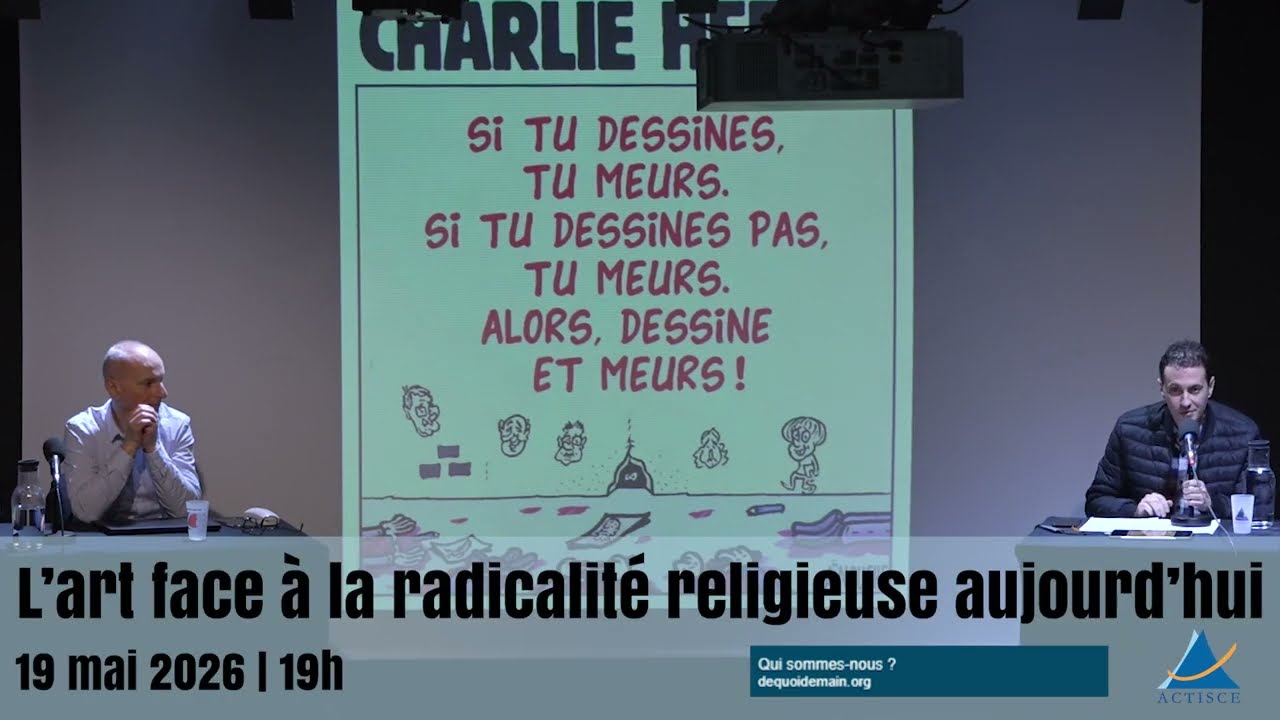
L’art face à la radicalité religieuse aujourd’hui
Keywords
Summary
211 words
Critical Evaluation
Value of the Information & Strength of the Argument
The value of the information lies in the unique combination of a first-hand account of persecution and a structured analysis of the conflict between art and religious extremism. Aïnouche’s testimony provides concrete, emotional evidence of the dangers faced by artists in authoritarian contexts, while Bestandji offers a clear conceptual framework that helps understand the motivations behind religious censorship. The argumentation is coherent and persuasive, using historical examples such as the Bamiyan Buddhas and the film ‘Persepolis’ to illustrate the points. However, the presentation is largely opinion-based, and the speakers do not engage with counterarguments or provide a balanced view of the topic. The strength of the argumentation lies in its clarity and the credibility of the speakers, but it lacks a systematic, academic approach.
Scientific Rigor, Source Quality, Title Accuracy
The scientific rigor is moderate. The speakers rely on personal experience and well-known historical events, but they do not cite specific academic studies or sources. The quality of sources is therefore limited to the speakers’ own authority and the examples they mention. The title accurately reflects the content, which is a discussion of the challenges art faces from religious radicalism. The conference is a debate format, which allows for a dynamic exchange of ideas but also means that the arguments are not always systematically developed. The personal testimony of Aïnouche adds authenticity but also introduces a subjective element that is not balanced by other perspectives. Overall, the content is informative and thought-provoking, but it would benefit from more rigorous sourcing and a more balanced presentation.
264 words
Title / Content Match
The title accurately reflects the content, which addresses the challenges art faces from religious radicalism through personal experience and theoretical analysis.
Quality & Reliability
7/10
The conference combines personal testimony from a persecuted cartoonist with a structured theoretical analysis of religious extremism and art. The arguments are coherent and grounded in historical examples, but the presentation is largely subjective and lacks systematic citation of academic sources.
Key Moments
Markers derived by PSI from the transcript: the creator did not define chapters.
- Introduction and tribute to Charlie Hebdo cartoonists
- Aïnouche recounts his personal background and the Algerian context
- Discussion of the 'black decade' and the assassination of intellectuals
- Aïnouche describes his own persecution and the use of Article 87 bis
- Aïnouche shows his cartoons and explains their context
- Bestandji begins his theoretical analysis, defining art and religious radicalism
- Discussion of why extremists oppose art: imagination, doubt, individuality
- Examples of censorship: Bamiyan Buddhas, Persepolis, and the concept of blasphemy
- Conclusion and call to defend artistic freedom
Cited Sources
- Le linceul du féminisme – caresser l’islamisme dans le sens du voile — Mentioned by Naëm Bestandji as his own publication, providing a basis for his analysis.
Concurring Sources
- Reporters Without Borders — Provides information on press freedom and persecution of journalists, supporting the claims about Algeria.
Contribution & Novelties
The conference offers a unique perspective by combining personal testimony from a persecuted cartoonist with a theoretical analysis of religious extremism. It provides concrete examples of censorship and violence against artists, and explains the ideological motivations behind such actions. The discussion of the concept of ‘blasphemy’ and its misuse is particularly insightful.
Pour aller plus loin :
- Freedom of expression — Provides a legal and philosophical background.
- Blasphemy law — Explores the legal treatment of blasphemy in different countries.
- Charlie Hebdo shooting — Contextualizes the attacks on the magazine and the debate on satire.
- Bamiyan Buddhas — Details the destruction of the statues by the Taliban.
106 words
Radar Profile
The radar profile shows high scores in information quantity and quality, but lower in technical level and reliability, reflecting the debate format and the reliance on personal testimony rather than academic rigor.