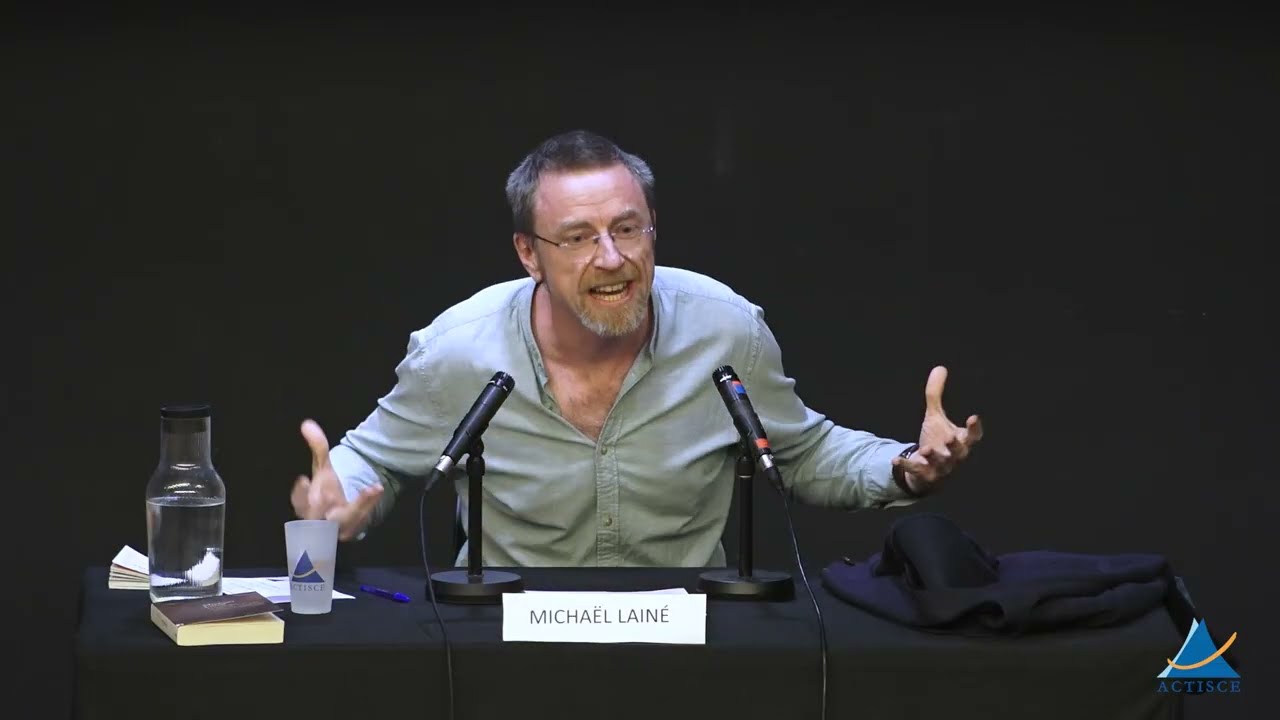
L’ère de la post-vérité ? | Michaël Lainé
Keywords
Summary
132 words
Critical Evaluation
Value of the Information & Strength of the Argument
The talk provides valuable insights into the psychological and algorithmic drivers of post-truth, offering a structured framework (demand and supply) that is both accessible and thought-provoking. The argumentation is coherent, building from a critique of common definitions to a nuanced explanation involving cognitive biases and platform design. However, some claims, such as the influence of X on journalism, are presented without detailed evidence, and the discussion of capitalism, while interesting, feels tangential.
Scientific Rigor, Source Quality, Title Accuracy
The speaker references several studies and concepts (e.g., the 2020 French study on immigration misinformation, the study on Facebook’s algorithm knowing users better than friends, and the work of Julia Cagé et al. on journalists’ use of X) but does not provide specific citations or URLs. The title accurately reflects the content, and the talk maintains a rigorous tone, though it is primarily an opinion piece rather than a systematic review.
158 words
Title / Content Match
The title accurately reflects the content, which explores the concept of post-truth and its societal implications.
Quality & Reliability
7/10
The speaker provides a nuanced analysis of post-truth, drawing on academic concepts and empirical studies, but the talk is primarily an opinion-based lecture without systematic citation of sources.
Key Moments
Markers derived by PSI from the transcript: the creator did not define chapters.
- Introduction to the concept of post-truth and its Oxford definition.
- Critique of the Oxford definition, emphasizing interpretation over facts.
- Discussion of three psychological needs: truth, cognitive security, and affection.
- Explanation of how algorithms maximize engagement and create cognitive bubbles.
- Analysis of the influence of social media on traditional journalism.
- Exploration of capitalism's role in satisfying desires and escaping reality.
Cited Sources
- Oxford Dictionary definition of post-truth — Referenced as the common definition of post-truth.
- Study on misinformation and fact-checking (2020) — Mentioned as an experiment on French internet users and immigration misinformation.
- Study on Facebook algorithm knowing users better than friends — Referenced to illustrate how algorithms understand users intimately.
- Study by Julia Cagé, Nicolas Hervé, and Mazoyé on journalists' use of X — Cited to show the influence of social media trends on traditional media coverage.
Concurring Sources
- Post-truth politics - Wikipedia — Provides academic and historical context for the term.
- Echo chamber (media) - Wikipedia — Supports the discussion of cognitive bubbles.
Dissenting Sources
- The Death of Truth by Michiko Kakutani — Offers a more pessimistic view, focusing on the erosion of objective truth in politics and culture.
Contribution & Novelties
The talk offers a comprehensive framework for understanding post-truth by integrating psychological needs and algorithmic supply, providing a novel perspective that goes beyond simple misinformation. It emphasizes the role of interpretation and the influence of digital platforms on public discourse.
Pour aller plus loin :
- Post-truth politics - Wikipedia — Overview of the concept and its historical context.
- Echo chamber (media) - Wikipedia — Related to cognitive bubbles and selective exposure.
- Confirmation bias - Wikipedia — Key cognitive bias underlying selective exposure.
- Surveillance capitalism - Wikipedia — Concept by Shoshana Zuboff relevant to the algorithmic economy.
96 words
Radar Profile
The radar profile shows balanced scores across information quantity, quality, technical level, and reliability, indicating a well-rounded but not exceptionally rigorous presentation. The talk is informative and accessible, with a moderate technical depth.
💬 No comments were provided for analysis.