Jeux vidéo et sciences cognitives | Celia Hodent
Keywords
Summary
185 words
Critical Evaluation
Value of the Information & Strength of the Argument
The talk provides valuable insights into how cognitive science principles are applied in game design, offering concrete examples from the speaker’s professional experience. The argumentation is solid, as Hodent builds her case logically from foundational concepts to practical applications. She effectively demonstrates the relevance of cognitive limitations in design decisions and supports her points with real-world cases, such as the Fortnite icon redesign. The discussion of ethical considerations adds depth, showing a commitment to responsible design. However, the talk is primarily based on personal expertise and anecdotal evidence rather than systematic research, which limits its scientific rigor.
Scientific Rigor, Source Quality, Title Accuracy
The speaker’s credentials lend credibility, and she references established concepts like the Ebbinghaus forgetting curve, though without formal citations. The talk is well-structured and the title accurately reflects the content. The lack of explicit sources in the video or description is a minor weakness, but the speaker’s authority and the practical examples compensate. The title is appropriate and not misleading.
172 words
Title / Content Match
The title accurately reflects the content, which explores the intersection of video games and cognitive science, focusing on UX design.
Quality & Reliability
8/10
The speaker is a doctor in cognitive psychology with extensive industry experience (Ubisoft, Epic Games). The content is grounded in established cognitive science concepts (perception, memory, attention) and practical UX examples. However, it is a conference talk without formal citations or peer-reviewed references, and some simplifications are made for a general audience.
Key Moments
Markers derived by PSI from the transcript: the creator did not define chapters.
- Introduction: speaker's background and experience in video games and cognitive science.
- Explanation of user experience (UX) and human factors, using the park path analogy.
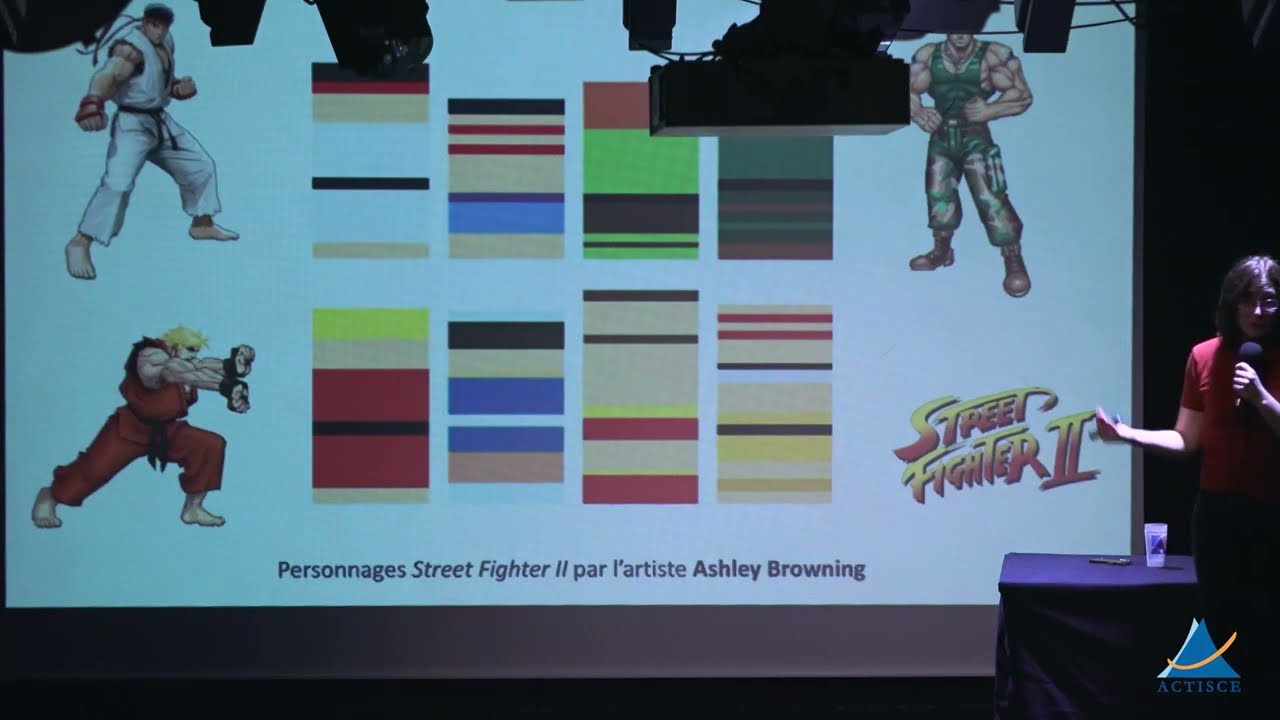
- Discussion on perception being subjective, with examples from Street Fighter and Fortnite.
- Memory limitations: the Thinker sculpture recall test and the Ebbinghaus forgetting curve.
- How games offload memory demands through HUDs and contextual prompts.
- Attention, emotion, and motivation in game design, and their impact on learning.
- Ethical considerations: inclusive design, avoiding dark patterns, and player well-being.
Cited Sources
- Ebbinghaus forgetting curve — Mentioned in the talk as a key concept in memory research.
Concurring Sources
- Ebbinghaus forgetting curve — The speaker's description aligns with the well-known forgetting curve.
Contribution & Novelties
The talk offers a unique perspective by bridging cognitive science and game design, providing practical insights from a leading UX expert. It emphasizes the importance of understanding human limitations to create better user experiences. The examples from Fortnite and other games illustrate how theoretical concepts are applied in real-world design.
Pour aller plus loin :
- User Experience (UX) Design — Overview of UX principles and practices.
- Cognitive Load Theory — Relevant to the discussion on memory and attention.
- Human Factors and Ergonomics — The scientific discipline behind user-centered design.
89 words
Radar Profile
The radar profile shows high scores in information quantity, quality, and reliability, with a moderate technical level. This indicates a well-informed talk that is accessible to a general audience while still offering depth for those interested in cognitive science and game design.