Thematic Track Session 2.2 Diversification and Decentralization of Energy Sources
Keywords
Summary
196 words
Critical Evaluation
Value of the Information & Strength of the Argument
The session provides valuable insights into the practical strategies for enhancing energy resilience through diversification and decentralization. The argumentation is solid, grounded in real-world case studies such as the Sri Lanka blackout, Ukraine conflict, and Puerto Rico’s hurricane resilience. The speakers effectively argue that diversification reduces exposure to systemwide risks, while decentralization localizes resilience and reduces the impact of disruptions. The evidence presented, including data on inverter behavior and grid response, strengthens the argument. However, some claims, such as the cost-benefit analysis from the IEA, are mentioned without detailed citation, which slightly weakens the overall rigor.
Scientific Rigor, Source Quality, Title Accuracy
The session demonstrates scientific rigor through the use of official investigation reports, such as the Sri Lanka Public Utilities Commission’s findings, and references to studies by the IEA. The sources are credible and directly relevant to the topic. The title accurately reflects the content, focusing on diversification and decentralization. The session does not include any promotional content. The discussion is well-structured, with each speaker providing evidence-based insights. The only minor weakness is the lack of peer-reviewed sources, but the reliance on official reports and expert testimony is appropriate for a conference session.
203 words
Title / Content Match
The title accurately reflects the session's focus on diversification and decentralization of energy sources, with presentations and discussions directly addressing these themes.
Quality & Reliability
8/10
The session features expert speakers from ADB, utilities, and regulatory bodies, presenting case studies and investigation findings. The content is grounded in real-world events and official reports, but lacks peer-reviewed sources and some claims are anecdotal.
Key Moments
Markers derived by PSI from the transcript: the creator did not define chapters.
- Introduction by moderator Kyle Dada on the importance of diversification and decentralization for energy security.
- Sydney Cisneros sets the scene, discussing the complexity and exposure of energy systems in Asia and the Pacific.
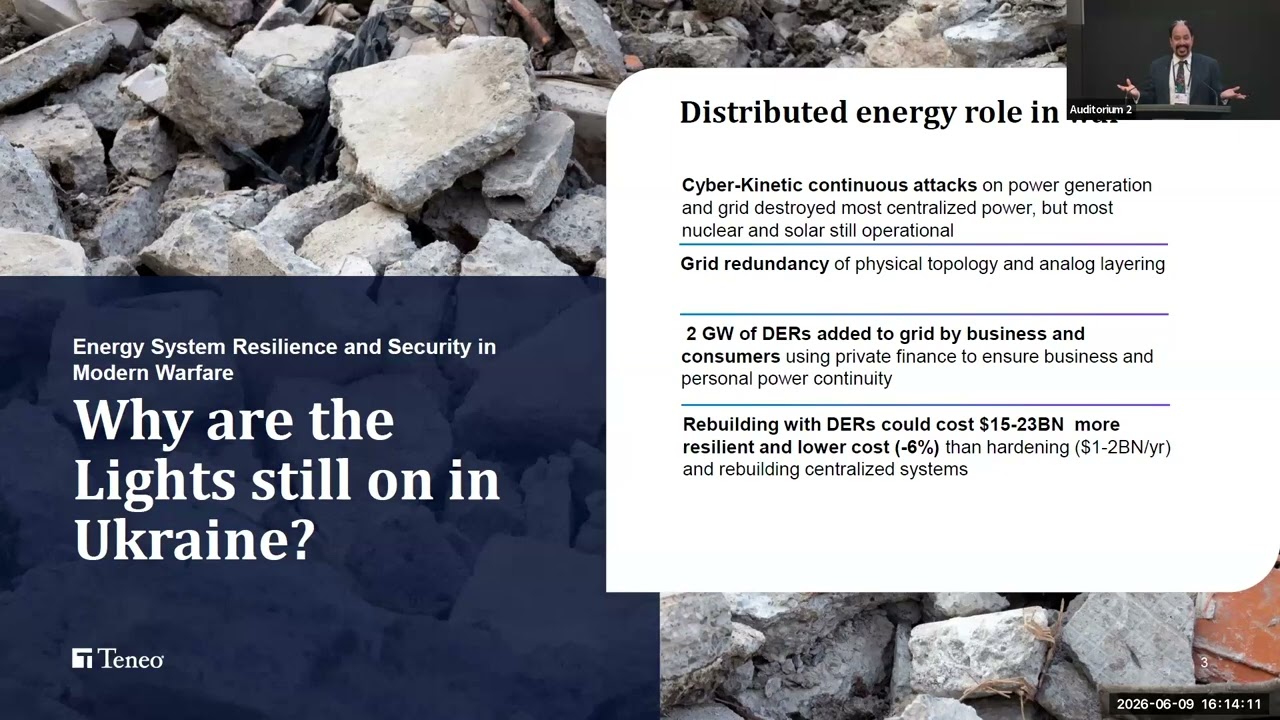
- Kyle Dada presents case studies from Ukraine and Puerto Rico, highlighting the resilience of distributed energy resources.
- Samira Adakam presents the Sri Lanka blackout investigation findings, focusing on inverter behavior and frequency response.
- Matna Pashava discusses Azerbaijan's green energy initiatives and grid reinforcement efforts.
- Panel discussion begins, addressing integration of distributed energy resources and market design.
Cited Sources
- Sri Lanka Public Utilities Commission Investigation Report — Referenced by Samira Adakam as the basis for the blackout analysis.
- IEA Study on Cost-Benefit of Distributed Energy Resources — Mentioned by Kyle Dada regarding the cost-effectiveness of DER-based architecture.
Concurring Sources
- IEA Report on Power Systems in Transition — Supports the argument for diversification and decentralization.
Contribution & Novelties
The session provides a comprehensive overview of the role of diversification and decentralization in enhancing energy system resilience, with concrete case studies from Sri Lanka, Ukraine, and Puerto Rico. It highlights the importance of managing distributed energy resources to avoid cascading failures, as seen in the Sri Lanka blackout. The session also emphasizes the need for regulatory and market reforms to support these strategies.
Pour aller plus loin :
- Distributed Generation — Provides background on the concept and its benefits.
- Microgrid — Relevant to the decentralization aspect discussed.
- Grid Resilience — Explores the broader concept of resilience in power systems.
100 words
Radar Profile
The radar profile shows high scores in information quantity, quality, and reliability, with a slightly lower technical level, indicating a session that is informative and credible but not overly technical, suitable for a broad audience.