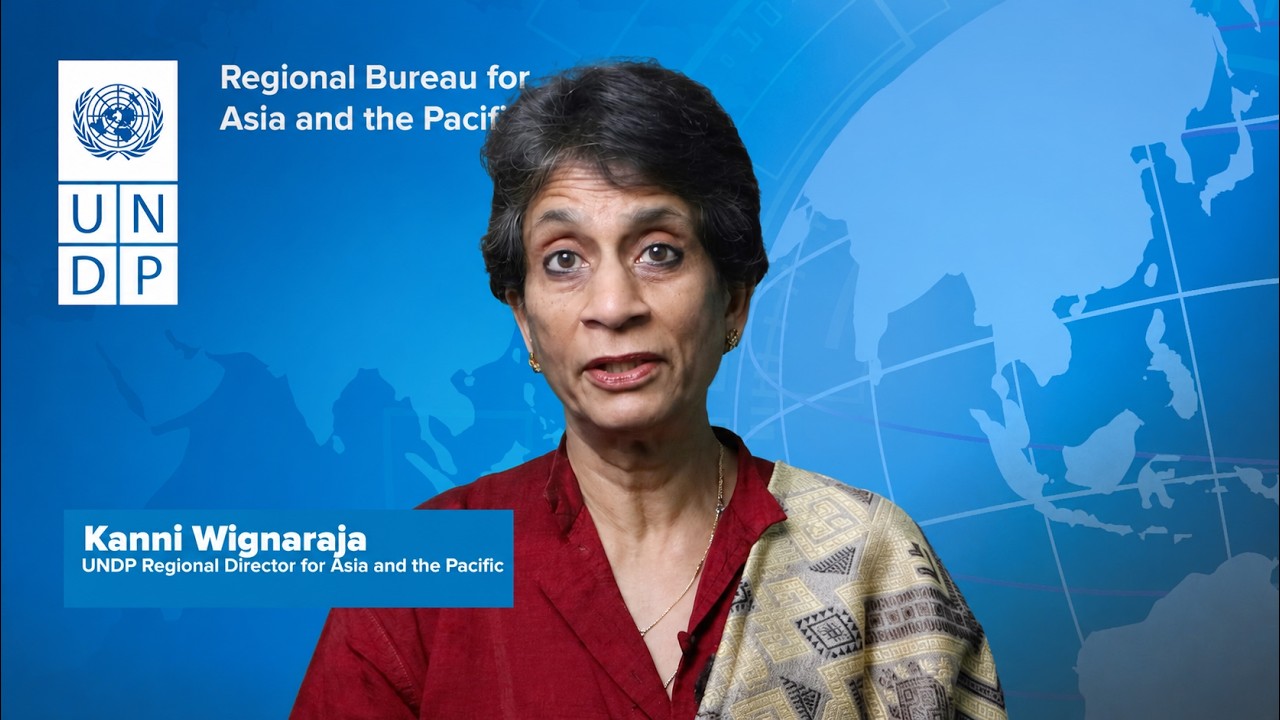
Transforming Development with Smart Energy Systems | Kanni Wignaraja at ACEF 2026
Keywords
Summary
192 words
Critical Evaluation
Value of the Information & Strength of the Argument
The video provides valuable insights into the strategic importance of smart energy systems for development, particularly in the Asia-Pacific region. It offers a high-level perspective from a UN official, emphasizing the integration of energy with social and economic outcomes. The argumentation is coherent and persuasive, using concrete examples (Fiji, Central Asia, Nepal) and relevant statistics (e.g., 85% fossil fuel reliance, 90% cheaper renewables, 2.3 million barrels of oil avoided by EVs in 2025). However, the talk is primarily an opinion piece and advocacy, lacking detailed technical analysis or rigorous citation of sources. The speaker’s authority adds credibility, but the claims are not independently verified within the video.
Scientific Rigor, Source Quality, Title Accuracy
The scientific rigor is moderate; the speaker cites specific data points (e.g., LNG price increase, GDP per unit of energy improvement) but does not provide sources. The quality of sources is limited to the speaker’s expertise and institutional role. The title accurately reflects the content, which is a keynote on smart energy systems and development. No public comments were provided for analysis.
184 words
Title / Content Match
The title accurately reflects the content, which focuses on the role of smart energy systems in development, as presented by Kanni Wignaraja at ACEF 2026.
Quality & Reliability
7/10
The speaker is a high-level UN official with relevant expertise, and the content is consistent with established energy and development discourse. However, specific data points are not sourced within the video, and the presentation is largely opinion and advocacy rather than peer-reviewed research.
Key Moments
Markers derived by PSI from the transcript: the creator did not define chapters.
- Introduction and context of ACEF 2026 closing plenary.
- Thesis: Transition is about how fast and smartly we do it.
- Need for smart energy systems: flexibility, cost, integration.
- Energy demand drivers in Asia: industrialization, urbanization, data centers.
- Fossil fuel reliance and resurgence of coal.
- Example of Fiji: renewable mini-grids and integrated development.
- Central Asia: grid modernization and de-risking investments.
- Geopolitical disruptions as opportunities; LNG price spike.
- Economic gains: energy efficiency, EVs, cost-competitiveness of renewables.
- Three points: optimizing systems, learning systems, local digital infrastructure.
- Smart partnerships: examples of Nauru and Nepal.
- Call to action: transform energy systems to transform lives.
Cited Sources
- Asia Clean Energy Forum 2026 — The event where this keynote was delivered.
- United Nations Development Programme (UNDP) — The organization the speaker represents.
Concurring Sources
- IRENA – Renewable Power Generation Costs — Supports the claim that renewables are increasingly cheaper than fossil fuels.
- IEA – Electricity Grids and Secure Energy Transitions — Supports the need for grid modernization and smart systems.
Dissenting Sources
- No direct discordant sources identified — The talk is broadly aligned with mainstream energy transition discourse; no specific contradictions found.
Contribution & Novelties
The video offers a high-level perspective on the importance of smart energy systems for sustainable development, emphasizing the integration of energy with social and economic outcomes. It provides examples from UNDP projects and highlights the role of digital technologies and AI in transforming energy systems. The talk is valuable for policymakers and development practitioners, but it does not present new research or technical innovations.
Pour aller plus loin :
- Smart grid — Provides background on smart grid technologies and their benefits.
- Energy transition — Context on the global shift from fossil fuels to renewables.
- United Nations Sustainable Development Goal 7 — Official UN goal on affordable and clean energy, relevant to the talk’s focus.
114 words
Radar Profile
The radar profile shows moderate to high scores across all dimensions, indicating a balanced presentation with solid information quality and technical level, though slightly lower on quantity of detailed data and source rigor.