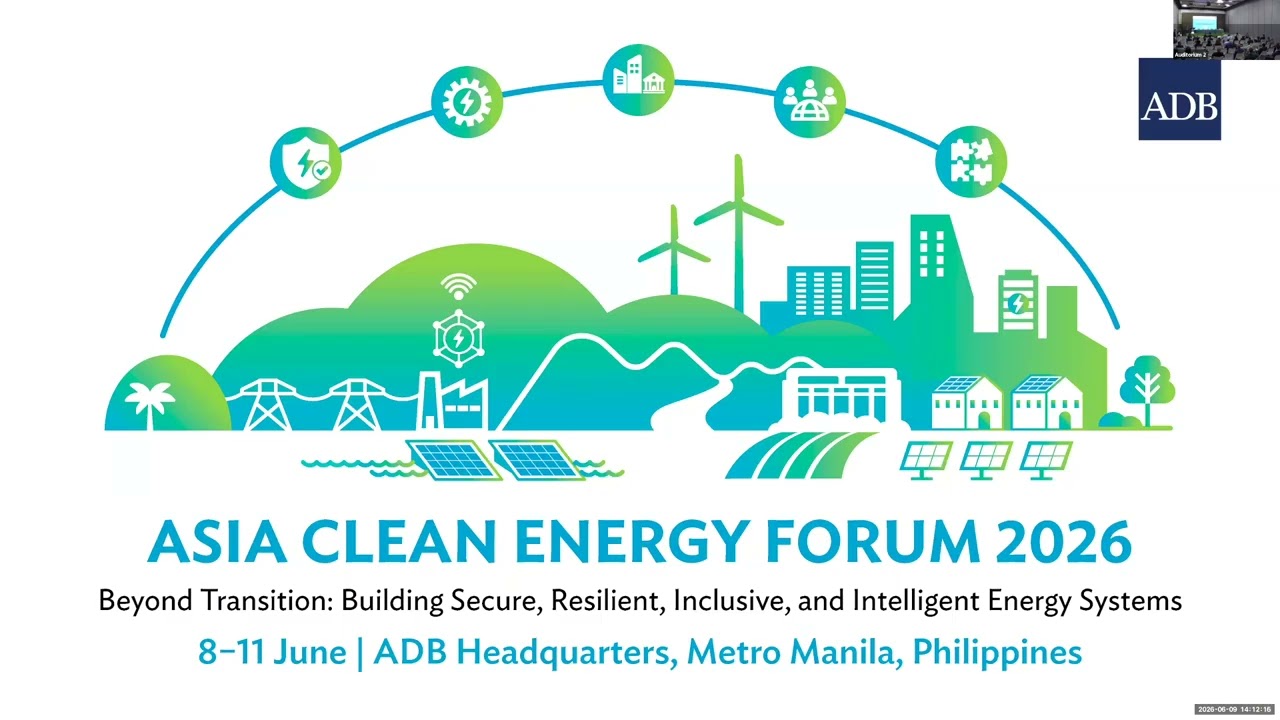
Thematic Track Session 2.1: Anticipating and Managing Disruptions
Keywords
Summary
149 words
Critical Evaluation
Value of the Information & Strength of the Argument
The session provides valuable insights from practitioners and experts, offering concrete examples and case studies. The argumentation is generally solid, with each presenter grounding their points in real-world experiences, such as ADB’s technical assistance in the Pacific, MRC’s engineering studies, Ember’s data analysis on India, and CDRI’s resilience assessment in Odisha. However, the depth of technical detail varies, and some presentations are more descriptive than analytical. The discussion on fuel price hedging effectively highlights the governance challenges, while the grid stability presentation offers a clear technical framework. The India case provides quantitative evidence of curtailment, and the Odisha study demonstrates a rigorous methodology. Overall, the value is high for a policy and practitioner audience, though it lacks rigorous academic referencing.
Scientific Rigor, Source Quality, Title Accuracy
The session demonstrates a reasonable level of scientific rigor, with presenters referencing their organizations’ reports and studies. However, specific sources are not explicitly cited in the transcript, and the reliance on institutional experience rather than peer-reviewed literature limits the academic rigor. The title accurately reflects the content, covering various disruptions and management strategies. The session is well-structured, with each presentation addressing a distinct aspect of the theme. The lack of detailed citations is a minor weakness, but the practical insights and case studies provide credible evidence. The presence of a public audience and Q&A session suggests a commitment to engagement, though the transcript does not include the Q&A.
243 words
Title / Content Match
The title accurately reflects the session's focus on anticipating and managing disruptions in the energy sector, covering fuel price volatility, grid stability, and climate resilience.
Quality & Reliability
7/10
Panel of experts from ADB, MRC Turkey, Ember, and CDRI discussing practical challenges and solutions for grid stability, flexibility, resilience, and fuel price risk. Content is grounded in institutional experience and case studies, but lacks peer-reviewed citations and is largely based on expert opinion and project experience.
Key Moments
Markers derived by PSI from the transcript: the creator did not define chapters.
- Introduction by moderator Melody, framing the session's four topics.
- Adita Faria begins presentation on fuel price hedging for Pacific countries.
- Adita explains the three types of derivatives: futures, swaps, and options.
- Adita highlights governance as the main challenge for fuel price hedging.
- Atina Lameski starts presentation on low inertia in power systems.
- Atina discusses the difference between adequacy and stability.
- Atina presents stability solutions like grid-forming inverters and battery storage.
- Rohita Singh begins presentation on India's solar curtailment.
- Rohita explains the 2025 curtailment event and its causes.
- Rohita discusses India's options for flexibility: coal flexibility, storage, and demand shifting.
- Kiran Sabinini starts presentation on Odisha's power system resilience.
- Kiran describes the cyclone damage and the study methodology.
- Samrat Ray discusses the investment plan and cost-benefit analysis.
Cited Sources
- ADB Technical Assistance 10153 — Mentioned by Adita Faria as the regional initiative on accelerated energy transition for Pacific small island developing states.
- Ember — Rohita Singh's organization, an energy think tank.
- Coalition for Disaster Resilient Infrastructure (CDRI) — Kiran Sabinini's organization, leading the Odisha resilience study.
Concurring Sources
Contribution & Novelties
The session provides a multi-faceted perspective on managing disruptions in the energy transition, combining financial risk management, technical grid stability, and climate resilience. The fuel price hedging presentation offers a practical framework for Pacific countries, emphasizing governance over technical instruments. The grid stability talk introduces a structured approach to studying low-inertia systems. The India case highlights the real-world challenge of solar curtailment and the need for system flexibility. The Odisha study demonstrates a comprehensive methodology for resilience assessment and investment planning. These insights are valuable for policymakers and practitioners.
Pour aller plus loin :
- Grid inertia — Wikipedia article on inertia in power systems.
- Fuel price hedging — Wikipedia article on hedging.
- Solar curtailment — Wikipedia article on curtailment in electricity.
- Climate resilience — Wikipedia article on climate resilience.
129 words
Radar Profile
The radar profile shows balanced scores across information quantity, quality, technical level, and reliability, indicating a well-rounded session with practical insights and credible expert opinions, though not deeply technical or research-heavy.