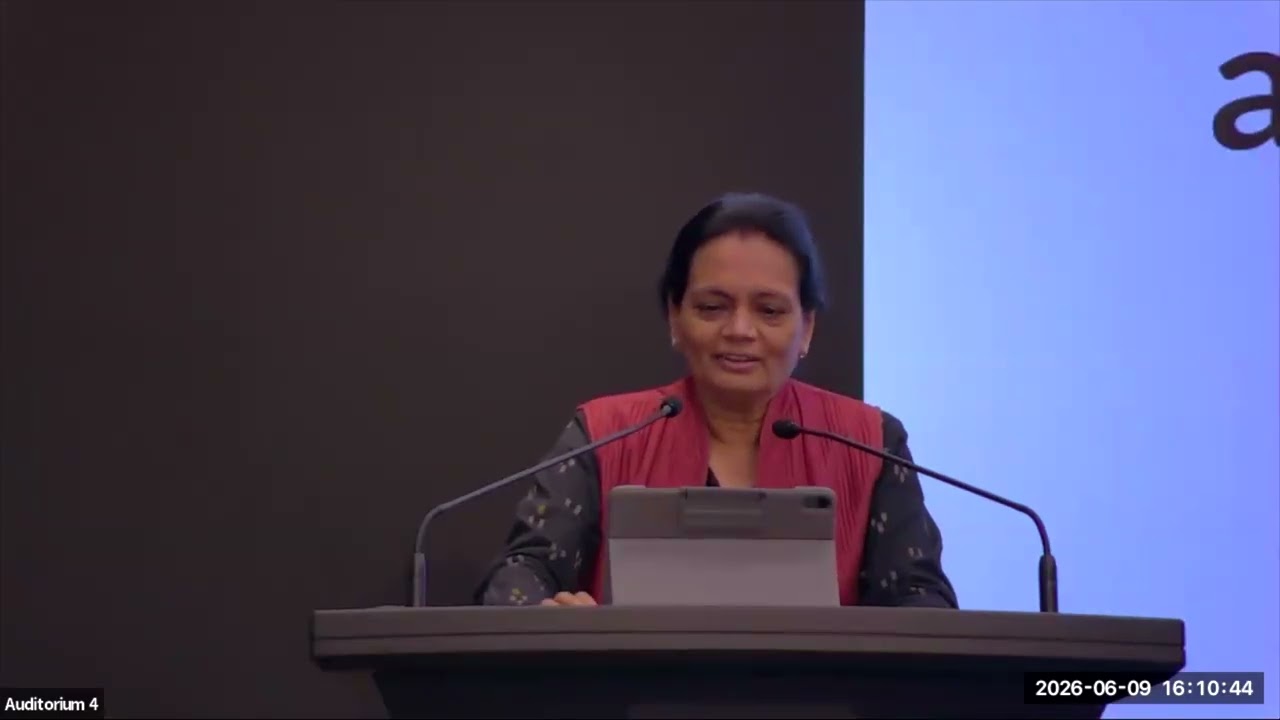
Thematic Track Session 4.2 AI-Driven Analytics, Robust Data Management and Cybersecurity
Keywords
Summary
150 words
Critical Evaluation
Value of the Information & Strength of the Argument
The session provides valuable insights into the practical applications of AI in the energy sector, supported by real-world examples and quantitative estimates. The argumentation is solid, with speakers drawing on their extensive experience and citing specific projects and reports. However, some claims, such as the $1 trillion economic value from AI-driven energy efficiency, are attributed to external sources without detailed verification. The discussion is balanced, acknowledging both opportunities and risks, and emphasizes the need for robust governance and cybersecurity.
Scientific Rigor, Source Quality, Title Accuracy
The session demonstrates strong scientific rigor, with speakers from reputable institutions and references to specific reports and data. The title accurately reflects the content, which covers AI-driven analytics, data management, and cybersecurity. The sources cited include the World Economic Forum, Ember’s report, and ESIG’s work, though not all are explicitly referenced with URLs. The discussion is well-structured and stays on topic.
155 words
Title / Content Match
The title accurately reflects the session's focus on AI-driven analytics, data management, and cybersecurity in energy systems.
Quality & Reliability
7/10
Panel of experts from reputable organizations (ADB, Hitachi Energy, Ember, ESIG, Arup, Dragos) discussing AI applications in energy. Content is largely qualitative and experience-based, with some quantitative estimates from Ember. No formal peer review, but speakers are credible.
Key Moments
Markers derived by PSI from the transcript: the creator did not define chapters.
- Introduction by moderator Jamila Modelo, setting the stage for the session.
- Sujata Gupta frames the discussion, highlighting ADB's $70 billion commitment and the importance of AI in energy.
- Dr. Naidu presents on autonomous systems, discussing AI applications like forecasting and predictive maintenance.
- Lam Pham presents Ember's report on AI's potential in ASEAN, quantifying savings and emission reductions.
- Debbie Lew discusses data gaps and coordination, emphasizing the need for data sharing and standardization.
- David Moran talks about digital transformation and data-driven decision-making in energy.
- Ken Gao addresses cybersecurity challenges in OT environments and the need for robust security frameworks.
- Q&A session with panelists, discussing practical implementation and collaboration.
Cited Sources
- Ember's report on AI to unlock renewable integration in ASEAN — Lam Pham presented findings from this report, quantifying cost savings and emission reductions.
- World Economic Forum — Sujata Gupta cited a WEF figure on AI-driven energy efficiency economic value.
- Energy Systems Integration Group (ESIG) — Debbie Lew mentioned ESIG's work and resources.
Concurring Sources
- IEA report on digitalization and energy — Supports the discussion on AI and data in energy systems.
Contribution & Novelties
The session provides a comprehensive overview of AI applications in the energy sector, with a focus on ASEAN and developing countries. It highlights the importance of data management and cybersecurity as foundational pillars. The discussion offers practical insights from industry leaders and quantifies potential benefits, which is valuable for policymakers and utilities.
Pour aller plus loin :
- AI in Energy — Overview of AI applications in energy.
- Dynamic Line Rating — Technology discussed for increasing grid capacity.
- Predictive Maintenance — Key application of AI in asset management.
87 words
Radar Profile
The radar profile shows balanced scores across all dimensions, with slightly higher scores in information quantity and quality, reflecting the expert panel and data-driven presentations. The technical level is moderate, suitable for a broad audience, while reliability is high due to credible speakers and references.