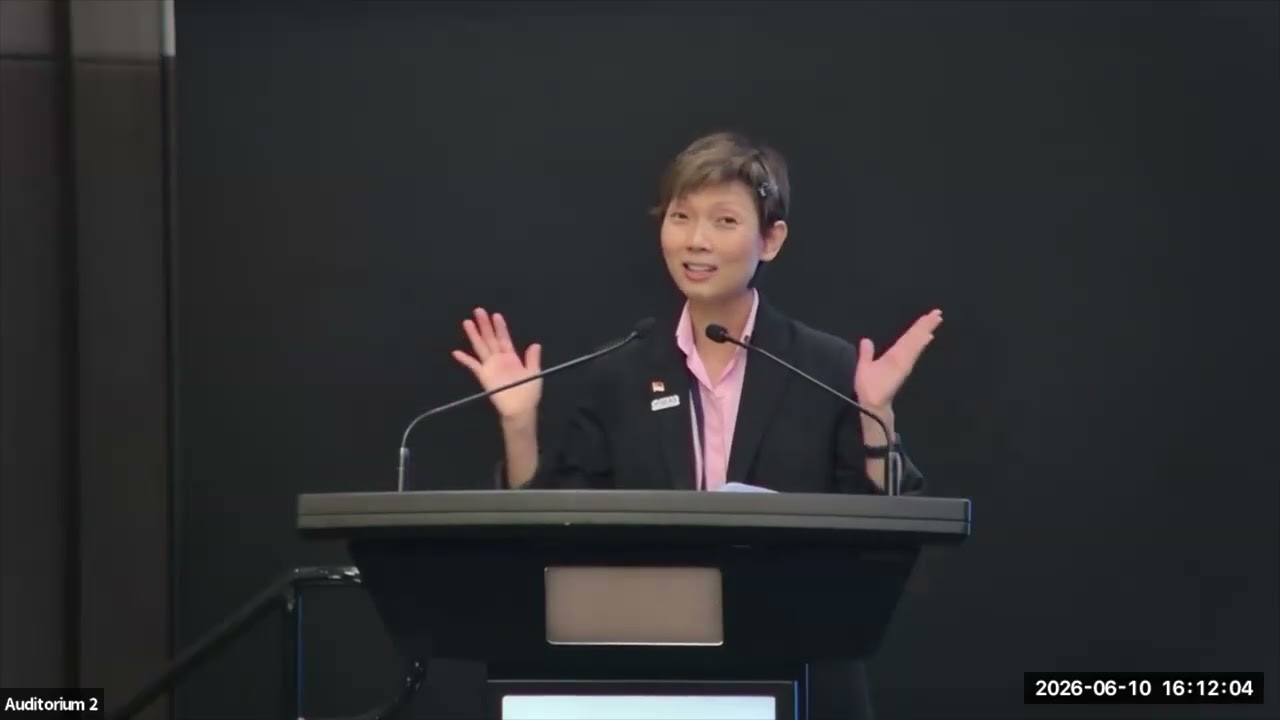
Deep Dive Workshop: How AI is Powering Asia's Secure and Resilient Clean Energy Future
Keywords
Summary
134 words
Critical Evaluation
Value of the Information & Strength of the Argument
The video provides valuable insights into the current state and potential of AI in Asia’s energy sector, supported by specific statistics (e.g., 170% ROI, 71% pilots stuck) and concrete examples (ADB pilots). The argumentation is coherent, emphasizing the need for governance, data management, and cybersecurity. However, the depth is limited by the workshop format, with some claims lacking detailed evidence. The panel discussions offer diverse perspectives, but the overall argumentation is more descriptive than critical.
Scientific Rigor, Source Quality, Title Accuracy
The scientific rigor is moderate: speakers cite reputable sources like IEA and ADB reports, but specific references are not formally listed. The title accurately reflects the content, and the workshop is well-structured. The presence of an MOU signing and promotional elements for SEAS programs slightly detracts from the scientific focus. No comments were provided, so public reception cannot be assessed.
150 words
Title / Content Match
The title accurately reflects the content, which focuses on AI applications for clean energy in Asia, including policy, technology, and financing.
Quality & Reliability
7/10
The video features expert opinions from ADB, SEAS, ARE, and IBM, with references to IEA data and ADB initiatives. However, it is a workshop recording with limited depth and no formal citations, and the low view count suggests limited peer validation.
Key Moments
Markers derived by PSI from the transcript: the creator did not define chapters.
- Introduction and welcome remarks by Lindri Malang (ADB)
- Keiju Mitsuhashi (ADB) discusses AI's role in energy transition and announces Pan-Asia Power Grid Initiative
- Sandra Sieh (SEAS) presents SEAS initiatives and training programs
- Jens Jaeger (ARE) introduces ARE and its digital energy facility
- MOU signing between SEAS and ARE
- Jamila Amadeu (ADB) keynote: AI implementation enablers, data, and governance
- Arun Biswas (IBM) keynote: AI for utilities, operational complexity, and cybersecurity
- Panel discussion on policy, financing, and collaboration
Cited Sources
- IEA 2025 report on AI in energy — Cited by Jamila Amadeu for ROI and adoption statistics
- Siemens and Vattenfall data on predictive maintenance — Cited by Jamila Amadeu for ROI figures
- ADB AI Preparedness Index — Mentioned by Jamila Amadeu as an ADB-developed tool
- ASEAN Guide on AI Governance and Ethics — Referenced as a regional standard
- EU AI Act — Mentioned as a regulatory framework in progress
- NIST AI Risk Management Framework — Referenced as a governance standard
Concurring Sources
- IEA report on AI and energy — Supports the statistics on AI ROI and adoption rates mentioned in the video.
- ADB's Pan-Asia Power Grid Initiative — Confirms the initiative announced in the video.
Dissenting Sources
- Potential overestimation of AI ROI — Some studies suggest that AI ROI in energy may be lower than claimed, depending on implementation context.
Contribution & Novelties
The workshop provides a regional perspective on AI in energy, highlighting ADB’s initiatives and pilot projects, and emphasizing the need for combined energy-AI standards. It offers practical insights from industry practitioners like IBM, bridging policy and implementation.
Pour aller plus loin :
- AI in Energy: Opportunities and Challenges — IEA report on AI’s impact on energy systems.
- Pan-Asia Power Grid Initiative — ADB’s initiative to connect regional power grids.
- NIST AI Risk Management Framework — Framework for managing AI risks.
- ASEAN Guide on AI Governance and Ethics — Regional guidelines for AI governance.
93 words
Radar Profile
The radar profile shows balanced scores across information quantity, quality, technical level, and reliability, with a slight emphasis on quality and reliability. This reflects a workshop that provides credible expert insights but lacks deep technical detail and formal citations.