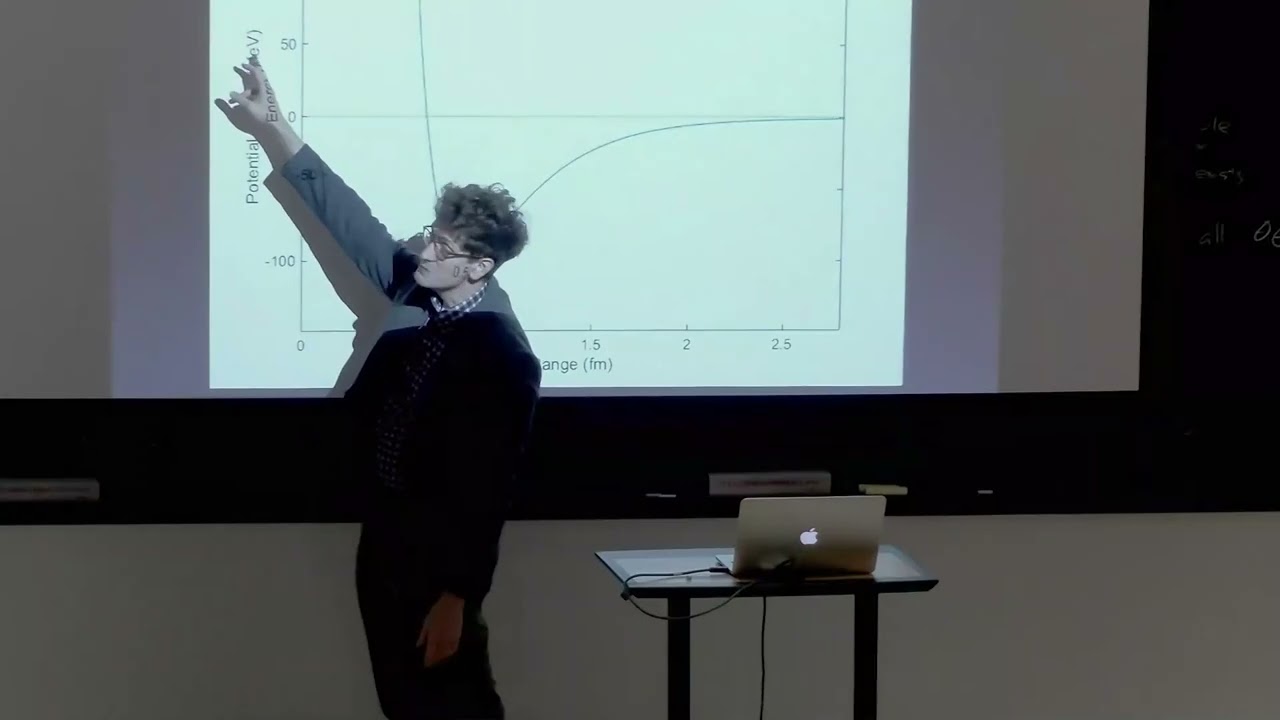
Lecture 2: Nuclear Technology 101
Keywords
Summary
138 words
Critical Evaluation
The lecture is an excellent educational resource, delivering a clear and accurate overview of nuclear technology. Professor Kemp’s expertise is evident in his ability to explain complex concepts in an accessible manner without oversimplifying. The content is well-structured, progressing logically from basic physics to reactor engineering. The use of diagrams and examples enhances understanding. The discussion of reactor types and fuel cycles is balanced, presenting both advantages and disadvantages. The safety considerations are addressed objectively. The lecture is particularly strong in its treatment of the physics of nuclear fission and the rationale behind different reactor designs. The brief mention of fusion provides a useful context for future developments. The sources cited are primarily the course materials and MIT OpenCourseWare, which are authoritative. The lecture does not delve into the social problems aspect, but that is expected as it is a technical primer. Overall, this is a high-quality, reliable introduction to nuclear technology.
152 words
Title / Content Match
The title accurately reflects the content: a basic introduction to nuclear technology, covering physics, reactor types, fuel cycles, and safety.
Quality & Reliability
9/10
Lecture by MIT professor R. Scott Kemp, part of an accredited course. Content is technically accurate, well-structured, and based on established nuclear physics principles. The instructor is a recognized expert in nuclear policy and technology. The lecture is educational, with clear explanations and appropriate scientific rigor.
Key Moments
Markers derived by PSI from the transcript: the creator did not define chapters.
- Introduction and course logistics
- Explanation of electron volt and atomic scale energy
- Atomic structure: protons, neutrons, and the strong force
- Table of isotopes and stability
- Curve of binding energy and energy release in fission
- Introduction to fission and neutron physics
- Thermal vs fast reactors and neutron moderation
- Uranium and thorium fuel cycles, enrichment
- Reactor types: PWR, BWR, graphite, fast, MSR
- Safety tradeoffs and fusion overview
Cited Sources
- MIT OpenCourseWare course page — Course materials and syllabus
- MIT OpenCourseWare — General OCW platform
- MIT OCW YouTube Playlist — Playlist for the course
Concurring Sources
- Nuclear fission — General reference on fission
- Pressurized water reactor — Reference on PWR
External References
Contribution & Novelties
The lecture provides a solid foundation in nuclear technology, clarifying key concepts such as binding energy, neutron moderation, and reactor types. It is particularly useful for non-experts entering the field. The presentation of various reactor designs and their safety tradeoffs is valuable.
Pour aller plus loin :
- Nuclear fission — Overview of fission process.
- Pressurized water reactor — Details on PWR design.
- Molten salt reactor — Information on MSR technology.
- Thorium fuel cycle — Explanation of thorium-based nuclear fuel.
79 words
Radar Profile
The radar profile shows high scores in information quantity, quality, and reliability, with a slightly lower technical level, reflecting the introductory nature of the lecture. The content is well-balanced and authoritative.