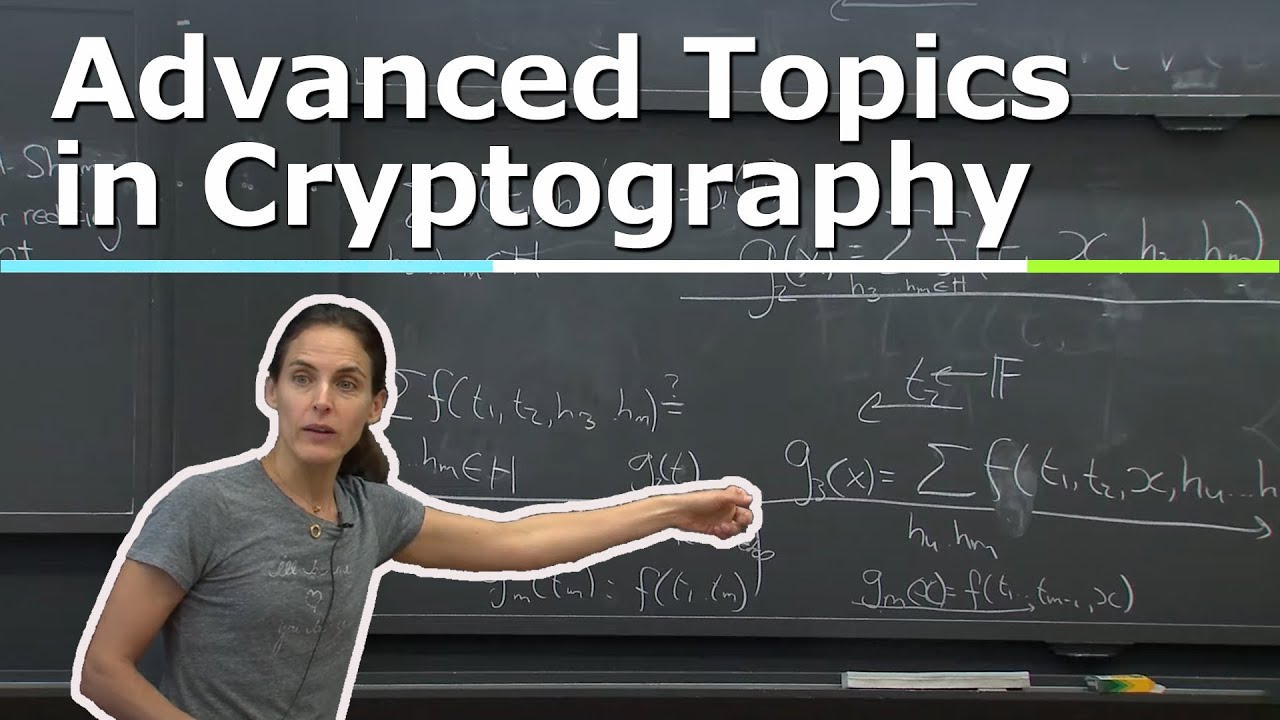
Lecture 1: Interactive Proofs and the Sum-Check Protocol, Part 1
Keywords
Summary
177 words
Critical Evaluation
This lecture provides an excellent introduction to interactive proofs and the sum-check protocol. Professor Kalai’s presentation is clear, well-structured, and pedagogically effective. She starts with a high-level overview of the course, then motivates the need for interactive proofs by contrasting them with classical proofs and the class NP. The formal definition of IP is given precisely, and the sum-check protocol is explained step-by-step, with attention to both correctness and soundness. The lecture is technically rigorous, but Kalai takes care to explain the intuition behind each step, making it accessible to students with a background in algorithms and complexity. The use of examples, such as matrix multiplication verification, helps solidify the concepts. The lecture also touches on important related topics, such as the relationship between IP and PSPACE, and mentions the historical context of zero-knowledge proofs. The quality of the content is high, and the lecture is well-suited for an advanced undergraduate or graduate-level course. The only minor criticism is that the lecture moves quickly in some parts, and students without prior exposure to complexity theory might need to review the material. However, this is expected for an advanced course. Overall, this is an outstanding lecture that effectively conveys the fundamental ideas of interactive proofs and sets the stage for the rest of the course.
214 words
Title / Content Match
The title accurately reflects the content: the lecture introduces interactive proofs and the sum-check protocol, as promised.
Quality & Reliability
9/10
Lecture by a leading expert (Yael T. Kalai) at MIT, part of an official course. Content is rigorous, well-structured, and based on established research. The presentation is clear and includes formal definitions and examples.
Key Moments
Markers derived by PSI from the transcript: the creator did not define chapters.
- Introduction and course overview
- Motivation: evolution of proofs in computer science
- Definition of interactive proofs (IP)
- Contrast with NP and the role of randomness
- Introduction to the sum-check protocol
- Detailed explanation of the sum-check protocol
- Application to #SAT and other problems
- Discussion of IP = PSPACE and implications
- Conclusion and next steps
Cited Sources
- MIT OpenCourseWare course page — Course materials and lecture notes
- MIT OpenCourseWare — General OCW platform
- YouTube Playlist — Playlist for the course
Concurring Sources
- MIT OpenCourseWare course page — Official course materials
External References
Contribution & Novelties
This lecture provides a clear and rigorous introduction to interactive proofs and the sum-check protocol, which are foundational concepts in modern cryptography and complexity theory. The lecture’s contribution lies in its pedagogical approach, breaking down complex ideas into understandable steps and connecting them to broader themes in the field.
Pour aller plus loin :
- Interactive proof system - Wikipedia — Overview of interactive proofs and related concepts.
- Sum-check protocol - Wikipedia — Detailed explanation of the sum-check protocol.
- IP = PSPACE - Wikipedia — Discussion of the celebrated result that IP equals PSPACE.
- Zero-knowledge proof - Wikipedia — Related concept that motivated interactive proofs.
- Probabilistically checkable proof - Wikipedia — Another proof system related to interactive proofs.
117 words
Radar Profile
The radar profile shows high scores across all dimensions, indicating a lecture that is rich in information, technically deep, and highly reliable. The balance between quantity and quality is excellent, and the technical level is appropriate for an advanced course.
💬 Sur les 0 commentaires analysés, aucune tendance n'est disponible.