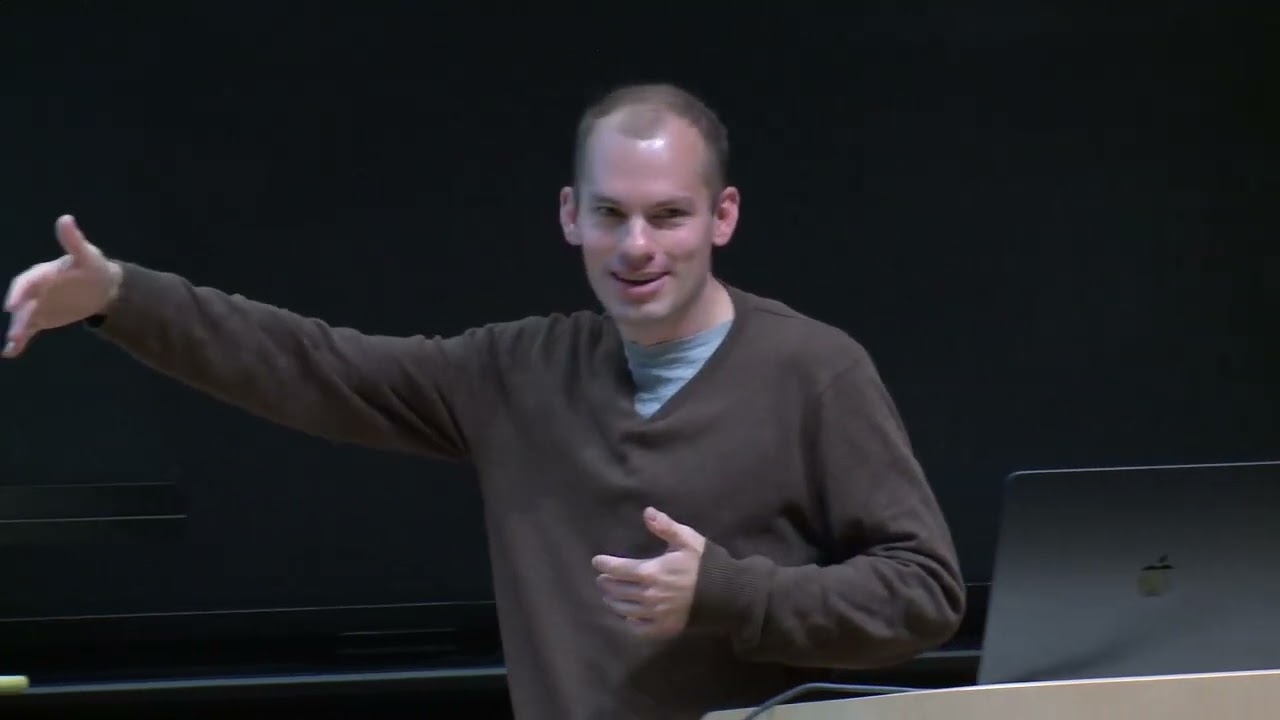
Lec 09. Hacker's Guide to Deep Learning
Keywords
Summary
146 words
Critical Evaluation
The lecture provides a valuable perspective on the practical aspects of deep learning, emphasizing the importance of data inspection and debugging over purely theoretical knowledge. The instructor’s credibility is high, given his position at MIT and his research background. The content is well-structured, moving from general principles to specific examples, such as the medical imaging case where a model relied on spurious correlations. The advice is actionable and grounded in real-world experience, making it highly relevant for practitioners. However, the lecture is opinionated and relies on anecdotes rather than systematic evidence, which may limit its generalizability. The sources cited are primarily the course materials and OCW, which are reliable but not exhaustive. The lecture does not delve into formal theory, which is appropriate given its focus on practical hacks. The adéquation between title and content is strong, as the title accurately reflects the practical, hack-oriented nature of the talk. Overall, the lecture is a valuable resource for those seeking practical guidance in training deep neural networks, though it should be complemented with more formal studies for a comprehensive understanding.
179 words
Title / Content Match
The title accurately reflects the content: a practical, hack-oriented guide to training deep neural networks.
Quality & Reliability
8/10
The lecture is delivered by an MIT professor with extensive experience in deep learning, providing practical heuristics and anecdotes. The content is opinionated but grounded in real-world experience and references to known issues in the field. The sources cited are primarily the course materials and OCW, which are reliable. The lecture does not present formal research but offers practical advice, which is valuable for practitioners.
Key Moments
Markers derived by PSI from the transcript: the creator did not define chapters.
- Introduction: lecture on practical advice and heuristics for deep learning.
- Story about Jitendra Malik's advice to 'become friends with every pixel'.
- Example of a deep net failing due to spurious correlation in medical imaging.
- Importance of looking at outputs, not just loss curves, with examples from generative models.
- Discussion on data preprocessing and common bugs like incorrect data ranges.
- Advice to inspect data right before model.forward, with a custom function.
Cited Sources
- MIT OpenCourseWare — Course materials and resources.
- Course page — Full course information.
- YouTube Playlist — All lectures in the series.
- OCW Support — Support OCW.
- OCW Terms — License and terms.
- OCW Comments Policy — Comment guidelines.
Concurring Sources
- MIT OpenCourseWare — Provides course materials and resources that align with the lecture's content.
Contribution & Novelties
The lecture provides a practitioner’s perspective on deep learning, emphasizing the importance of data inspection and debugging. It offers concrete heuristics and anecdotes that are not typically covered in formal courses. The emphasis on ‘becoming friends with every pixel’ and inspecting data before model.forward is a practical contribution that can help practitioners avoid common pitfalls.
Pour aller plus loin :
- Andrej Karpathy’s blog — Relevant for additional practical tips and insights on training neural networks.
- fast.ai — Practical deep learning courses that emphasize hands-on coding.
- Caffe — Historical deep learning framework mentioned in the lecture, useful for understanding legacy practices.
100 words
Radar Profile
The radar profile shows high scores in information quality and reliability, reflecting the instructor's expertise and practical focus. The technical level is moderate, suitable for a broad audience. The overall balance indicates a solid, practical lecture with strong credibility.