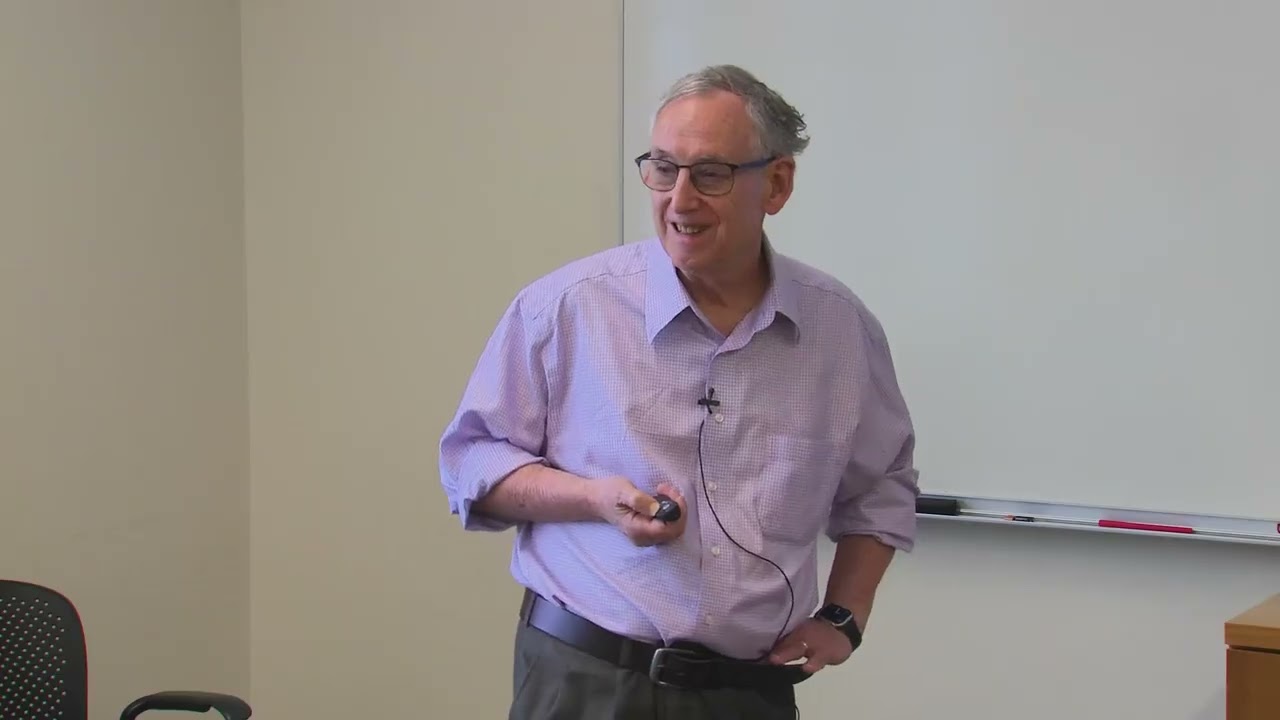
Lecture 2: Blockchain as a Database
Keywords
Summary
186 words
Critical Evaluation
The lecture provides a rigorous and insightful analysis of blockchain technology from an economic perspective. It successfully demystifies blockchain by framing it as a database, which is a fundamental and accessible concept. The instructor’s expertise is evident in the way he connects blockchain to traditional financial accounting, offering a unified framework that is both novel and pedagogically effective. The use of the ‘babysitting economy’ as an analogy for money is particularly illustrative, making abstract monetary concepts tangible. The discussion of central bank reactions, including the BIS’s unified ledger proposal, is timely and well-contextualized, showing the evolution of institutional perspectives. The lecture is well-structured, with clear sections and logical progression. However, it assumes a certain level of familiarity with economic and financial concepts, which may be challenging for absolute beginners. The technical aspects of blockchain, such as proof-of-work and cryptographic hashing, are mentioned but not deeply explained, which is appropriate for an introductory lecture but may leave some viewers wanting more detail. The sources cited are credible, including IMF and BIS publications, and the instructor’s own research. The lecture does not present any controversial claims without proper context, and it acknowledges the limitations and open questions in the field. Overall, this is a high-quality educational resource that offers valuable insights into the intersection of blockchain and finance.
216 words
Title / Content Match
The title accurately reflects the content, which focuses on conceptualizing blockchain as a database and comparing it with financial accounts.
Quality & Reliability
8/10
Lecture from MIT OpenCourseWare by a renowned economist, presenting a balanced view of blockchain as a database, with references to academic work and central bank reports. The content is well-structured and grounded in economic theory, though it reflects the instructor's perspective.
Key Moments
Markers derived by PSI from the transcript: the creator did not define chapters.
- Introduction to the lecture and outline of topics.
- Definition of blockchain as a database and its structure.
- Creation of Bitcoin and the white paper by Satoshi Nakamoto.
- Discussion of the babysitting economy and its relevance to money.
- Central bank reactions to cryptocurrencies and the BIS unified ledger proposal.
- Introduction to financial accounts as databases.
- Detailed explanation of cash flow statements and their components.
- Discussion of technical limitations of blockchains and mapping economies.
Cited Sources
- MIT OpenCourseWare course page — Course materials and additional resources.
- MIT OpenCourseWare YouTube playlist — Playlist of lectures for the course.
- MIT OpenCourseWare support page — Support OCW initiative.
- MIT OpenCourseWare terms — Terms of use for OCW content.
- MIT OpenCourseWare comments policy — Guidelines for comments on OCW platforms.
Concurring Sources
- Bitcoin whitepaper — Original description of Bitcoin's design, supporting the lecture's explanation of blockchain as a database.
- BIS Annual Economic Report 2023 — Discusses the unified ledger and the future of the monetary system, aligning with the lecture's content.
Dissenting Sources
- Paul Krugman's critique of Bitcoin
External References
Contribution & Novelties
This lecture offers a unique perspective by treating blockchain and financial accounts as equivalent databases, providing a unified framework for understanding both. It bridges the gap between technical blockchain concepts and traditional financial accounting, making it accessible to economists and finance professionals. The lecture also highlights the evolution of central bank thinking on digital currencies, from skepticism to exploration of unified ledgers.
Pour aller plus loin :
- Bitcoin whitepaper — The original paper by Satoshi Nakamoto, foundational to understanding blockchain.
- The Babysitting Economy — Wikipedia article explaining the analogy used in the lecture.
- Unified ledger concept by BIS — BIS annual economic report discussing the unified ledger.
- Central bank digital currencies (CBDCs) — IMF page on CBDCs, relevant to the lecture’s discussion.
122 words
Radar Profile
The radar chart shows high scores in information quantity, quality, and technical level, indicating a comprehensive and well-presented lecture. The reliability score is also high, reflecting the credibility of the instructor and sources.