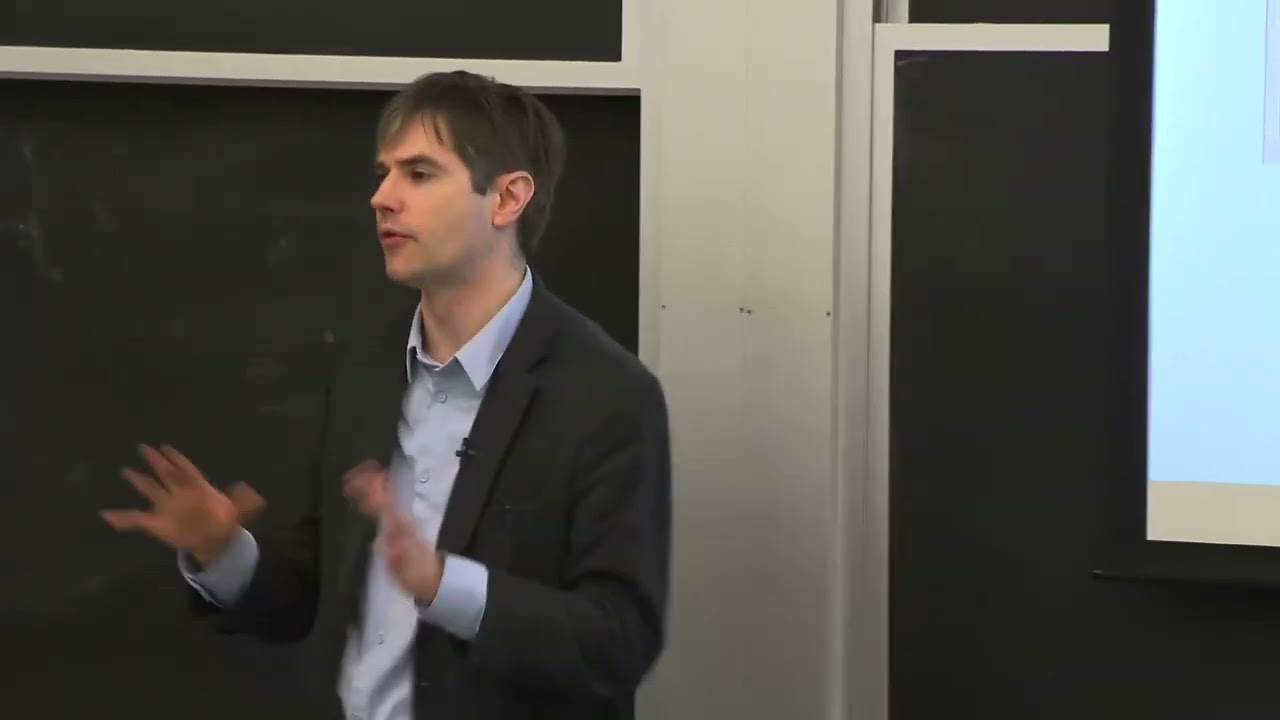
Lecture 23: The Qing through Qianlong
Keywords
Summary
175 words
Critical Evaluation
The lecture provides a comprehensive and nuanced overview of Taiwan’s early Qing history, demonstrating the professor’s expertise and ability to present complex historical processes clearly. The narrative is well-structured, moving from the broader context of the Three Feudatories to the specific case of Taiwan, and it effectively highlights the significance of this period for understanding later developments. The professor’s use of specific examples, such as the role of Shi Lang and the debate over annexation, adds depth to the discussion. The lecture is based on established scholarship, though specific sources are not cited within the video itself; however, the course materials are available online, which enhances credibility. The argumentation is solid, and the professor acknowledges multiple perspectives, such as the different legacies of Zheng Chenggong. The adéquation between title and content is good, as the lecture covers the Qing through the Qianlong reign, with a focus on the early period. The lecture is suitable for an academic audience but also accessible to interested laypeople. Overall, it is a valuable resource for understanding the historical context of Taiwan’s relationship with China.
180 words
Title / Content Match
The title accurately reflects the content, which covers the Qing dynasty up to the Qianlong reign, with a focus on Taiwan's integration.
Quality & Reliability
8/10
Lecture by MIT professor, based on scholarly research, with nuanced presentation of historical events. Sources not explicitly cited in the video but course materials are available online.
Key Moments
Markers derived by PSI from the transcript: the creator did not define chapters.
- Introduction and recap of the Three Feudatories Rebellion
- Discussion of Taiwan's indigenous peoples and early European colonization
- Dutch and Spanish presence in Taiwan and encouragement of Chinese migration
- Zheng Chenggong's (Koxinga) establishment of a base in Taiwan and his legacy
- Qing's coastal evacuation policy to combat piracy
- Shi Lang's campaign and the conquest of Taiwan in the 1680s
- Debate over whether to keep Taiwan and Shi Lang's argument for annexation
- Taiwan's annexation as part of Fujian Province and its light-touch rule
- Population growth and economic development of Taiwan during the Qing
- Explanation of the term 'Formosa' and its Portuguese origin
Cited Sources
- MIT OpenCourseWare course page — Course materials and syllabus for Dynastic China, Fall 2024
- YouTube Playlist for the course — Playlist containing all lectures of the course
- MIT OpenCourseWare main site — General access to MIT OpenCourseWare resources
- MIT OpenCourseWare terms — Terms of use for OCW content
- MIT OpenCourseWare comments policy — Policy for comments on OCW platforms
Concurring Sources
- MIT OpenCourseWare course page — Course materials likely contain readings and references that support the lecture content.
External References
Contribution & Novelties
The lecture provides a detailed and accessible account of Taiwan’s integration into the Qing Empire, highlighting the roles of key figures like Zheng Chenggong and Shi Lang, and the strategic considerations of the Qing court. It offers a balanced perspective on the island’s history, acknowledging both the indigenous population and the impact of European colonization.
Pour aller plus loin :
- Koxinga (Zheng Chenggong) — For more on the life and legacy of Zheng Chenggong.
- Qing dynasty — Overview of the Qing dynasty and its expansion.
- Taiwan under Qing rule — Detailed article on Taiwan’s history during the Qing period.
99 words
Radar Profile
The radar profile shows high scores in quantity and quality of information, with a moderate technical level, indicating a lecture that is both informative and accessible. The reliability is also high, reflecting the academic credibility of the instructor and institution.
💬 Très positif : Les commentaires expriment un fort enthousiasme pour la série de cours et demandent la publication des autres conférences, avec des éloges pour la qualité de l'enseignement et la clarté des explications.