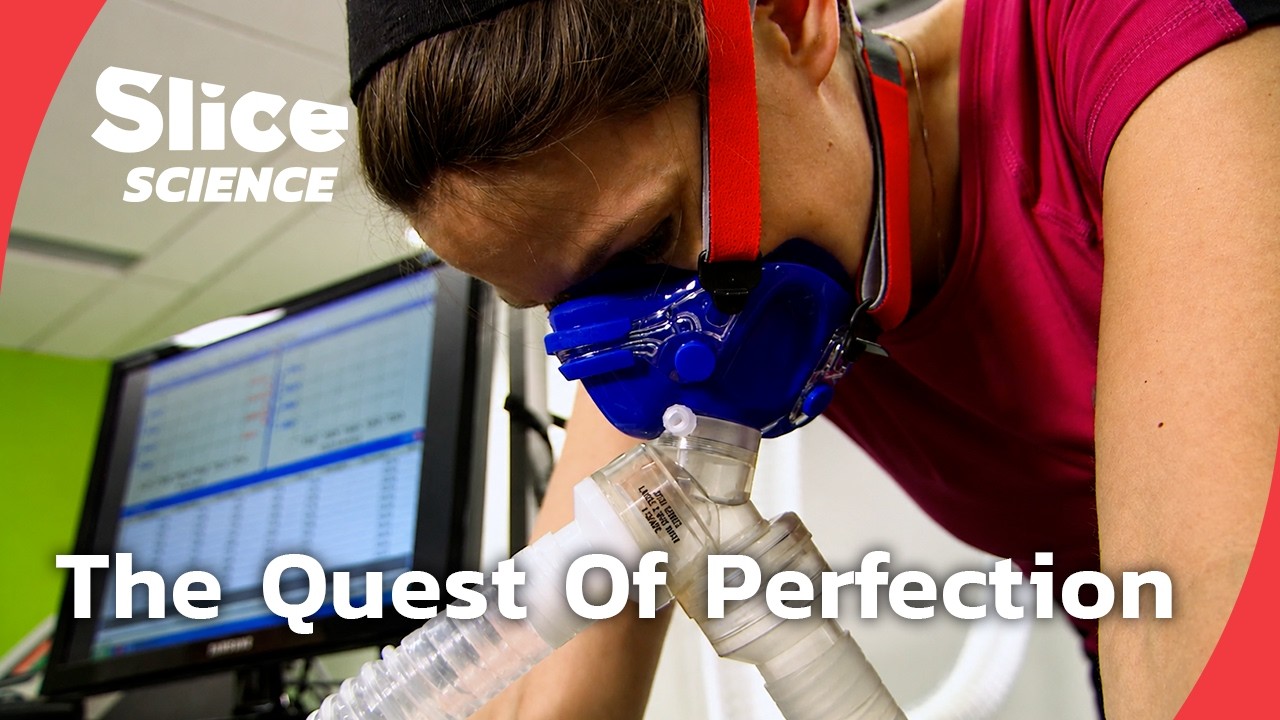
Myth Or Science: The Quest For Perfection | SLICE SCIENCE | FULL DOC
Keywords
Summary
192 words
Critical Evaluation
Value of the Information & Strength of the Argument
The documentary provides valuable information by directly testing popular claims with scientific experiments, often using the host as a subject. The argumentation is generally solid, as it relies on measurable outcomes (e.g., VO2 max, skin thickness, handgrip endurance) and expert commentary. However, the sample sizes are small (often n=1 for the host), and the documentary does not discuss potential limitations or alternative interpretations. The presentation is engaging and persuasive, but it may oversimplify complex scientific concepts for a general audience.
Scientific Rigor, Source Quality, Title Accuracy
The scientific rigor is moderate: the experiments are real and conducted by researchers, but the documentary does not provide detailed methodology or peer-reviewed references. The sources are primarily the researchers themselves and their institutions, which adds credibility. The title accurately reflects the content, and the documentary’s structure is clear. No public comments were provided for analysis.
151 words
Title / Content Match
The title accurately reflects the content: a scientific exploration of claims about achieving physical and mental perfection.
Quality & Reliability
7/10
The documentary features interviews with researchers from reputable institutions (McMaster University, York University, University of Toronto) and presents experimental data, but it is a popular science production with limited methodological detail and potential oversimplification.
Key Moments
Markers derived by PSI from the transcript: the creator did not define chapters.
- Introduction to the quest for perfection and the aging claim.
- Dr. Tarnopolsky's research on exercise and aging in mice.
- Skin biopsy and measurement of skin thickness before and after exercise.
- High-intensity interval training experiment with Dr. Gibala.
- Comparison of VO2 max results after HIIT.
- MRI comparison of visceral fat between Jennifer and Anicka.
- Willpower test with Dr. Bray: Stroop test and handgrip endurance.
- Training willpower by using non-dominant hand for two weeks.
- Caffeine metabolism genetic test with Dr. El-Sohemy.
Cited Sources
- Jambika Productions — Production company of the documentary.
Concurring Sources
- McMaster University - Exercise and Aging Research — Institution where Dr. Tarnopolsky and Dr. Gibala conduct their research.
Contribution & Novelties
The documentary’s original contribution lies in its hands-on approach to testing popular health claims, making scientific research accessible and engaging. It highlights the importance of evidence-based practices and individual variability (e.g., genetics in caffeine metabolism).
Pour aller plus loin :
- High-intensity interval training (HIIT) — Provides background on HIIT and its physiological effects.
- CYP1A2 and caffeine metabolism — Scientific article on the role of CYP1A2 in caffeine metabolism.
- VO2 max — Definition and significance of maximal oxygen consumption.
- Stroop effect — Explanation of the cognitive test used to measure willpower.
- Mitochondria and aging — Overview of mitochondrial function and its link to aging.
103 words
Radar Profile
The radar profile shows high scores in information quantity and quality, moderate technical level, and good reliability. This indicates a well-rounded documentary that is informative and credible, though not deeply technical.