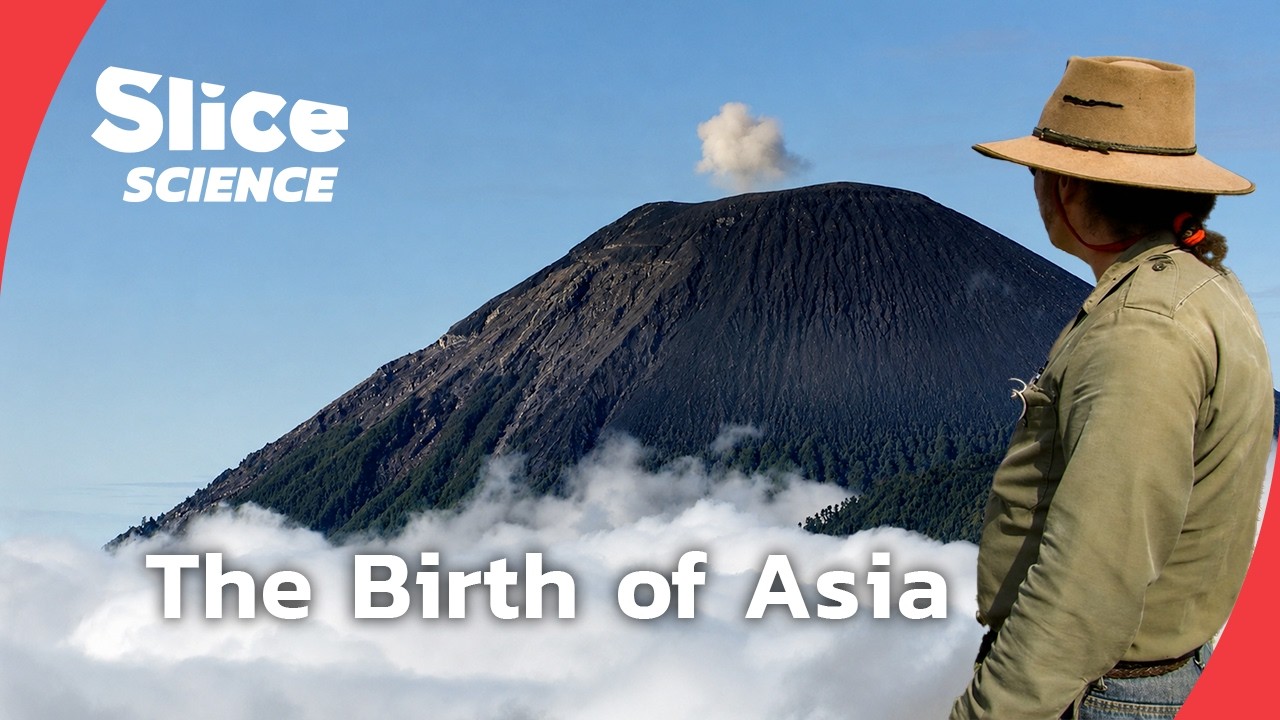
Asia’s Geological Origins: Volcanoes, Collisions and Rising Seas | SLICE SCIENCE | FULL DOC
Keywords
Summary
150 words
Critical Evaluation
The documentary provides a comprehensive overview of Asia’s geological evolution, effectively combining scientific explanations with visual storytelling. It features interviews with experts, such as geologist Dimmitri Gladkuche and paleontologist Sylvia Krescat, who present their research on key geological events. The use of radiometric dating and fossil evidence lends credibility to the narrative. However, the documentary occasionally simplifies complex processes, such as the exact mechanisms of mass extinctions, and the dramatic reconstructions may be misleading. The sources cited are not explicitly listed, but the research is based on established geological knowledge. The title accurately reflects the content, and the documentary successfully conveys the scale and impact of tectonic forces. The main strength is its ability to make geology accessible to a general audience without sacrificing scientific accuracy. The main weakness is the lack of detailed citations and the potential for oversimplification. Overall, it is a valuable educational resource that highlights the dynamic nature of our planet.
155 words
Title / Content Match
The title accurately reflects the content, covering Asia's geological history from its origins to current sea-level rise.
Quality & Reliability
8/10
The documentary presents a well-structured narrative based on scientific research, featuring interviews with geologists and paleontologists, and references to specific geological evidence. However, it lacks detailed citations and some dramatic reconstructions may oversimplify complex processes.
Key Moments
Markers derived by PSI from the transcript: the creator did not define chapters.
- Introduction to Earth's formation and tectonic forces.
- Discovery of 3.4-billion-year-old zircons in Siberia.
- Explanation of the collision between northern China and Siberia.
- Formation of the Ural Mountains and the assembly of Pangaea.
- The Siberian Traps and the Permian-Triassic extinction.
- Southern China as a refuge for life after the extinction.
- Dinosaur fossils in Thailand proving continental connections.
- India's rapid tectonic journey and the Deccan Traps.
- The Deccan Traps and the extinction of the dinosaurs.
- The rise of the Himalayas and the threat of sea-level rise in Bangladesh.
Contribution & Novelties
The documentary synthesizes current geological research on Asia’s formation, presenting it in an engaging visual format. It highlights recent discoveries, such as the role of southern China as a refuge during the Permian-Triassic extinction, and the use of dinosaur fossils to trace continental movements. The film also connects ancient geological events to modern environmental challenges, such as sea-level rise in Bangladesh.
Pour aller plus loin :
- Plate tectonics — Provides a foundational overview of the theory central to the documentary.
- Siberian Traps — Details the volcanic event linked to the Permian-Triassic extinction.
- Deccan Traps — Explores the volcanic province in India and its potential role in dinosaur extinction.
108 words
Radar Profile
The radar profile shows high scores in quantity and quality of information, with a slightly lower technical level, indicating a documentary that is informative and scientifically sound but accessible to a general audience.