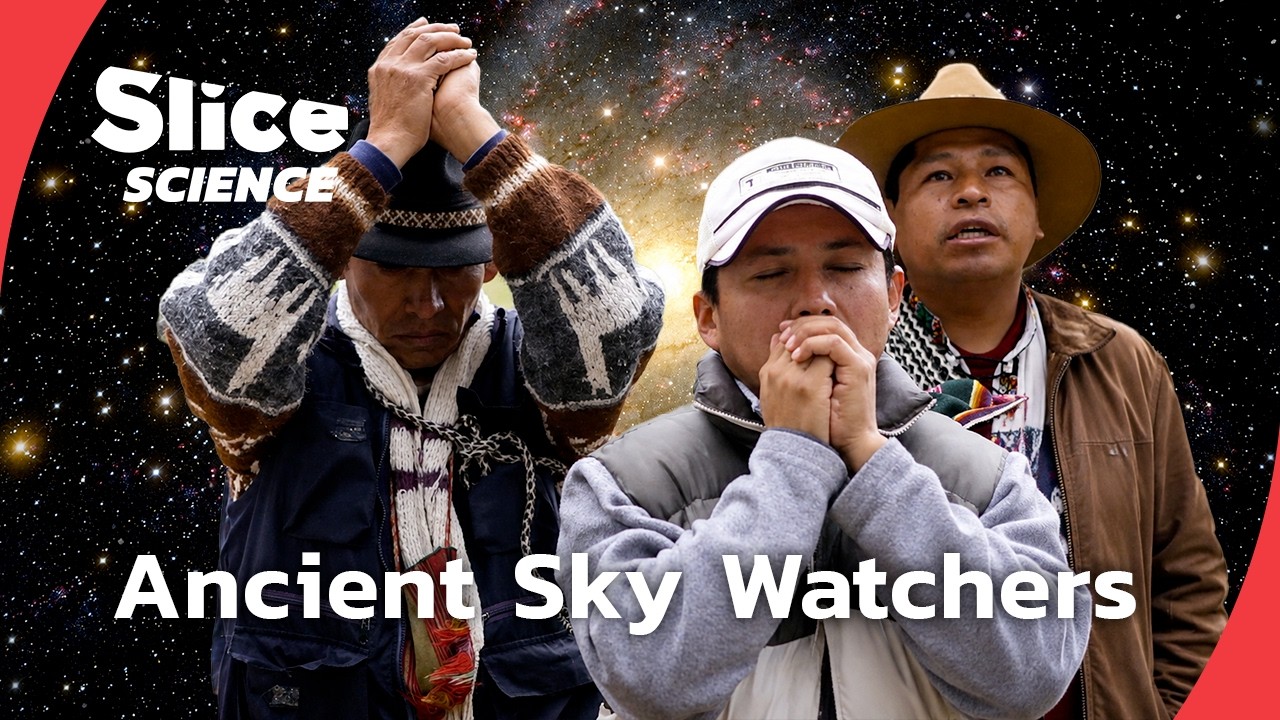
Astrology Vs Astronomy: How Humans Read The Sky | SLICE SCIENCE | FULL DOC
Keywords
Summary
148 words
Critical Evaluation
The documentary offers a valuable comparative perspective on astrology and astronomy, emphasizing cultural diversity in sky interpretation. Its strength lies in showcasing indigenous astronomical knowledge, which is often overlooked, and in presenting skeptical viewpoints that challenge pseudoscience. However, the scientific content is relatively superficial, with limited explanation of astronomical concepts like dark energy or precession. The arguments against astrology are presented through anecdotal comparisons of horoscopes rather than rigorous statistical analysis, which weakens the scientific critique. The documentary’s structure is engaging, but it sometimes feels disjointed, jumping between locations and topics without deep exploration. The inclusion of modern observatories provides a necessary contrast, but the scientific segments are brief and lack technical depth. Overall, the documentary succeeds in raising awareness about cultural astronomy and skepticism, but it falls short of a thorough scientific analysis. The title’s promise of a direct comparison is only partially fulfilled, as the focus is more on cultural practices than on a systematic evaluation of astrology’s validity.
161 words
Title / Content Match
The title accurately reflects the content, which contrasts astrology and astronomy through cultural and scientific perspectives.
Quality & Reliability
7/10
The documentary presents a balanced view of astronomical practices and astrological beliefs, featuring interviews with scientists and skeptics. It includes historical and cultural context, but lacks detailed scientific explanations and citations for some claims.
Key Moments
Markers derived by PSI from the transcript: the creator did not define chapters.
- Introduction to the documentary's theme: how humans read the sky.
- Visit to El Infiernito in Colombia, explaining the Muisca astronomical alignments.
- Discussion of the Muisca legend of Bachué and the sacred lake.
- Journey to the Brazilian Amazon to meet indigenous communities.
- Astronomer Germano Afonso explains indigenous constellations and calendars.
- Visit to the Baniwa community and their star-based traditions.
- In Chile, the Asociación Escéptica critiques astrology by comparing horoscopes.
- Discussion on the ambiguity of astrological predictions.
- Visit to modern observatories to study dark energy.
- Reflections on the search for meaning in the stars.
Cited Sources
- Documentary: Children of The Stars - Season 1, Episode 9: Destiny Written In The Stars — The documentary itself, produced by 3box Media (2014), directed by Gonzalo Argandoña.
Concurring Sources
- International Astronomical Union — The IAU defines the constellations and promotes astronomy education, aligning with the documentary's scientific perspective.
Dissenting Sources
Contribution & Novelties
The documentary provides a unique cross-cultural perspective on astronomy and astrology, highlighting indigenous astronomical knowledge that is rarely featured in mainstream media. It bridges the gap between scientific astronomy and cultural beliefs, offering a holistic view of humanity’s relationship with the sky.
Pour aller plus loin :
- Cultural Astronomy — Overview of the field studying astronomical practices in different cultures.
- Muisca astronomy — Specific information on the astronomical knowledge of the Muisca people.
- Dark Energy — Scientific explanation of dark energy, a key topic in modern astronomy.
- Precession of the equinoxes — Explanation of the astronomical phenomenon that affects zodiac signs.
- Skeptical movement — Context for the skeptical approach to pseudoscience.
111 words
Radar Profile
The radar profile shows moderate scores across all dimensions, with slightly higher scores in information quantity and reliability, reflecting the documentary's balanced but not deeply technical content.