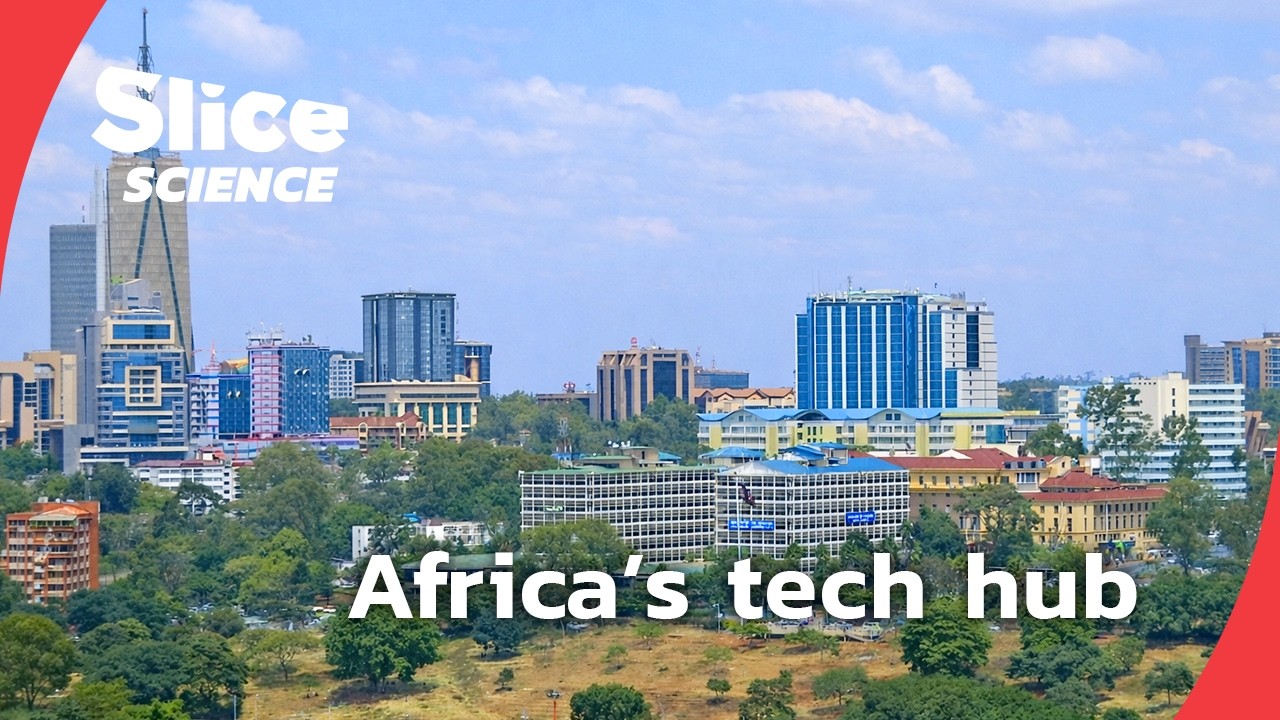
Why global tech companies are looking at Kenya | SLICE SCIENCE | FULL DOC
Keywords
Summary
130 words
Critical Evaluation
The documentary offers a compelling and accessible introduction to Kenya’s tech ecosystem, effectively using case studies and interviews to illustrate key points. It successfully conveys the innovative spirit and the practical solutions being developed to address local challenges. However, the analysis is largely descriptive and lacks critical depth. The documentary does not critically examine potential downsides or challenges, such as the digital divide, regulatory issues, or the sustainability of the growth. The sources cited are primarily company representatives and entrepreneurs, which may introduce bias. The reference to a Georgetown University study on M-PESA’s impact is mentioned but not detailed, and no specific citation is provided. The documentary’s strength lies in its human interest stories and visual appeal, but it falls short of a rigorous scientific analysis. The title accurately reflects the content, and the documentary is well-structured, but it could benefit from a more balanced perspective. Overall, it serves as a good overview for general audiences but lacks the depth expected from a scientific documentary.
165 words
Title / Content Match
The title accurately reflects the content, which explores why global tech companies are interested in Kenya's tech scene.
Quality & Reliability
7/10
The documentary provides a balanced overview of Kenya's tech ecosystem, featuring interviews with entrepreneurs and company representatives. It cites specific data (e.g., M-PESA users, M-KOPA connections) and references a Georgetown University study, but lacks detailed citations and independent verification. The production quality is professional, but the content is largely descriptive and promotional.
Key Moments
Markers derived by PSI from the transcript: the creator did not define chapters.
- Introduction to Kenya as an economic engine and tech hub.
- Visit to iHub, an incubator for tech startups.
- Presentation of the 'Brick' device and its features.
- Demonstration of the Kio Kit in a school, showing educational use.
- Discussion on the impact of M-PESA on financial inclusion.
- Interview with M-PESA boss Ron Webb on the service's success.
- Introduction to M-KOPA Solar and its pay-as-you-go model.
- Visit to a rural home using M-KOPA Solar, showing its benefits.
- Discussion on Africa's young population and the need for jobs.
- Overview of Andela's training program and its selection process.
Cited Sources
- Georgetown University study on M-PESA impact — Referenced in the documentary as evidence that M-PESA has lifted people out of poverty.
Concurring Sources
- World Bank on Kenya's tech sector — Supports the documentary's portrayal of Kenya as a growing tech hub.
Dissenting Sources
- Critique of Silicon Savannah narrative — Some analyses argue that the tech boom benefits only a small elite and does not address broader inequality.
Contribution & Novelties
The documentary provides a comprehensive overview of Kenya’s tech ecosystem, highlighting innovative solutions like M-PESA and M-KOPA Solar. It offers insights into the local context and the role of mobile technology in development. The film’s contribution lies in its accessible presentation of these innovations and their impact on everyday life.
Pour aller plus loin :
- M-PESA — Background on the mobile money service.
- Silicon Savannah — Overview of Kenya’s tech hub.
- M-KOPA Solar — Information on the solar company.
79 words
Radar Profile
The radar chart shows a balanced profile with moderate scores across all dimensions, indicating a documentary that is informative but not highly technical or deeply critical. The strengths are in the quantity and quality of information, while the level of technical detail is moderate.
💬 No comments were provided for analysis.